Brand
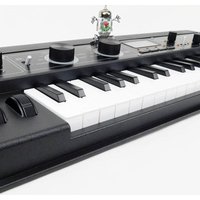
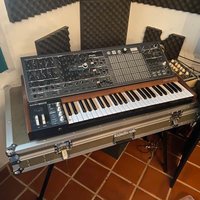
Korg, based in Japan, has always been known for mixing the experimental with the practical. From the MS-20 with its gritty filters to the M1 workstation and the more recent Minilogue and Volca series, Korg constantly innovate. They offer quirky pocket synths as well as professional stage keyboards. Their gear often encourages exploration and happy accidents. Korg instruments reward curiosity and have been favourites for decades among adventurous musicians.
Category
Tags
Analogue is sound generation based on physical electronic circuits such as oscillators, filters, and amplifiers rather than digital processing. It produces continuously variable signals with natural drift, saturation, and harmonic character, giving sounds a distinctive warmth and movement. Analogue instruments are valued for their hands-on control, immediacy, and expressive response in both studio and live performance environments.
Analogue is sound generation based on physical electronic circuits such as oscillators, filters, and amplifiers rather than digital processing. It is used for its continuously variable signals, natural movement, and harmonic character that respond directly to hands-on control. For example, an analogue instrument might be used to create a warm bass line or an evolving lead sound with subtle changes in tone and texture as it is played.
Bass is low-frequency sound used to provide depth, weight, and foundation in music. Bass instruments and bass-focused synthesis are designed to produce powerful sub and low-mid frequencies that support rhythm and harmony. In electronic music and production, bass sounds are commonly shaped with oscillators, filters, and envelopes to create solid, controlled tones that anchor a track and drive its energy.
A filter is a sound-shaping component that removes or emphasises specific frequency ranges. Filters are used to sculpt tone, add movement, and control brightness or depth, playing a central role in shaping raw sound into expressive and musical results.
A sequencer is a tool used to record, arrange, and play back musical events in a defined order. It allows notes, rhythms, and parameter changes to be programmed step by step or recorded in real time, creating structured patterns and loops. Sequencers are used to keep multiple instruments in sync, build evolving arrangements, and automate movement within a sound. For example, a sequencer might be used to create a repeating bass pattern while gradually changing filter or modulation values to add variation over time.
Synth for Sale has over 1000 used synths and gear like that for sale. We bring these products to you via our trusted partners, retailers and direct with independent sellers in the UK.