A great bass synthesizer does more than reach low notes. It needs the right combination of weight, attack, movement and sequencing for the music around it. An acid line, a played funk bass and a sustained sub part may all live in the same register, but they ask for very different instruments.
The five choices below cover those different jobs. Listen to the character of the filter and envelope, but also judge how the sequencer handles slides, accents, ties, probability and pattern changes. In bass music, the rhythm of the sound is often as important as the waveform.
Affiliate disclosure: SynthForSale may earn a small commission when you buy through links on this page, at no extra cost to you.
Quick picks
| Best for | Our pick | Core strength |
|---|---|---|
| Portable analogue lines | Korg volca bass | Three oscillators, 16-step sequencing and sync |
| Acid bass | Behringer TD-3-MO | 303-style workflow with expanded sound controls |
| Played and programmed bass | Korg monologue | 25-key analogue instrument with presets and sequencing |
| Bass plus beat sketches | Sonicware LIVEN Bass&Beats | Wavetable bass and rhythm tracks in one box |
| Performance sequencing | Erica Synths DB-01 | Powerful analogue bass voice and up to 64-step patterns |
1. Korg volca bass — best for portable analogue lines
The Korg volca bass is a compact analogue bass machine with three oscillators, a filter, envelope, LFO and 16-step sequencer. The oscillators can be combined for thick unison tones or used in more varied patterns, while slide and Active Step functions make the sequence itself part of the instrument.
It is an inviting choice for a small table-top setup because it can run on batteries, includes a speaker for quick ideas and synchronises with other Volca instruments or MIDI gear. The front panel stays focused enough for a beginner while still producing assertive lines that can hold their own beside drums.
Memory and detailed pattern control are more limited than on larger sequencers, and the touch keyboard is designed for entry rather than expressive playing. Think of it as a portable bass sequencer with an analogue voice, not a replacement for a full keyboard synth.
Best match: first hardware setups, travel rigs and simple synced jams.
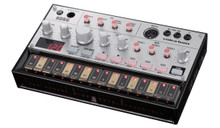

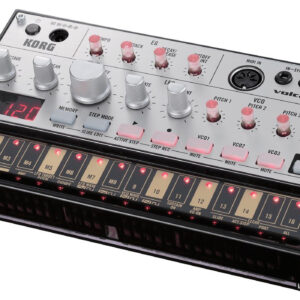
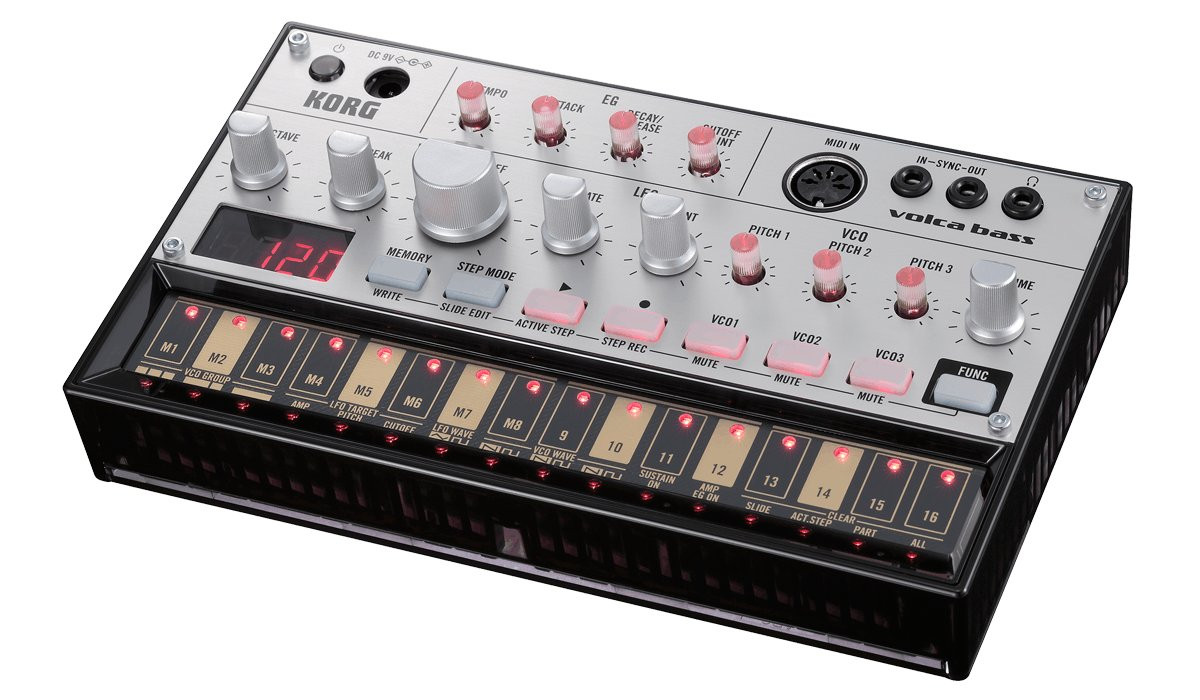
Korg Volca Bass – Analogue Bass Step Sequencer
Korg Volca Bass – Analogue Bass Step Sequencer from Korg is on synthforsale in our Sequencers department. Read More product details below.
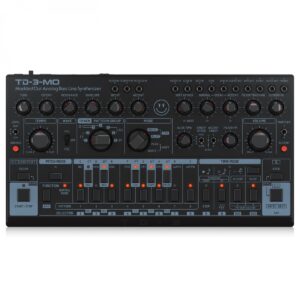
2. Behringer TD-3-MO — best for acid bass
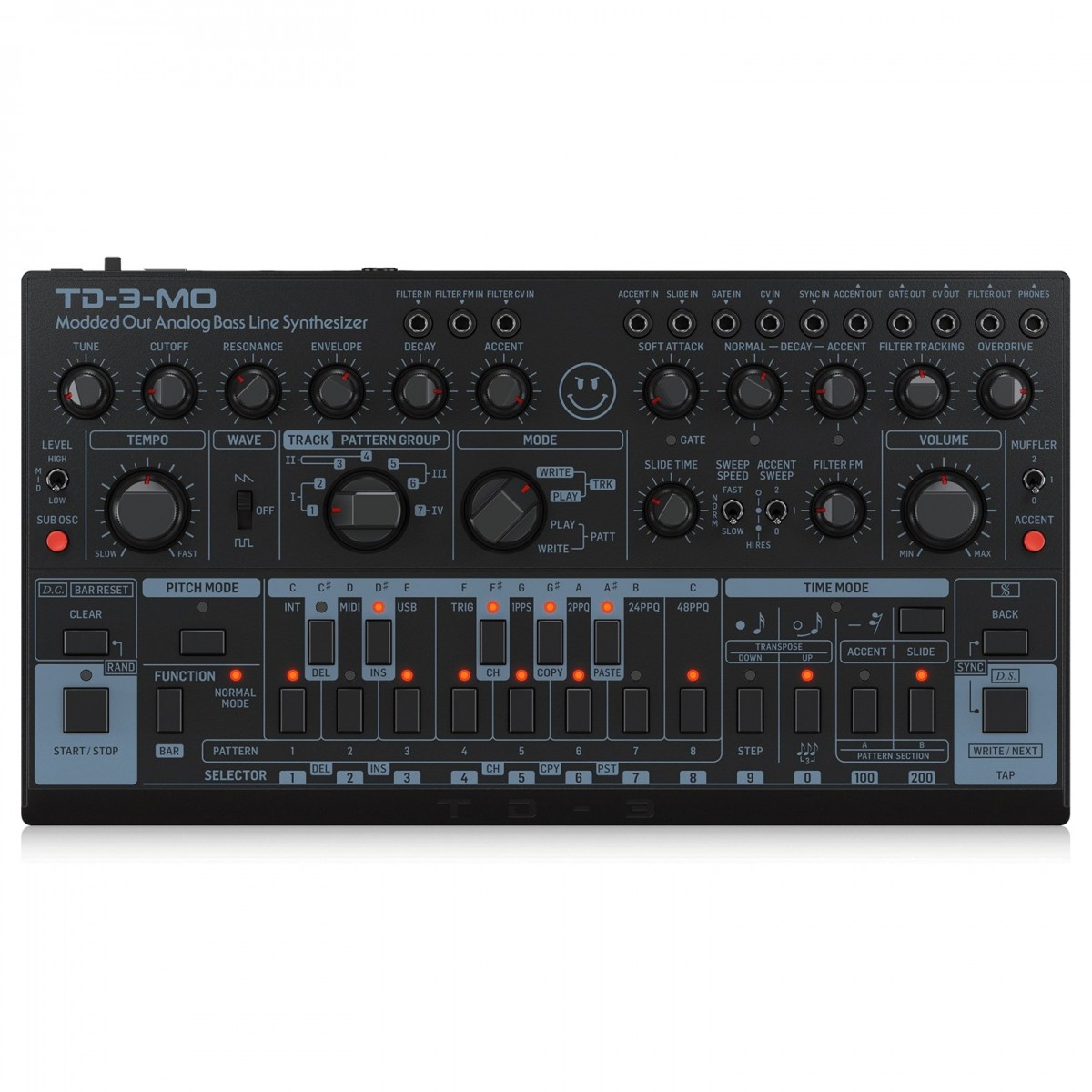
The Behringer TD-3-MO takes the familiar 303-style combination of a single oscillator, resonant filter, accent, slide and step sequencing and adds a collection of sound-shaping modifications. It is designed for bass lines whose character comes from the interaction between programmed notes and live filter movement.
It is strongest when the sequence is treated as a performance: raise resonance, push the filter envelope, lengthen decays and let accents strike the circuit differently. The expanded controls and patch points provide more aggressive or unusual directions than a strictly traditional clone.
The pattern-entry method is its own language, and a monophonic acid box is intentionally narrow. If you want broad keyboard duties, start elsewhere. If you want the bass line to be an evolving rhythmic voice, that focus is exactly the appeal.
Best match: acid house, techno and live filter performances.
3. Korg monologue — best for played and programmed bass
The Korg monologue gives you a 25-note velocity-sensitive keyboard, two analogue oscillators, a characterful filter, drive, modulation and a 16-step sequencer. Unlike a compact bass box with touch buttons, it works equally well when you want to play a line by hand or programme it step by step.
The visible signal path makes it quick to create solid subs, cutting mid-basses, percussive plucks and driven leads. Motion sequencing can record knob movement, and the programme memory is useful when you need to recall a sound for a track or live set.
It remains monophonic and its keyboard is slim rather than full size. Players who need wide ranges or two-handed parts will want another controller or synth, but for a dedicated bass and lead instrument it balances immediacy with enough memory for repeatable work.
Best match: musicians who want to play bass lines as well as sequence them.
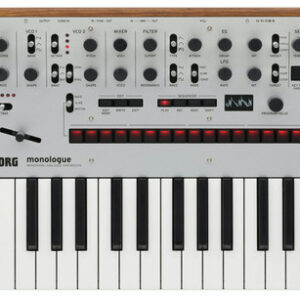
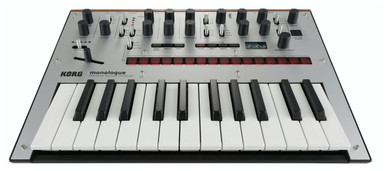

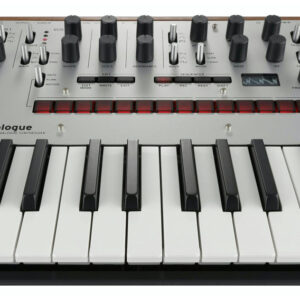
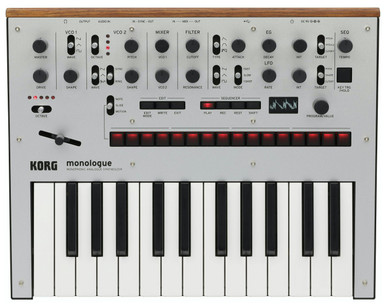
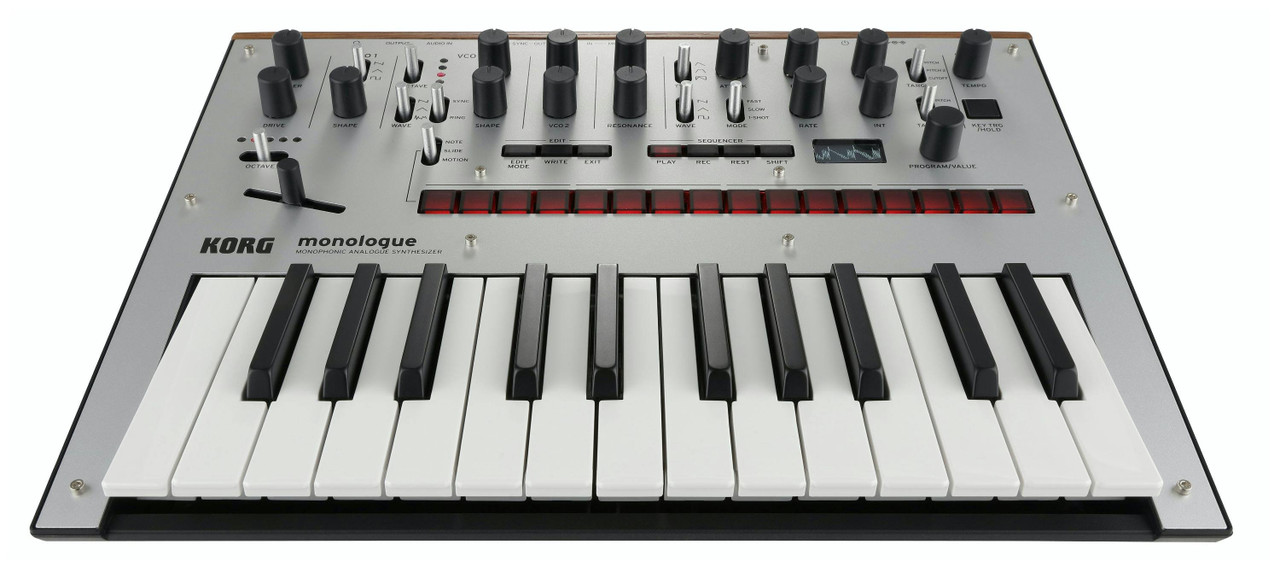
Korg Monologue Monophonic Analogue Synthesizer in Silver
Korg Monologue Monophonic Analogue Synthesizer in Silver from Korg is on synthforsale in our Synthesizers department. Read More product details below.
4. Sonicware LIVEN Bass&Beats — best for bass plus beat sketches
The Sonicware LIVEN Bass&Beats combines a wavetable bass engine with rhythm tracks and sequencing. That makes it more than a single bass voice: it can establish the low end, programme the drums and turn the relationship between them into a coherent pattern before other instruments are added.
Its digital bass engine can move from clean subs to more animated or abrasive timbres, while patterns can extend to 64 steps. For producers who think in grooves rather than isolated patches, having bass and beats under the same sequencing system can make ideas arrive faster.
The interface is compact and contains more modes than a one-purpose analogue box. It rewards learning the workflow and may be less immediate for someone who only wants a few large knobs. Choose it for composition value rather than for analogue purity.
Best match: portable electronic sketches where bass and drums need to develop together.
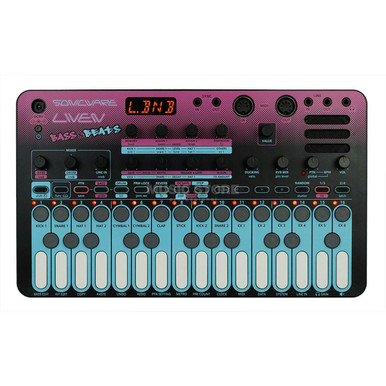
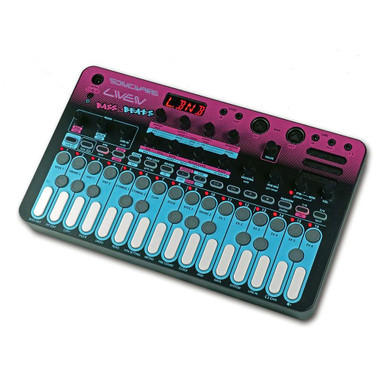

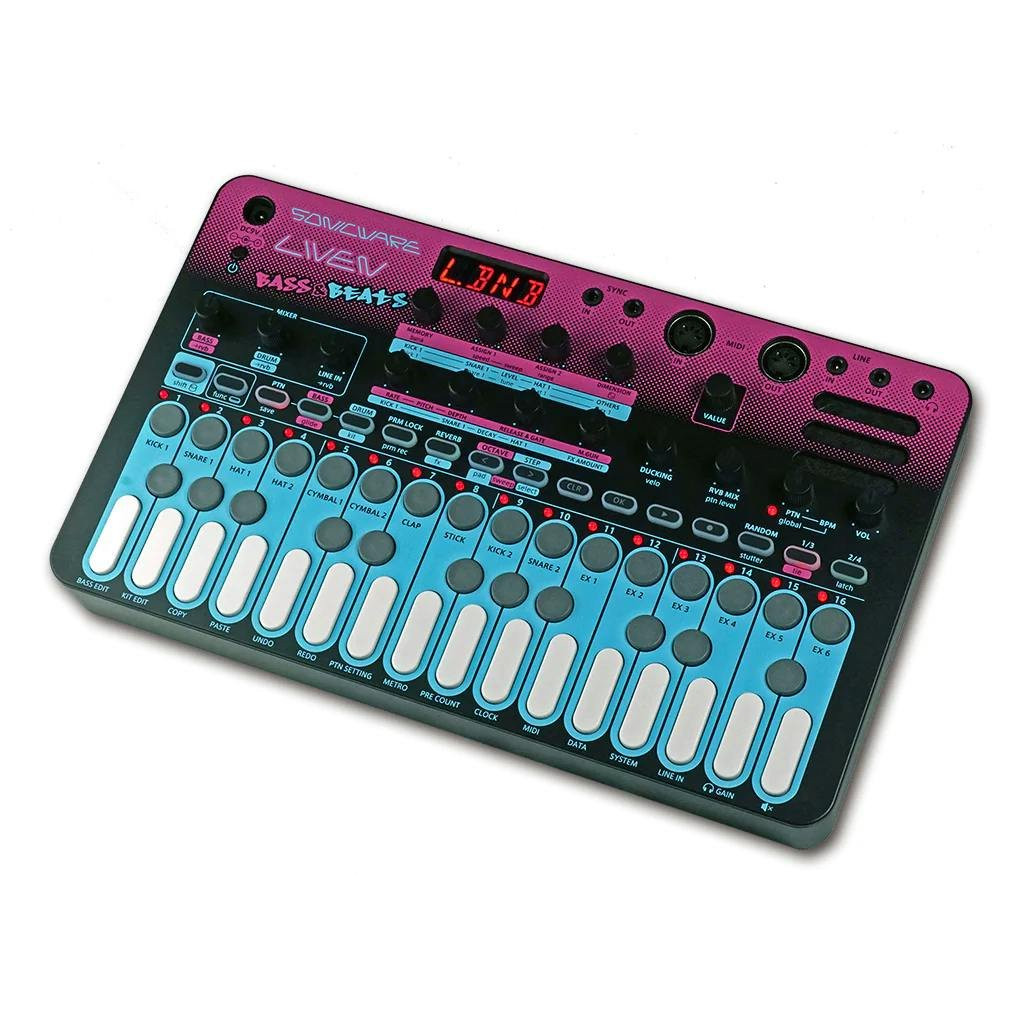
SonicWare Liven Bass and Beats Drum Machine and Bass Synth
SonicWare Liven Bass and Beats Drum Machine and Bass Synth from SonicWare is on synthforsale in our Drum Machines department. Read More product details below.
5. Erica Synths Bassline DB-01 — best for performance sequencing
The Erica Synths Bassline DB-01 pairs a forceful analogue sound engine with a performance-oriented sequencer capable of patterns up to 64 steps. It can deliver heavy subs, resonant lines and overdriven sequences while giving the player direct ways to alter the pattern rather than simply letting it loop.
This is the choice for a hardware set in which one bass machine must remain interesting over a long arrangement. Longer patterns, accents, slides, randomisation and immediate control can produce variation without rebuilding the sequence in a computer.
It is a specialist desktop instrument and expects another device to handle chords, samples or drums. The DB-01 makes most sense once you know you want a serious performance bass voice rather than a general first synth.
Best match: techno, electro and live hardware sets built around evolving bass sequences.
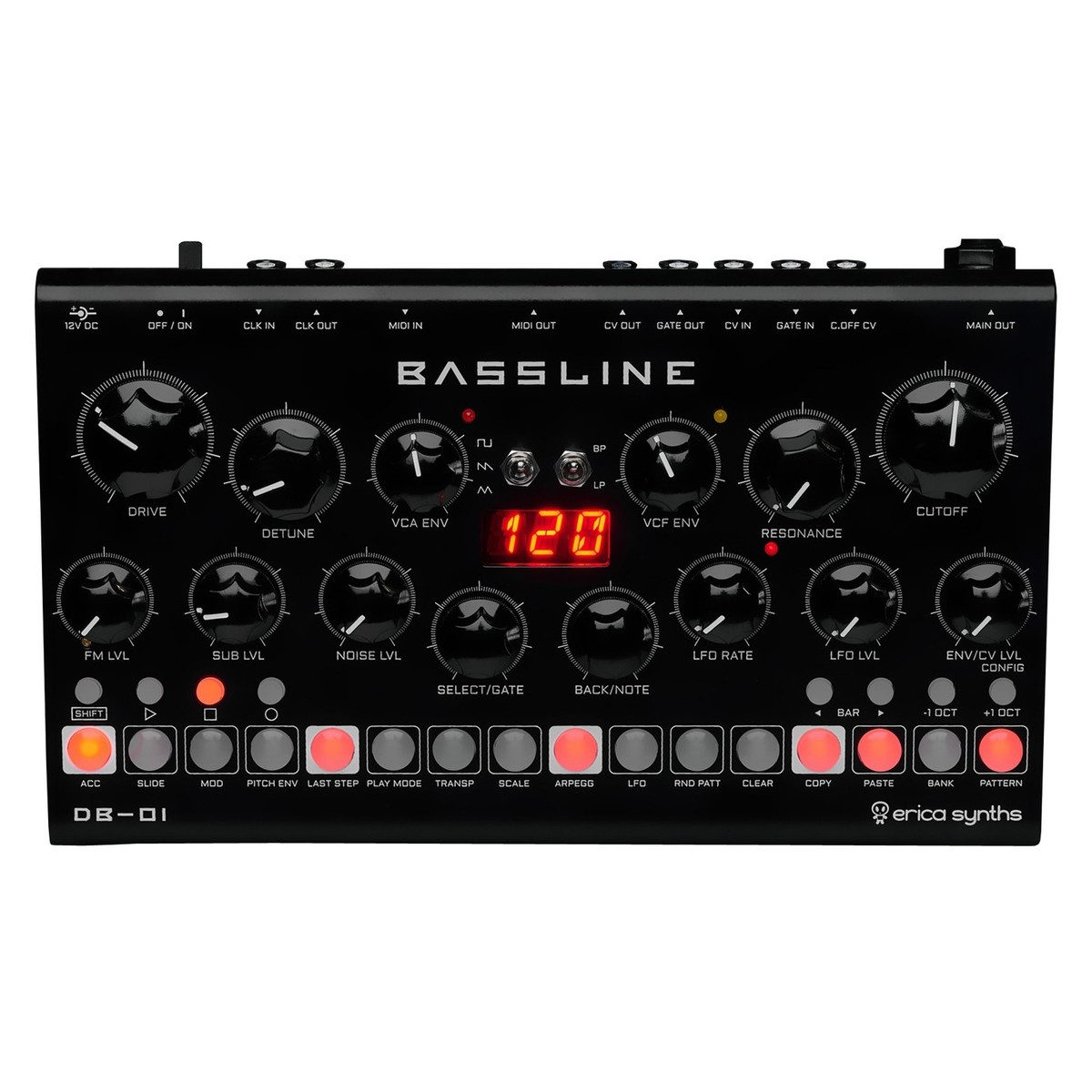
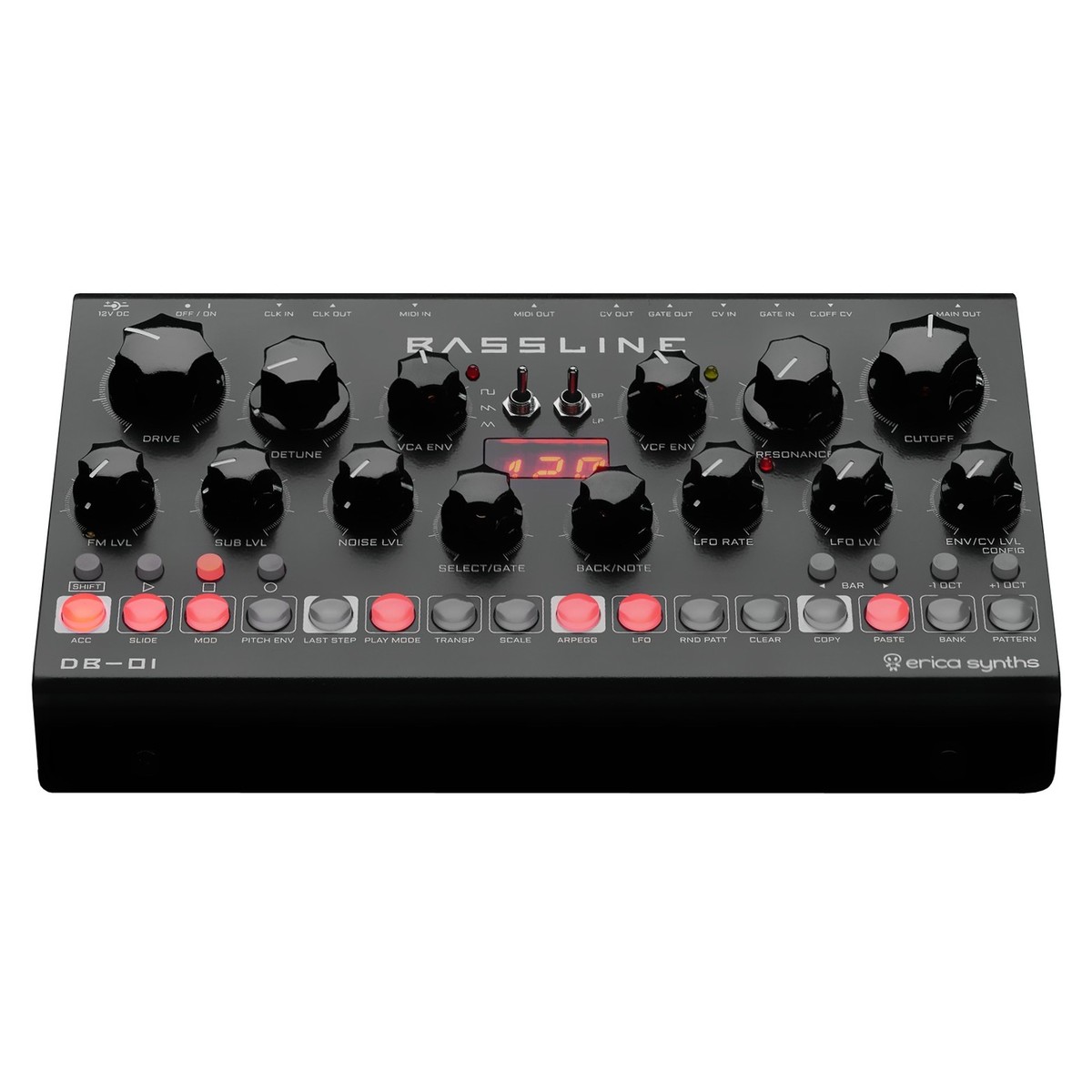
Erica Synths Bassline DB-01
Erica Synths Bassline DB-01 from Erica Synths is on synthforsale in our Synthesizers department. Read More product details below.
What matters in a bass synth?
Envelope response
Bass often needs precise timing. A fast attack and controllable decay can create punch; longer envelopes create weight and movement. Try the instrument with a simple repeated note and listen to how the envelope shapes the groove.
Filter character
Resonance can thin the fundamental on some filters and preserve it on others. Judge the sound at realistic mix levels and with drums, not only as a solo sweep.
Sequencer behaviour
Slides, ties, accents, probability and pattern length determine whether a line breathes. If the bass will be sequenced externally, check MIDI response and decide whether the internal sequencer still adds something useful.
Mixing and headroom
A bass can feel enormous alone and overwhelm a track. Reliable output level, controlled resonance and an easy way to reduce drive are practical strengths. Leave room for the kick rather than judging every patch by maximum weight.
Which one should you choose?
Choose the volca bass for a compact analogue start, the TD-3-MO for acid, the monologue for keyboard playing, Bass&Beats for combined groove sketches or the DB-01 for a more advanced performance sequencer. The right bass synth is the one whose timing and control make the low end easier to arrange, not merely the one that sounds largest in isolation.
Read next
Five of the Best Drum Machines in 2026
Five of the Best Synthesizers for Making Electronic Music in 2026
How to Connect and Synchronise Synthesizers, Drum Machines and Grooveboxes