
Description
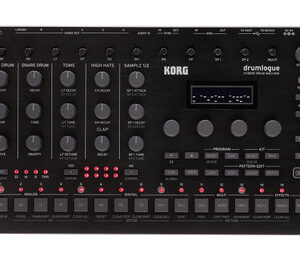
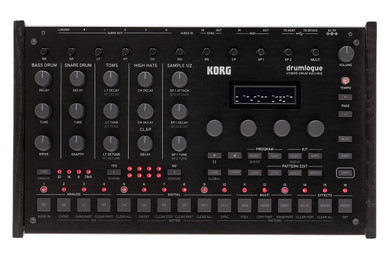
Introducing Drumlogue – the first hybrid drum machine from Korg. Combining the rich power of analogue with the flexibility of digital, Drumlogue delivers the ultimate sound for your sonic creations.
Key Features
- Threefold hybrid drum machine: analogue, digital and SDK
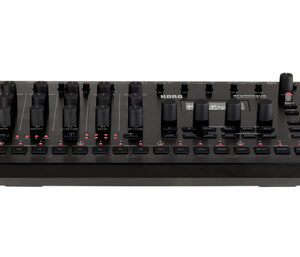
- Intuitive and easily accessible controls
- Fully customisable with a SDK for user synth voices and effects
- Exclusive Sinevibes ”Nano” synth plugin
- Powerful 64-step sequencer with chain mode
- Incredible individual and master effects
- Broad connectivity with 4 assignable outputs
The introduction of Drumlogue marks a paradigm shift for drum machines. It combines the rich and raw power of analogue, the flexibility and convenience of digital, and the deep customisation of a unique SDK. A heavy-duty dynamic sequencer, powerful effects, and intuitive controls make Drumlogue a must-have in any setup.
The power of analogue
Drumlogue features completely new analogue circuitry from legendary Korg engineer: Junichi Ikeuchi (ARP 2600 M, MS-20 Mini, ARP Odyssey). The depth and richness of its sound is on a whole new level. New analogue circuits for bass drum, snare drum, low tom and high tom provide a solid foundation, and elevate tracks with harmonic richness and a thick low end.
The versatility of digital
Drumlogue has 7 digital parts: 6 sample-based and 1 Multi Engine based. The sample-based parts can play a wide selection of pre-loaded PCM samples alongside imported user samples. These can be easily loaded into Drumlogue by connecting to a computer via USB and simply dragging and dropping into its main memory.
Endless creative potential
The wildly popular Multi Engine from Minilogue XD is made even more powerful: in addition to Variable Phase Modulation (VPM) and Noise generator engines, the Multi Engine in Drumlogue features a new user slotable to play fully-fledged synth voices – providing vast sonic possibilities never before heard on a drum machine.
Connectivity
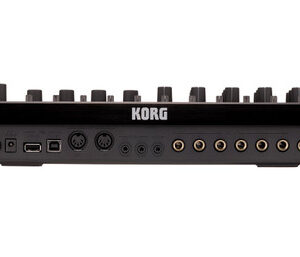
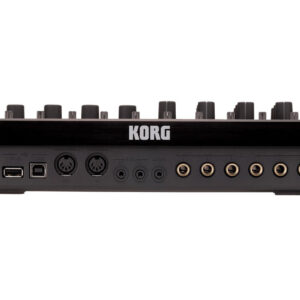
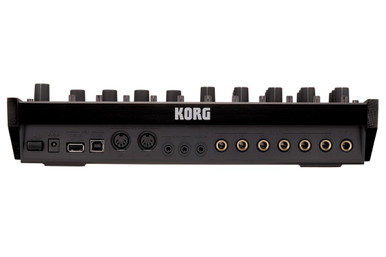
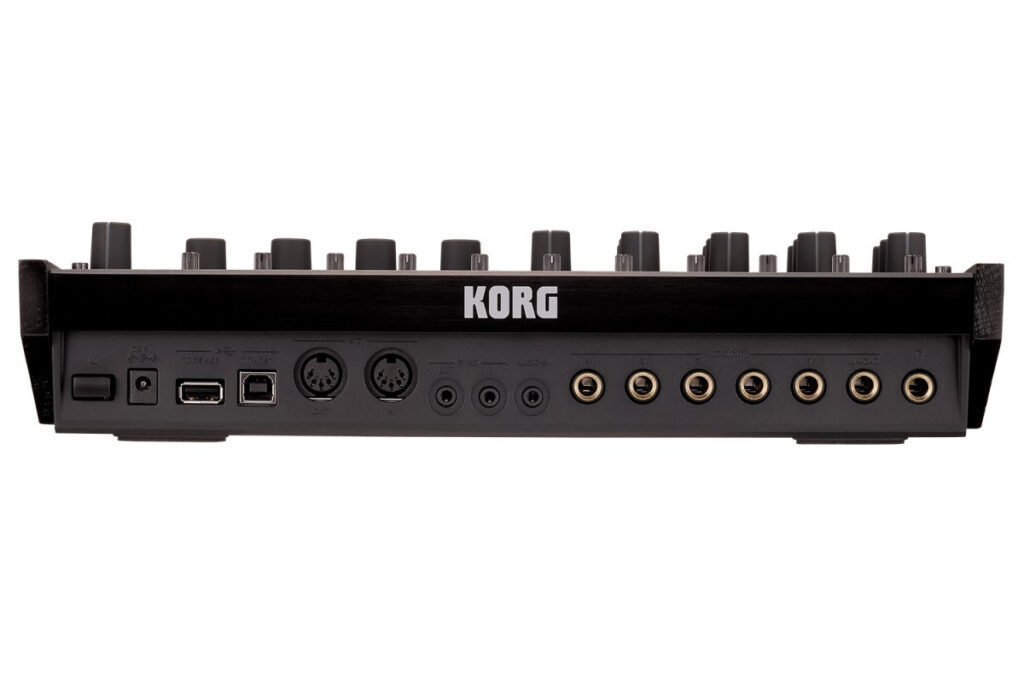
With a wide range of I/O, Drumlogue can be integrated seamlessly with your rig. A USB-A port supports connectivity with USB MIDI class-compliant devices, meaning volumes can be controlled with the faders on a nanoKONTROL 2, or sounds triggered by the pads on a nanoPAD 2. Four individual outputs are available, in addition to headphone and main L/R. Any part can be assigned to any output, allowing for expanded routing versatility with external processing and multi-track integration. It almost goes without saying that Drumlogue easily syncs with other gear via the MIDI in/out, sync in/out, or via USB MIDI
Specifications
- Polyphony: 11 voices, User synths may be played polyphonically via MIDI, the actual voice count depends on the synth’s implementation.
- Sound engine: Analogue x 4, PCM / user samples x 6, Multi Engine x 1
- Programs: 128
- Drum kits: 128
- Effects: Reverb, delay, master
- I/O: Headphones, Output (L/Mono, R, Audio, Out 1-4), Sync in/out, Audio in, audio out, USB-A (to device) for midi controllers, USB-B (to host), Power supply AC adapter (DC 9V), included
- Dimensions: 317 x 189 x 73 mm
- Weight: 1.4kg