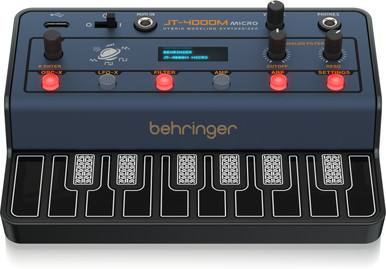
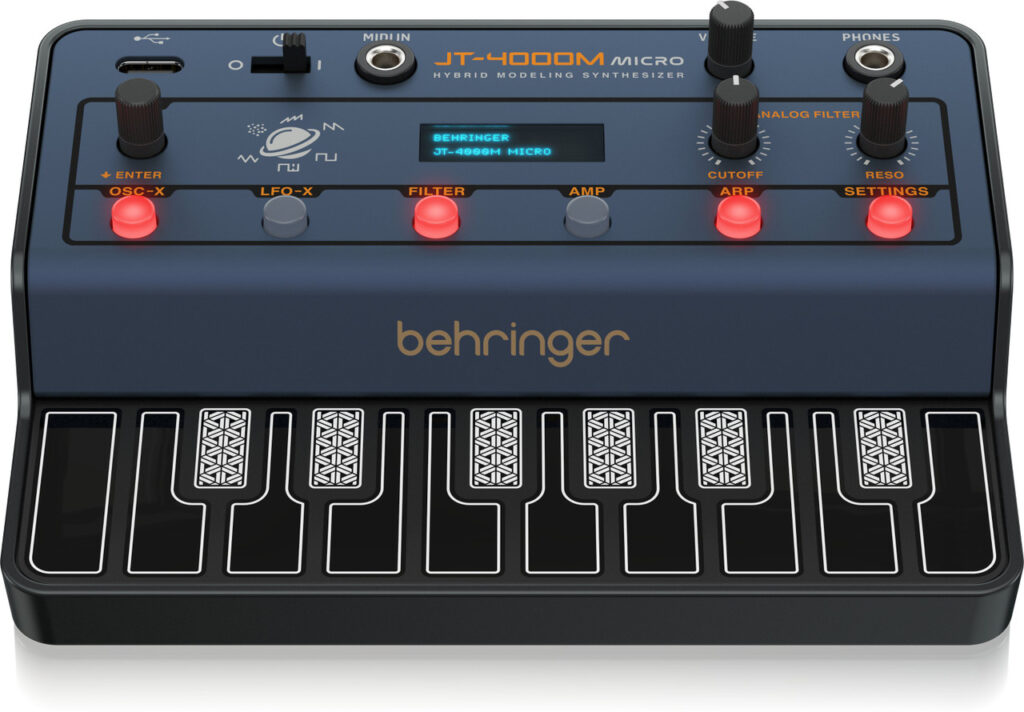
Brand
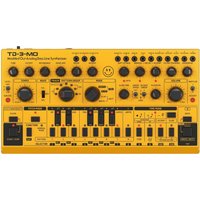
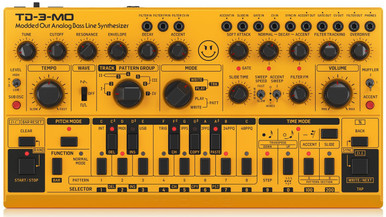
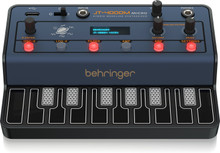
Behringer, founded by Uli Behringer in Germany, is famous for making affordable versions of classic instruments. They’re known for synth and drum machine clones like the RD-8 (808 style) and TD-3 (303 style), as well as the DeepMind synths. By lowering prices, Behringer have democratised access to legendary sounds once out of reach. They also produce mixers, interfaces and studio essentials used worldwide. Whatever your opinion, Behringer gear has enabled countless producers to get started without breaking the bank.
Category
Digital synths use digital signal processing to generate and shape sound, offering a wide palette that can range from classic synth tones to complex, modern textures. They are valued for their flexibility, stability and features such as presets, modulation options and integration with studio and live setups. If you enjoy exploring sound design with precision and versatility, digital synths provide powerful tools for creativity across many styles of music.
Keyboards are versatile electronic instruments used for learning, songwriting, production and live performance. They range from simple, portable models with built-in sounds to more advanced instruments designed for studio and stage use. If you want an accessible way to explore music across many styles, keyboards offer flexibility, convenience and creative freedom.
Keyboards and pianos cover a wide range of instruments designed for learning, creativity and performance. From portable keyboards with built-in sounds and rhythms to full digital pianos with weighted keys and authentic feel, they suit beginners and experienced players alike. Whether you are writing music, practising at home or playing live, keyboards and pianos offer flexible ways to explore melody, harmony and expression.
Semi-modular and desktop synths are compact electronic instruments designed for flexible sound creation without the need for a full modular system. Desktop synths are self-contained units that operate without a keyboard, while semi-modular synths include patch points that allow internal routing to be reconfigured or expanded using patch cables.
These instruments are popular with producers and musicians who want hands-on control, creative routing, and powerful sound design in a small footprint. They work well in studio and live setups, either as standalone sound sources or integrated with modular systems, MIDI controllers, and DAWs, making them a versatile choice for electronic, experimental, and modern music production.
Synths are electronic instruments designed for creating and shaping sound, from classic analogue-style tones to modern digital textures. Used for basslines, leads, pads and experimental sound design, they play a central role in many styles of music. If you enjoy hands-on creativity and exploring new sonic ideas, synths offer a powerful and expressive way to make music.
Synths and workstations are powerful instruments built for sound creation, composition and performance. Synths focus on shaping and designing sounds, while workstations combine synthesis with sequencing, effects and performance controls in a single unit. If you want an all-in-one instrument for writing, arranging and playing complete pieces of music, synths and workstations offer deep creative control and flexibility.
Tags
Desktop refers to instruments designed for tabletop or studio use rather than keyboard-based performance. Desktop units are compact, self-contained devices controlled via knobs, buttons, sequencers, or external controllers, making them ideal for studio workflows and modular setups.
Digital is sound generation and processing based on digital signal processing rather than analogue circuitry. It is used for precise control, stable tuning, patch memory, and complex sound design that would be difficult to achieve with purely analogue systems. For example, a digital instrument might be used to create detailed evolving textures or realistic emulations while storing and recalling complete sound setups instantly.
Hybrid is a design approach that combines analogue and digital technologies within a single instrument. Hybrid instruments use analogue circuitry for character and warmth alongside digital control or processing for stability, flexibility, and expanded functionality.
Modular is a synthesis format made up of separate, interchangeable modules that are patched together to create custom signal paths. It allows complete freedom over sound design, sequencing, and modulation, with each system built to suit the user’s workflow and creative approach.
Portable keyboards and pianos are lightweight, compact instruments designed for easy transport without sacrificing playability. They deliver a wide range of sounds, built-in features, and practice tools, making them popular with beginners, students, and travelling musicians.
Many models include battery operation, onboard speakers, and connectivity options, so you can play anywhere — at home, on stage, or on the move. Despite their smaller size, portable instruments often feature weighted or touch-sensitive keys for expressive playing.
Perfect for learning, rehearsing, or performing, portable keyboards and pianos combine convenience with versatility.
Semi-modular is an instrument design that combines a pre-wired internal signal path with the option to reroute and expand using patch connections. It is used to provide immediate, playable sound while still allowing deeper experimentation through external modulation and signal routing. For example, a semi-modular instrument can be played straight away as a complete synth, then patched into other modules or controllers to explore more complex sound design.
A synthesizer is an electronic instrument that generates and shapes sound using oscillators, filters, envelopes, and modulation sources. It allows sounds to be created from scratch, altered in real time, and controlled through keys, sequencers, or external controllers. Synthesizers are used to produce everything from basses and leads to pads, textures, and experimental sound design in both studio production and live performance.
Synths are electronic instruments used to create and shape sound using oscillators, filters, envelopes, and modulation. They are used to produce basses, leads, pads, and textures that cannot be created easily with traditional instruments. For example, a synth might be used to design a deep bass line that evolves over time or a wide pad sound that fills space and adds atmosphere to a track.
A voice is a single complete sound path within an instrument, typically made up of an oscillator, filter, amplifier, and modulation. It determines how many notes can be played at once and how each note is shaped. For example, an instrument with multiple voices can play chords and layered parts, while each voice handles the sound of one note independently.