Category
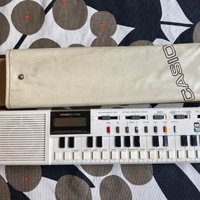
Keyboards are versatile electronic instruments used for learning, songwriting, production and live performance. They range from simple, portable models with built-in sounds to more advanced instruments designed for studio and stage use. If you want an accessible way to explore music across many styles, keyboards offer flexibility, convenience and creative freedom.
Digital pianos offer the feel and sound of a traditional piano with the convenience and flexibility of modern technology. Designed to replicate the touch of real keys and the tone of acoustic instruments, they are ideal for practice, performance and recording in a wide range of environments.
What makes digital pianos so appealing is their versatility. With features like weighted keys, built-in sounds, headphone outputs and connectivity options, they allow you to play quietly, record easily and integrate with other equipment. Whether you choose a portable model or a full furniture-style instrument, they provide a reliable and consistent playing experience.
Digital pianos are simply great — expressive, practical and easy to use. Whether you’re a beginner or an experienced player, they offer a flexible and enjoyable way to play, learn and create music, and you will not be disappointed.
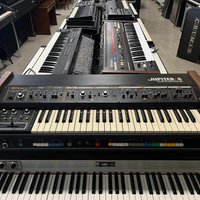
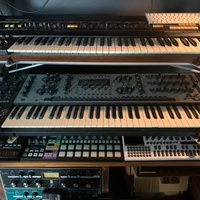
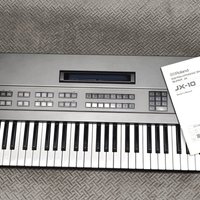
Synths are electronic instruments designed for creating and shaping sound, from classic analogue-style tones to modern digital textures. Used for basslines, leads, pads and experimental sound design, they play a central role in many styles of music. If you enjoy hands-on creativity and exploring new sonic ideas, synths offer a powerful and expressive way to make music.
Tags
Eurorack is a modular synthesis format with standardised dimensions, power connections, and signal levels. Eurorack systems are built from individual modules mounted in cases, allowing users to create highly customisable instruments tailored to specific sound design and performance needs.
Semi-modular is an instrument design that combines a pre-wired internal signal path with the option to reroute and expand using patch connections. It is used to provide immediate, playable sound while still allowing deeper experimentation through external modulation and signal routing. For example, a semi-modular instrument can be played straight away as a complete synth, then patched into other modules or controllers to explore more complex sound design.
A sequencer is a tool used to record, arrange, and play back musical events in a defined order. It allows notes, rhythms, and parameter changes to be programmed step by step or recorded in real time, creating structured patterns and loops. Sequencers are used to keep multiple instruments in sync, build evolving arrangements, and automate movement within a sound. For example, a sequencer might be used to create a repeating bass pattern while gradually changing filter or modulation values to add variation over time.
A synthesizer is an electronic instrument that generates and shapes sound using oscillators, filters, envelopes, and modulation sources. It allows sounds to be created from scratch, altered in real time, and controlled through keys, sequencers, or external controllers. Synthesizers are used to produce everything from basses and leads to pads, textures, and experimental sound design in both studio production and live performance.