Brand
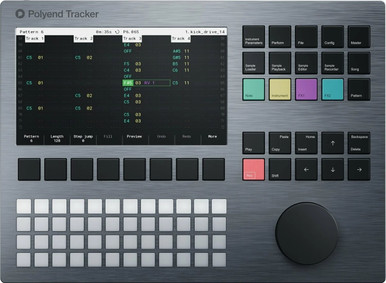
Polyend is a Polish electronic instrument company best known for creative, performance-focused hardware that sits somewhere between synthesis, sequencing, and experimental composition. The brand built its reputation on intuitive interfaces and unconventional workflows that encourage exploration rather than traditional menu-driven programming.
They’re particularly known for grid-based instruments and grooveboxes that combine sequencing, sampling, and synthesis in a very visual, hands-on way. Polyend gear is popular with electronic musicians who like to build patterns, textures, and evolving arrangements quickly, often outside a DAW or alongside modular and live setups.
For SynthForSale, Polyend fits into the modern groovebox, sequencer, and creative production category — instruments designed for musicians who value experimentation, immediacy, and unique ways of making music rather than classic keyboard-led synthesis.
Category
Samplers are instruments that record, manipulate and play back audio, allowing you to turn sounds into playable and rhythmic elements. Used for beats, textures, vocals and experimental sound design, they are central to many production and live performance workflows. If you enjoy building music from captured sounds and shaping them in creative ways, samplers offer a powerful and hands-on approach to making music.
Sequencers are tools used to record, arrange and play back musical notes, patterns and rhythms in a structured way. Commonly found in synths, drum machines and standalone units, they allow you to build evolving sequences, loop ideas and create complete compositions step by step. If you enjoy hands-on music creation and pattern-based workflows, sequencers offer a powerful way to turn ideas into finished tracks.
Tags
Polyphonic is the ability to play multiple notes at the same time. Polyphonic instruments allow chords, layered harmonies, and complex musical passages, making them suitable for pads, harmonic textures, and expressive performance.
A sampler is an instrument that records, stores, and plays back audio recordings as playable sounds. It allows samples to be triggered, pitched, sliced, and processed, turning recorded material into musical elements. Samplers are widely used for rhythm creation, melodic parts, and sound design in both studio production and live performance.
A sequencer is a tool used to record, arrange, and play back musical events in a defined order. It allows notes, rhythms, and parameter changes to be programmed step by step or recorded in real time, creating structured patterns and loops. Sequencers are used to keep multiple instruments in sync, build evolving arrangements, and automate movement within a sound. For example, a sequencer might be used to create a repeating bass pattern while gradually changing filter or modulation values to add variation over time.
A synth is an electronic instrument that creates sound through electronic signal generation and shaping. It is used to produce basses, leads, pads, textures, and effects by controlling oscillators, filters, envelopes, and modulation. Synths are central to electronic music and modern production, offering flexible sound design for both studio work and live performance.
A Workstation is a professional keyboard instrument that combines high-quality sounds with powerful sequencing, recording, and performance features. More than just a keyboard, it acts as a complete music production hub, allowing players to compose, arrange, and perform without needing extra equipment.
Workstations typically include a wide range of instrument voices, drum kits, effects, and built-in sequencers for layering and arranging tracks. Many also offer sampling, audio recording, and deep integration with MIDI or computer software.
Favoured by composers, producers, and live performers, workstations are versatile tools that bring together creativity and practicality in one instrument.