Brand
Korg, based in Japan, has always been known for mixing the experimental with the practical. From the MS-20 with its gritty filters to the M1 workstation and the more recent Minilogue and Volca series, Korg constantly innovate. They offer quirky pocket synths as well as professional stage keyboards. Their gear often encourages exploration and happy accidents. Korg instruments reward curiosity and have been favourites for decades among adventurous musicians.
Category
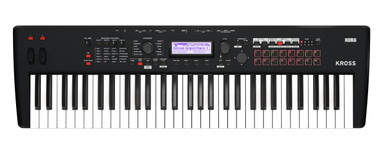
Keyboards are versatile electronic instruments used for learning, songwriting, production and live performance. They range from simple, portable models with built-in sounds to more advanced instruments designed for studio and stage use. If you want an accessible way to explore music across many styles, keyboards offer flexibility, convenience and creative freedom.
Digital pianos offer the feel and sound of a traditional piano with the convenience and flexibility of modern technology. Designed to replicate the touch of real keys and the tone of acoustic instruments, they are ideal for practice, performance and recording in a wide range of environments.
What makes digital pianos so appealing is their versatility. With features like weighted keys, built-in sounds, headphone outputs and connectivity options, they allow you to play quietly, record easily and integrate with other equipment. Whether you choose a portable model or a full furniture-style instrument, they provide a reliable and consistent playing experience.
Digital pianos are simply great — expressive, practical and easy to use. Whether you’re a beginner or an experienced player, they offer a flexible and enjoyable way to play, learn and create music, and you will not be disappointed.
Tags
Analogue is sound generation based on physical electronic circuits such as oscillators, filters, and amplifiers rather than digital processing. It produces continuously variable signals with natural drift, saturation, and harmonic character, giving sounds a distinctive warmth and movement. Analogue instruments are valued for their hands-on control, immediacy, and expressive response in both studio and live performance environments.
Cables are used to connect instruments, controllers, and equipment so that audio, control signals, and data can be transmitted reliably. They are essential for routing sound, synchronising devices, and enabling communication between hardware. For example, cables are used to connect a synthesiser to speakers, link devices via MIDI or USB, or patch modules together in a modular system.
Drum covers electronic drum machines and rhythm instruments used to create beats, patterns, and percussive sequences. These instruments allow sounds to be programmed, synthesised, sampled, and triggered in real time, often with step sequencers, performance pads, and hands-on controls. They are central to electronic music production and live performance, providing tight timing, repeatable grooves, and creative control over rhythm, dynamics, and texture.
Modular is a synthesis format made up of separate, interchangeable modules that are patched together to create custom signal paths. It allows complete freedom over sound design, sequencing, and modulation, with each system built to suit the user’s workflow and creative approach.