Brand
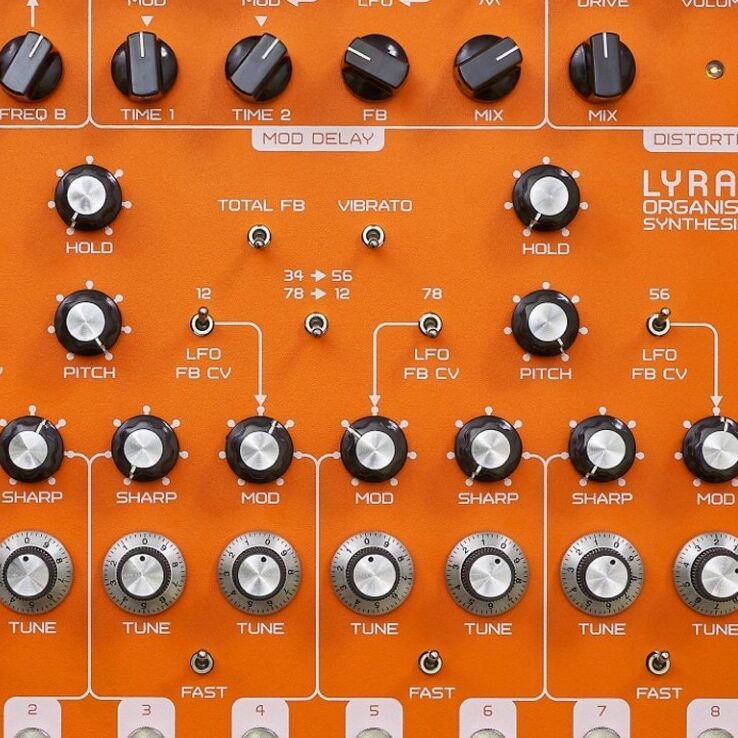
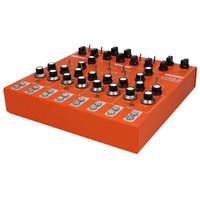
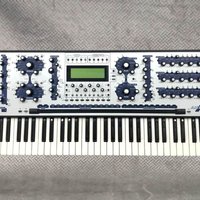
SOMA laboratory are respected makers in the world of musical instruments, specialising in keyboards, synths or electronic gear. They bring their own identity through design and sound, offering instruments that stand out for reliability and creativity. Musicians value SOMA laboratory for producing gear that delivers professional results. With a focus on quality and innovation, SOMA laboratory continues to play a trusted role in the music industry.
Category
Synths are electronic instruments designed for creating and shaping sound, from classic analogue-style tones to modern digital textures. Used for basslines, leads, pads and experimental sound design, they play a central role in many styles of music. If you enjoy hands-on creativity and exploring new sonic ideas, synths offer a powerful and expressive way to make music.
Tags
8-voice indicates that an instrument can play up to eight notes simultaneously. It is used to perform chords, layered harmonies, and sustained parts without notes cutting off. For example, an 8-voice synthesiser allows complex chord voicings or evolving pad sounds to be played smoothly while maintaining clarity and balance across each note.
Analogue is sound generation based on physical electronic circuits such as oscillators, filters, and amplifiers rather than digital processing. It produces continuously variable signals with natural drift, saturation, and harmonic character, giving sounds a distinctive warmth and movement. Analogue instruments are valued for their hands-on control, immediacy, and expressive response in both studio and live performance environments.
Analogue is sound generation based on physical electronic circuits such as oscillators, filters, and amplifiers rather than digital processing. It is used for its continuously variable signals, natural movement, and harmonic character that respond directly to hands-on control. For example, an analogue instrument might be used to create a warm bass line or an evolving lead sound with subtle changes in tone and texture as it is played.
New Gear is unused and in original condition, supplied as it leaves the manufacturer. It is chosen for guaranteed reliability, full functionality, and the assurance of manufacturer support. For example, buying new ensures access to the latest design revisions, included accessories, and official warranty coverage.
A synth is an electronic instrument that creates sound through electronic signal generation and shaping. It is used to produce basses, leads, pads, textures, and effects by controlling oscillators, filters, envelopes, and modulation. Synths are central to electronic music and modern production, offering flexible sound design for both studio work and live performance.
A synthesiser is an electronic instrument used to generate and shape sound using oscillators, filters, envelopes, and modulation. It is used to create basses, leads, pads, and evolving textures for music production and performance. For example, a synthesiser might be used to design a pulsing bass line that drives a track or a layered pad sound that adds depth and movement to a composition.
A voice is a single complete sound path within an instrument, typically made up of an oscillator, filter, amplifier, and modulation. It determines how many notes can be played at once and how each note is shaped. For example, an instrument with multiple voices can play chords and layered parts, while each voice handles the sound of one note independently.