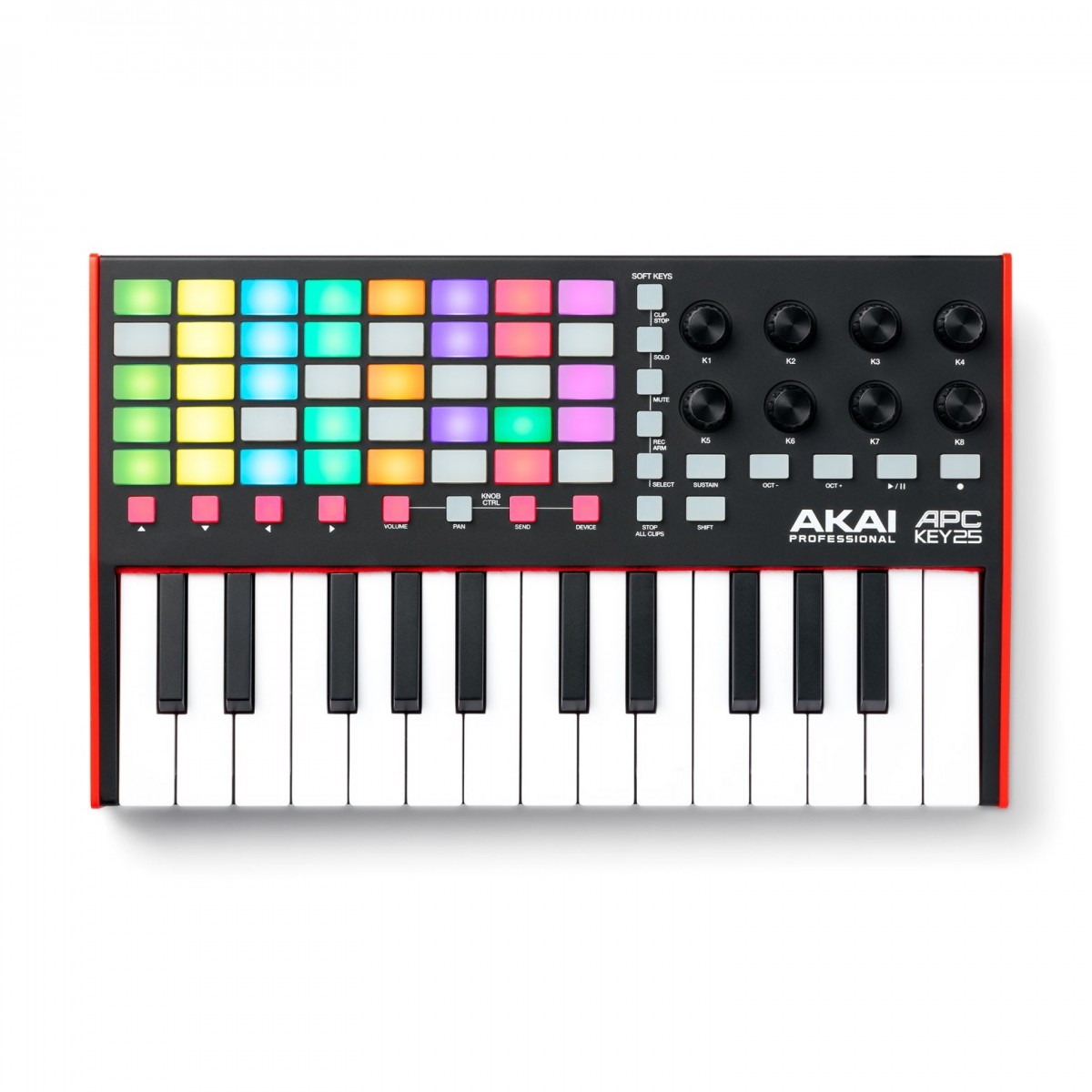
The Akai Professional APC Key 25 MKII Ableton MIDI Controller combines the power and versatility of Akais MIDI controllers with deep integration for Ableton DAWs (digital audio workstations). Building on the design of previous APC Key controllers the MKII features a 5×8 pad matrix with 40 new backlit pads with vivid RGB colours that represent Ableton Live session clips. Express yourself with a wide variety of controls including the Gen 2 Dynamic Keybed for creating chords arpeggios and soundscapes and everything in between. Eight assignable endless 360 rotary knobs are great for controlling volume automation and other parameters within Ableton and other DAWs. Navigate through your clip matrix with ease using the four directional arrows and create captivating live performances/sequences using the dedicated scene launch buttons. Get started straight away with the inclusion of Ableton Live Lite music software packed with powerful instruments mixing effects and everything else you need to create music. Also included is the virtual instrument pack from the award-winning AIR Music Technology; featuring Hybrid 3 (a powerful polyphonic analog synthesizer) Mini Grand (acoustic piano) and Velvet (vintage electro piano).
Search results for: “Akai Tom Cat”
-
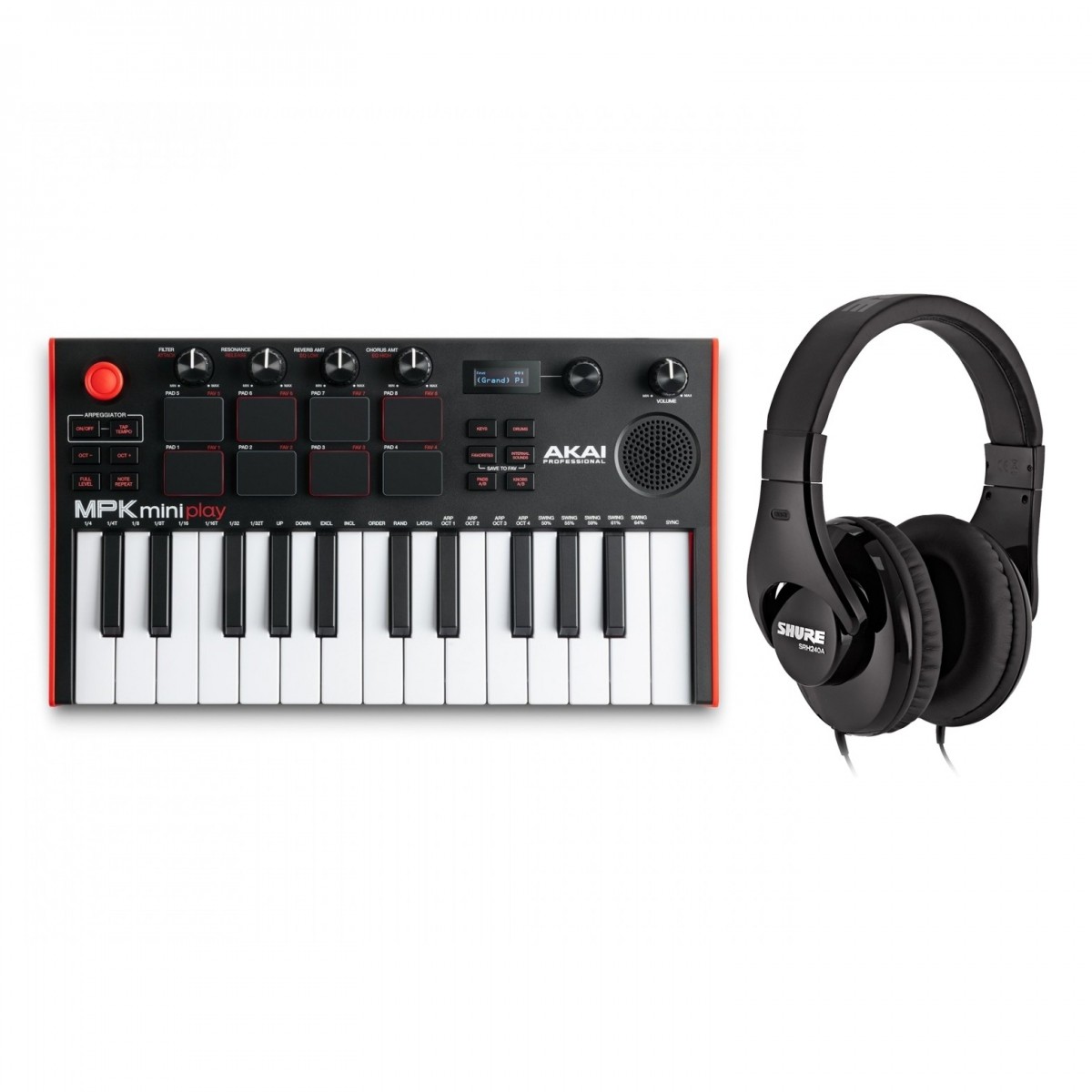
Akai Professional MPK Mini Play MK3 Keyboard + SRH240A Headphones
The Akai Professional MPK Mini Play MK3 Keyboard and MIDI Controller is the next-level upgraded MIDI keyboard in a compact and portable housing for travelling musicians. Building on the excellent reputation of previous models the MK3 introduces several upgraded parts to improve performance playability and functionality. With the MPK Mini Play MK3 you can perform exactly as you mean to with complete authenticity thanks to the upgraded Gen 2 keybed as well as hear back exactly how your music will sound with particular attention to the low-end through the redeveloped onboard speaker. Eight improved MPC-style pads give you tactile control over the percussion elements of your performance for an improved response as well as extended durability over time. This bundle also includes a pair of Shure stereo headphones for monitoring your sound while you work. Combining playability with functionality and portability the MPK Mini Play MK3 is the ideal tool for music creation anywhere you go. The small footprint class-compliant USB or battery-powered keyboard offers up to 14 hours of playtime for completely wireless music creation. For musicians of all abilities the MPK Mini Play MK3 comes bundled with several software solutions including MPC Beats for music production as well as Melodics for your musical education. With over 128 internal sounds youll never run out of choice when creating the music youve always wanted to. Take control of your sessions and use the Akai Professional MPK Mini Play MK3 as a controller using the four assignable knobs controlling MIDI parameters of your sessions including Pan automation and precise editing. Perfect for producers and musicians the MPK MK3 offers a new unique way to the music youve always wanted to.
-
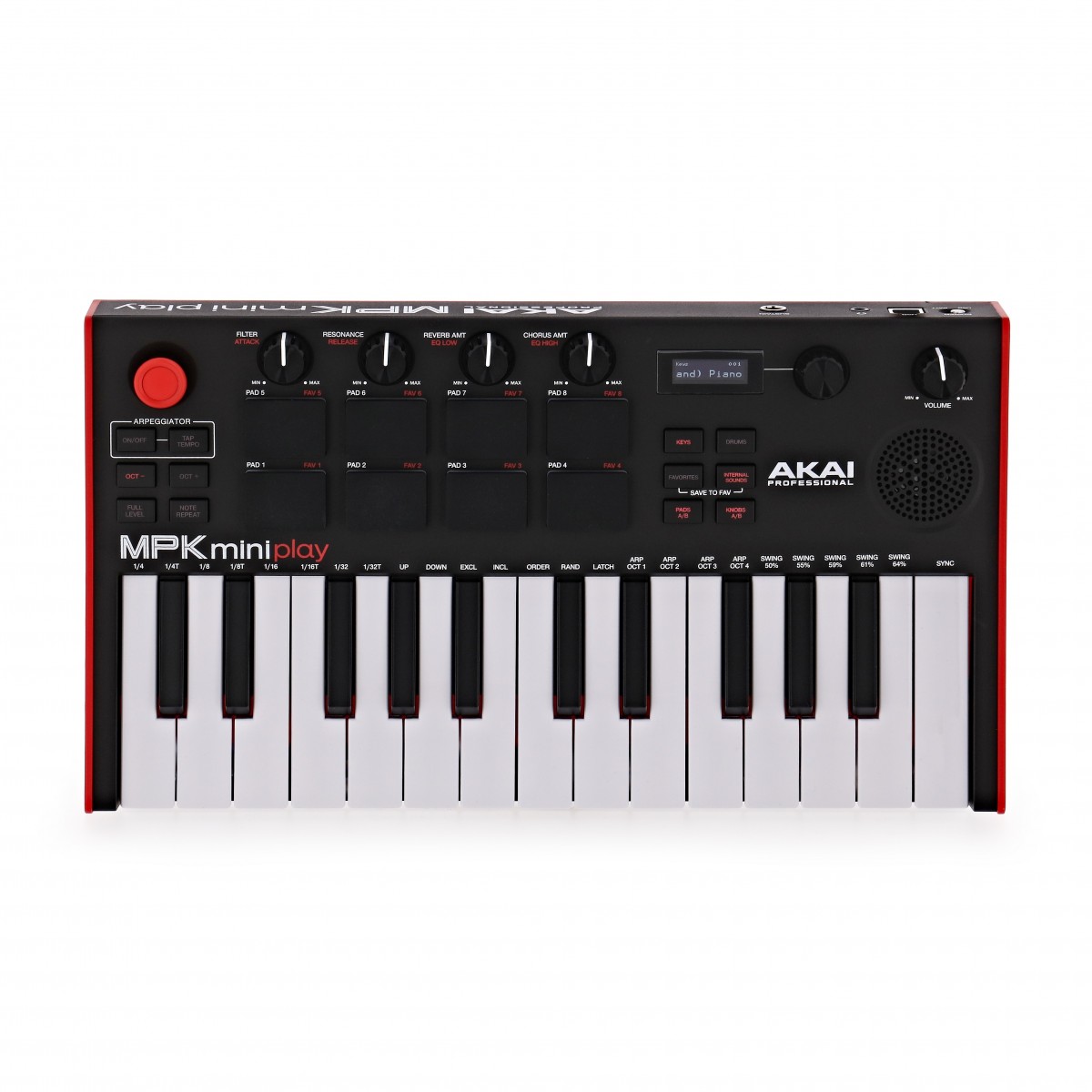
Akai Professional MPK Mini Play MK3 Keyboard and MIDI Controller
The Akai Professional MPK Mini Play MK3 Keyboard and MIDI Controller is the next-level upgraded MIDI keyboard in a compact and portable housing for travelling musicians. Building on the excellent reputation of previous models the MK3 introduces several upgraded parts to improve performance playability and functionality. With the MPK Mini Play MK3 you can perform exactly as you mean to with complete authenticity thanks to the upgraded Gen 2 keybed as well as hear back exactly how your music will sound with particular attention to the low-end through the redeveloped onboard speaker. Eight improved MPC-style pads give you tactile control over the percussion elements of your performance for an improved response as well as extended durability over time. Combining playability with functionality and portability the MPK Mini Play MK3 is the ideal tool for music creation anywhere you go. The small footprint class-compliant USB or battery-powered keyboard offers up to 14 hours of playtime for completely wireless music creation. For musicians of all abilities the MPK Mini Play MK3 comes bundled with several software solutions including MPC Beats for music production as well as Melodics for your musical education. With over 128 internal sounds youll never run out of choice when creating the music youve always wanted to. Take control of your sessions and use the Akai Professional MPK Mini Play MK3 as a controller using the four assignable knobs controlling MIDI parameters of your sessions including Pan automation and precise editing. Perfect for producers and musicians the MPK MK3 offers a new unique way to the music youve always wanted to. The MPK Mini also now supports NKS integration allowing you to use Native Instruments plugins to their full potential. Also included is your choice of one of three Komplete Select bundles each tailored to different production styles.
-
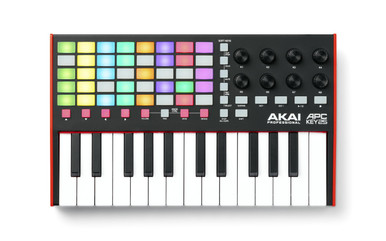
Akai APC Key 25 MKII MIDI Keyboard & Controller
Here's what Akai say
The new APC Key 25 Mk2 is a versatile and compact MIDI keyboard controller that seamlessly delivers the power to perform and create anywhere, for the perfect combination of clip launching and composing in Ableton Live. Bring your original melodies, chord structures and layered harmonic ideas to life with APC Key 25.
Key Features
- 5×8 Pad Grid Matrix Featuring 40 RGB-backlit Pads
- 25-Key Gen 2 Dynamic Keybed
- 8 Assignable Endless 360 Rotary Knobs
- Dedicated Scene Launch Buttons
- 4 Directional Arrows to Navigate Clip Matrix
- Includes Ableton Live Lite Music Production Software (Mac/PC)
40 BRILLIANT RGB-BACKLIT PADS
APC Key 25 Mk2 features 40 new RGB-backlit pads for a brilliant and precise representation of your Ableton Live session clips. Whether in the studio or on stage, the scrollable RGB-enabled pad matrix will boldly shine through. In the heart of your most creative moment, launch and activate loops, instruments, vocals, and more with confidence.
LAUNCH AN IMMERSIVE MUSIC-CREATION EXPERIENCE
APC Key 25 allows you to trigger individual loops, samples, and melodies or entire Scenes for the most imaginative and inspirational music creation performances. 40 RGB-backlit pads on a customizable 5×8 grid accurately reflect clips from your Ableton Live Session and are always in reach for the ultimate navigational experience, even with large sessions.
YOUR MELODIC PERFORMANCE
The APC Key 25 authentically brings out your melodic ideas. Dive into Ableton’s powerful instruments and express your music on your own terms. Create your own bass lines with AIR Technology’s Hybrid 3, and layer dynamic piano sounds with the Mini Grand Virtual Instrument. Combined with Ableton's Scene and Clip launching workflow, APC Key 25 allows you to add original performances to your tracks.
GEN 2 KEYBED – PERFORMANCE AND FEEL
APC Key 25 features 25 keys with the Gen 2 Dynamic Keybed for melodic and harmonic music creation. Play your own chords, arpeggios, solos, and soundscapes with the incredibly versatile keys. Use the Octave Up/Down buttons for expanded note range. The dedicated Sustain button adds space and dimension to your playing, ensuring the APC Key 25 is ready for any musical moment.
A MORE POWERFUL ABLETON EXPERIENCE
Enjoy serious hands-on control for a powerfully creative Ableton Live experience. APC Key 25 features 8 endless 360-knobs to adjust volume, pan, insert effect sends and more for smooth, intuitive control of your sessions. Tweak reverbs, sweep filters, or write automation that will bring your music to life. Shape your sounds instantly using the assignable endless 360-knob controls.
PRECISE INTUITIVE CONTROL
Create your own distinct sounds with ease. With Device Mode, the APC Key 25 knobs are automatically mapped to the eight Macro Controls of Ableton Live’s selected device. Control multiple parameters with one knob to generate totally innovative sounds. Get more hands-on control with Soft Keys for easy access to Solo, Mute, Stop and Record arm functions.
LAUNCH WITH ABLETON LIVE LITE
APC Key 25 includes Ableton Live Lite software. Start creating and making music with this powerful clip launching DAW packed with instruments, mixing effects, samples, and the ability to record and mix audio and MIDI. Ableton Live Lite offers all the tools to transform your musical ideas into exciting songs and performances.
ELEVATE YOUR SOUND WITH AIR
Elevate your sound with the included virtual instrument pack from award-winning sound design company AIR Music Technology. In addition to Ableton Live Lite, APC Key 25 also includes multiple world-class plugin instruments including Hybrid 3 — a powerful polyphonic analog synth, Mini Grand — an acoustic piano instrument, and Velvet — a vintage electric piano instrument.
-
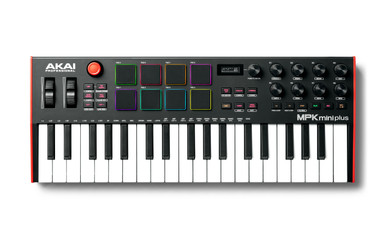
Akai MPK Miniplus keyboard Controller
The Akai MPK Mini Plus takes portable music production to the next level, offering musicians and producers complete creative control in a compact yet powerful design. Featuring a 37 key Gen 2 Dynamic Keybed, dedicated transport controls, and extensive connectivity options, this MIDI controller is built for seamless integration with studio setups and live performances. The MPK Mini Plus enhances workflow with intuitive hands on controls, including 8 RGB backlit drum pads, pitch bend and modulation wheels, and an assignable joystick. Advanced connectivity options such as CV/Gate and 5 pin MIDI I/O ensure compatibility with a wide range of hardware and software. Additionally, the onboard step sequencer allows for standalone operation, making it an ideal tool for spontaneous music creation. Bundled with MPC Beats DAW and an extensive sound library, the MPK Mini Plus is perfect for both beginners and experienced musicians looking to expand their creative possibilities.
Key Features:
- 37 key Gen 2 Dynamic Keybed:
Provides an extended range with improved velocity response for expressive and dynamic performances. - 8 RGB backlit Drum Pads:
Velocity sensitive pads allow for responsive drum programming, sample triggering, and parameter control. - Advanced Connectivity:
Includes USB Type B, CV/Gate outputs, MIDI DIN In/Out, and sustain input for extensive integration with hardware and software. - Native Instruments NKS support:
AKAI MPK Keyboards now support Native Instruments NKS, this is a game changer with NI plug ins, allowing you to get making music fast!
Choose Your Exclusive NI Bundle:
Akai Professional and Native Instruments have partnered together to bring NKS integration to the MPK Controller series, including the world’s most popular MPK Mini MK3, Play, Plus, and MPK249. Experience the seamless connection between your MPK controller and NI’s legendary sounds with NKS for yourself with your free Komplete 15 Select Bundle of synths, sampled instruments, and studio effects, all ready to Kontrol with your MPK.
Expanded Creative Control:
With dedicated transport controls, the MPK Mini Plus streamlines your workflow by providing direct access to essential DAW functions. Play, stop, record, and loop seamlessly without needing to switch between your MIDI controller and computer. The 8 assignable rotary knobs allow for hands on manipulation of effects, filters, and automation, ensuring an immersive production experience.
Enhanced Playability and Expression:
The MPK Mini Plus offers a 37 key Gen 2 Dynamic Keybed, designed for greater sensitivity and wider velocity response. This provides a more expressive and natural playing experience, making it ideal for melodic composition and chord progressions. The addition of pitch bend and modulation wheels, along with an assignable joystick, further enhances the ability to shape and sculpt sounds in real time.
Standalone Sequencing and Performance:
Featuring a built in step sequencer, the MPK Mini Plus enables quick and easy creation of melodic patterns and drum sequences without requiring a computer. Capture ideas on the fly and experiment with polyphonic sequencing for dynamic, evolving compositions. With its versatile connectivity, including CV/Gate outputs and MIDI I/O, this controller integrates effortlessly with modular and standalone synth setups.
Specifications:
- Connectivity: USB Type-B, CV/Gate outputs, MIDI DIN In/Out, sustain input
- Power: USB bus-powered or via wall adapter
- Keys: 37-key Gen 2 Dynamic Keybed
- Drum Pads: 8 RGB-backlit velocity-sensitive pads
- Knobs: 8 assignable 360° rotary knobs
- Dimensions: 45.11 cm x 18.0 cm x 5.2 cm
- Weight: 1.26 kg
- 37 key Gen 2 Dynamic Keybed:
-
B Stock Korg Nautilus 73 04
The Korg NAUTILUS is the ultimate performance synthesiser and workstation, offering an unprecedented range of sounds and expressive capabilities. Boasting nine dedicated sound engines, it delivers authentic pianos, electric pianos, organs, analog and physical modelling synthesis, and more. NAUTILUS redefines creativity with its intuitive user interface, dynamic controls, and real-time knobs for immediate sound manipulation. Musicians can explore unique, current, and standard sounds, from rare global instruments to modern electronic kits, all with seamless transitions and expansive sonic depth. Its eight-inch colour TouchView display provides detailed visual feedback and interactive control, while Set List mode, arpeggiator, and drum track functions make live performance effortless. With a 16-track MIDI sequencer, 16-track audio recorder, Open Sampling System, and powerful onboard effects, NAUTILUS supports complete music production in a single instrument. Available in 88-key weighted, 73-key light-touch, and 61-key models, it combines superb playability with distinctive design, making it a commanding presence both in the studio and on stage.
Key Features
- Nine Sound Engines:
Covering acoustic and electric pianos, organs, analog modelling, FM and physical synthesis, providing enormous expressive power for any style of music. - Realtime Control:
Six assignable knobs and a dynamics control enable immediate, intuitive changes to sound, shaping tone, effects, and expression while performing. - 16-Track Sequencer and Recorder:
Capture both MIDI and audio tracks, integrate samples, and apply effects, offering full production capabilities within one instrument.
User Interface and TouchView Display:
The NAUTILUS features an eight-inch colour TouchView display designed for effortless navigation. Its touch and drag capabilities allow precise editing of parameters, from piano lid adjustments to modular synthesis routing. Mode selection, page navigation, and quick-access templates simplify workflow, while dark mode reduces eye strain. Users can quickly search and preview sounds, adjust settings on the fly, and create custom layouts for live performance or studio work.
Expressive Playing and Sound Design:
With the DYNAMICS knob and responsive key actions, NAUTILUS allows nuanced control over volume and tone. Its weighted 88-key keyboard mimics piano touch, while the lighter 73- and 61-key models support fast synth and organ playing. Combined with unique, current, and standard sounds, this system delivers a vast palette for musical creativity, from delicate solo performances to full ensemble arrangements.
Live Performance and Production Features:
Set List mode organises presets, combinations, and sequences for effortless song transitions, supported by colour-coded touch buttons. Arpeggiator and drum track functions provide flexible rhythmic support, while the Open Sampling System and USB connectivity enable rapid sampling and integration with external audio sources for both live and studio applications.
Specifications
- Nine sound engines including SGX-2, EP-1, CX-3, MOD-7, PolysixEX, MS-20EX, STR-1
- Eight-inch 800 x 480 pixel TouchView colour display
- 16-track MIDI sequencer and 16-track audio recorder
- Open Sampling System supporting AIFF, WAV, SoundFont 2.0, AKAI S1000/3000 formats
- 16 onboard effect processors
- Realtime knobs and DYNAMICS control
- Arpeggiator and drum track functions
- Set List mode with nine-band graphic EQ
- 88-key weighted RH-3, 73-key light touch, 61-key light touch
- USB and MIDI host ports
- Seamless sound transitions between programs
- Wooden side panels on 88-key model, curved design on 73- and 61-key models
- Nine Sound Engines:
-
Five of the Best Samplers for Making Music in 2026
A sampler can be a portable notebook, a live effects instrument, a drum computer, a clip launcher or the centre of an entire studio. Those roles overlap, but the best choice depends on what you want to do after a sound has been recorded.
The five machines below cover very different workflows. Think about capture, editing, sequencing, arrangement and performance as separate stages. A sampler that is brilliant at one stage may deliberately keep another simple.
Quick picks
Best for Our pick Core strength Portable first sampling Roland P-6 Built-in mic, granular tools, sequencing and hands-on effects Live performance and effects Roland SP-404MKII Fast pads, resampling and extensive performance effects Deep sample sequencing Elektron Digitakt II Sixteen flexible tracks and a 128-step Elektron sequencer Complete standalone production Akai MPC One G2 Sampling, instruments, arranging and full-track production Compact clip and song arranging 1010music blackbox 2 Touchscreen sampling, loops, multisamples and portable arrangement 1. Roland P-6 — best for portable first sampling
The Roland P-6 places sampling, a built-in microphone, USB-C connectivity, granular sound design, a 64-step sequencer and familiar performance effects in a pocket-sized instrument. It is designed to make capturing a sound feel like the beginning of an idea rather than a separate studio task.
A beginner can record a voice, object or short musical phrase, trim and play it, add a pattern and then reshape it with effects. More advanced users can explore granular processing, resampling and detailed sequencing. The rechargeable design makes it practical as a sketchpad away from the main setup.
The small controls and display demand some shortcut learning, and the compact memory and editing experience are not intended to replace a large workstation. It is strongest when speed, character and portability matter more than a spacious visual interface.
Best match: musicians who want to learn sampling by recording the world around them and immediately turning it into patterns.
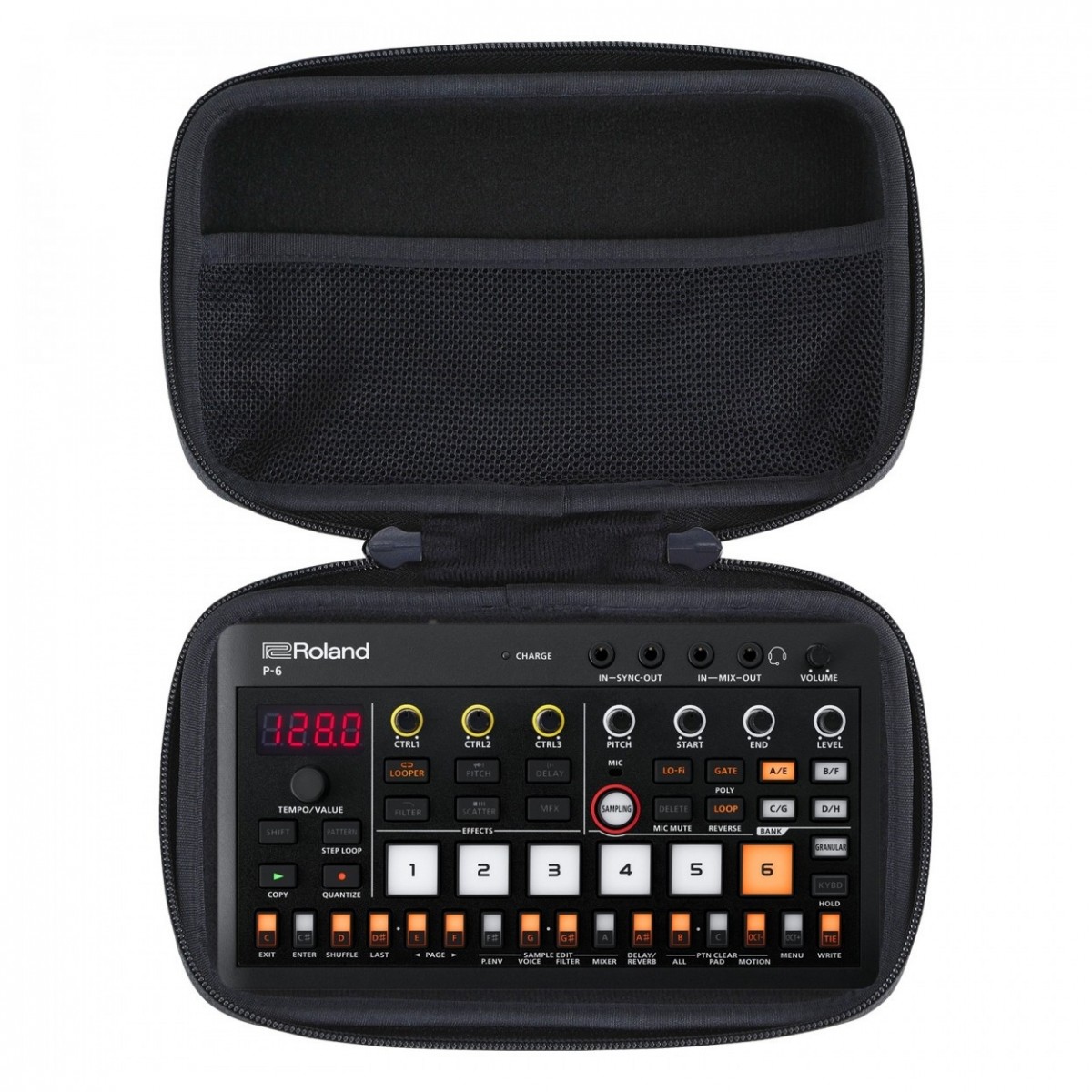
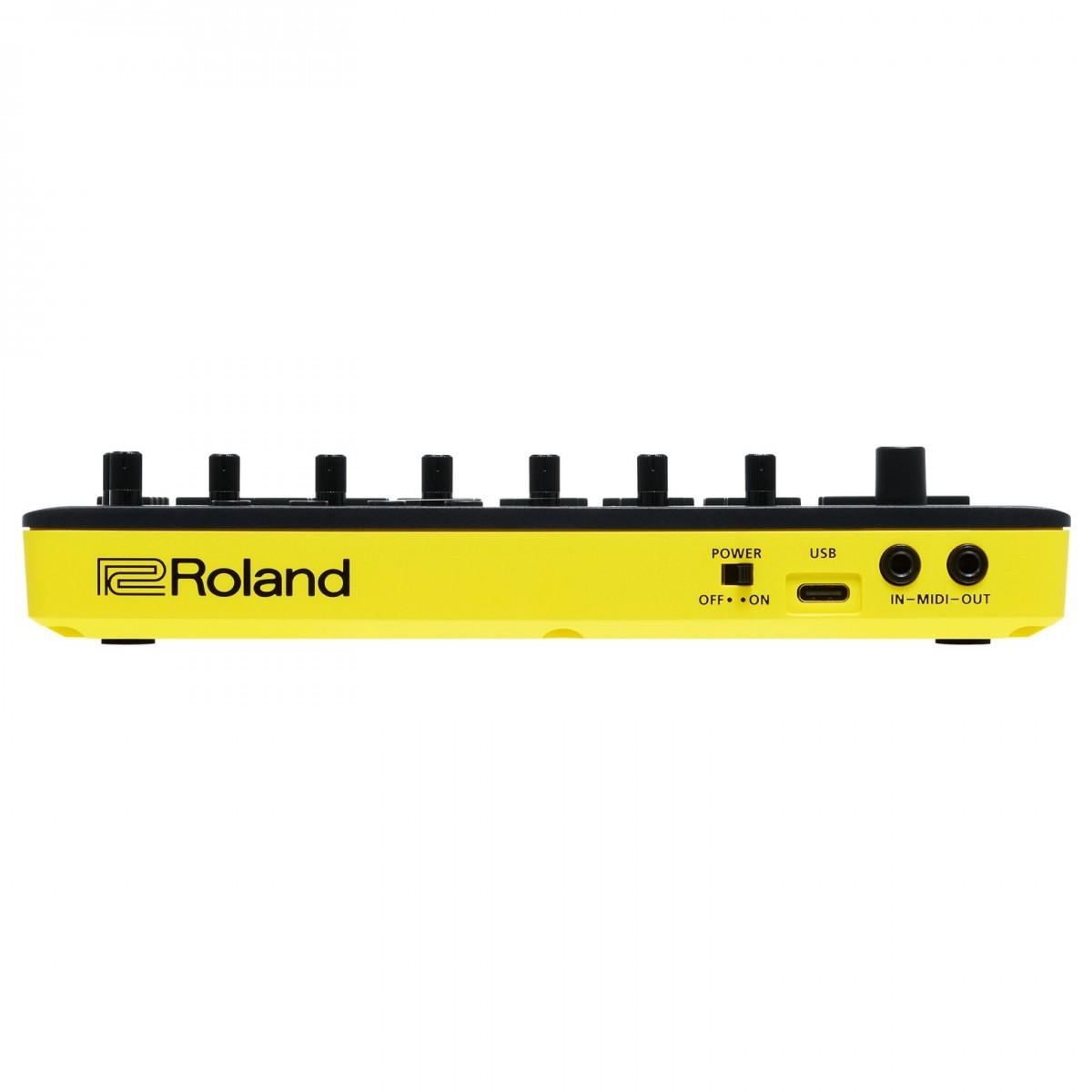
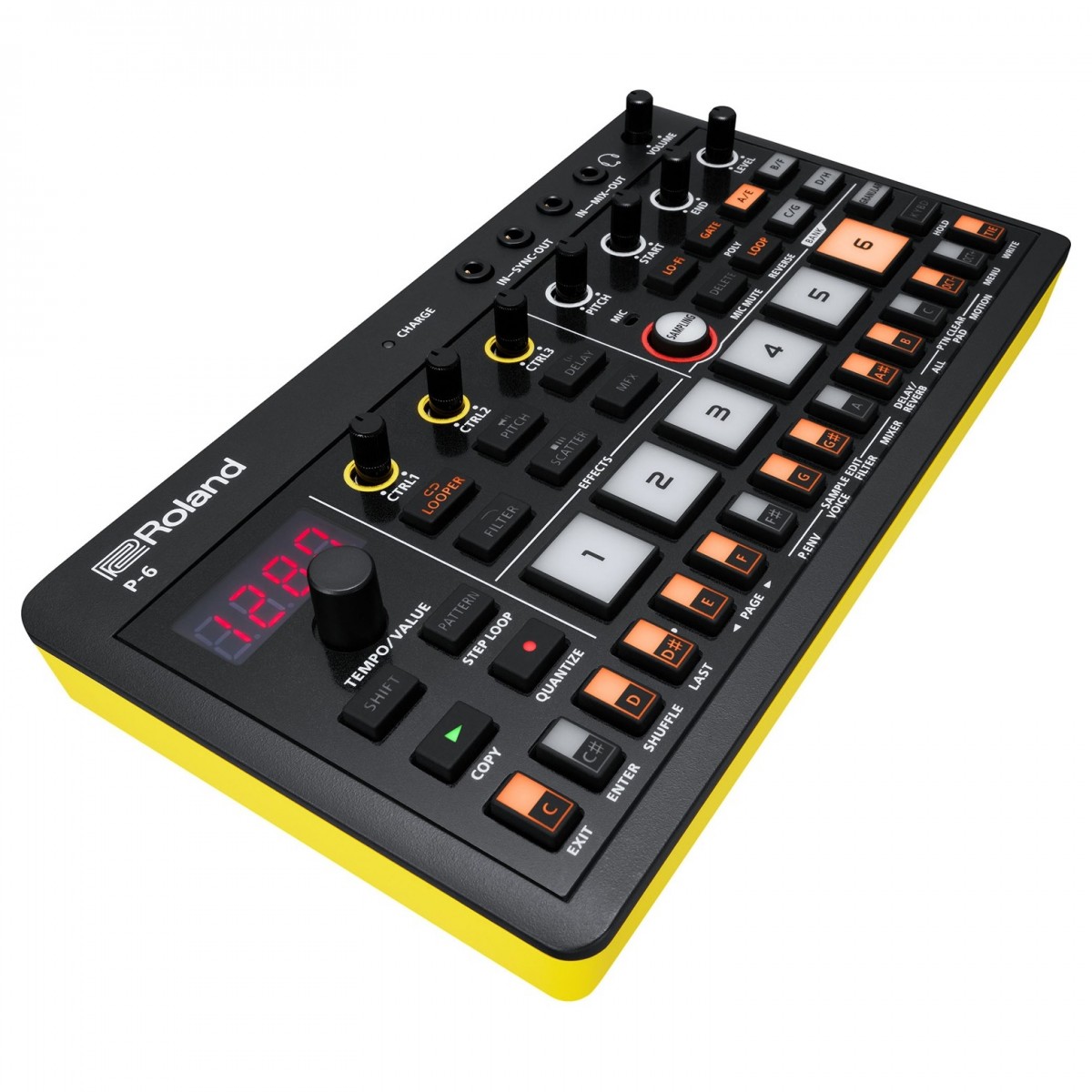
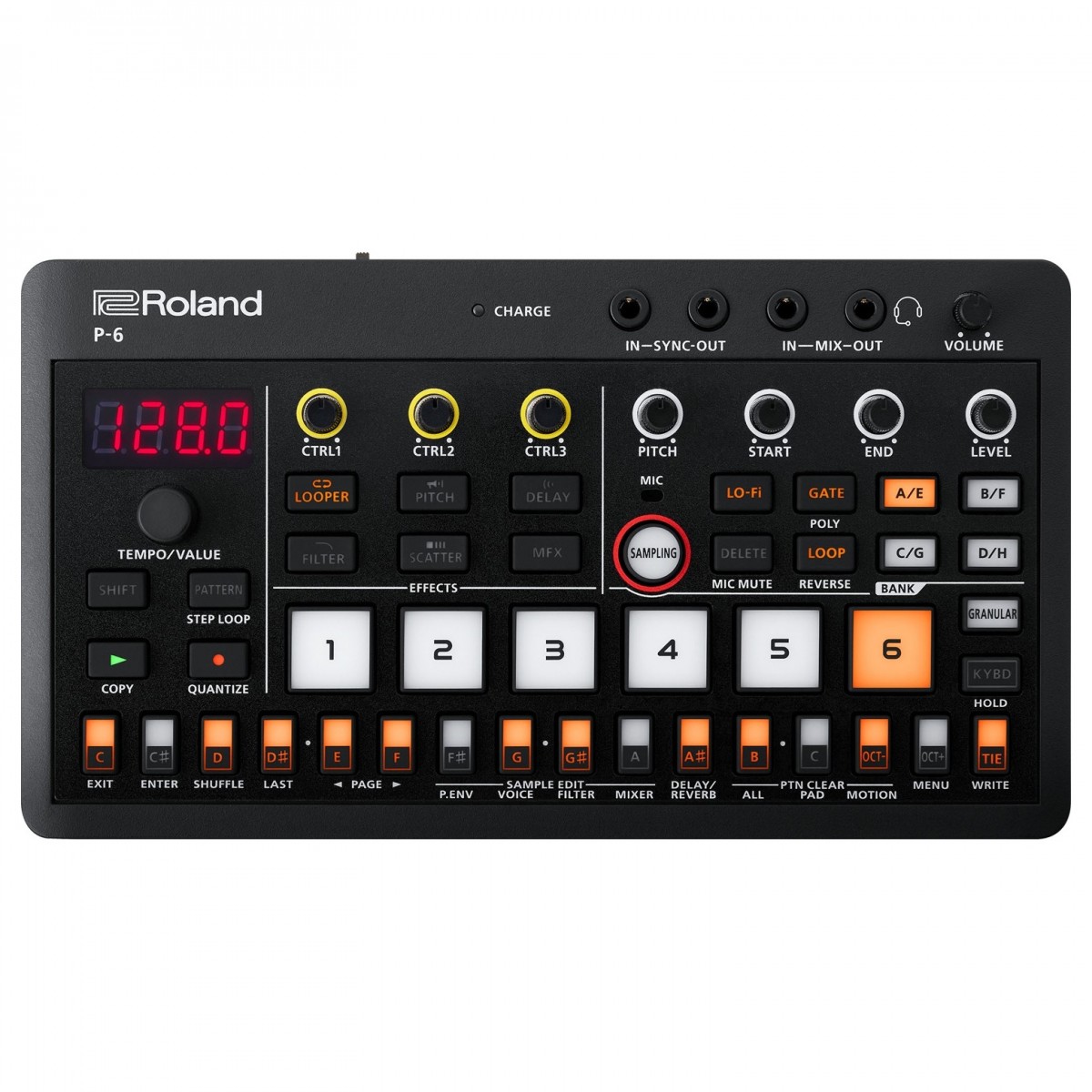
Roland Aira Compact P-6 Creative Sampler with Case
£205.00Roland Aira Compact P-6 Creative Sampler with Case from Roland is on synthforsale in our Samplers department. Read More product details below.
2. Roland SP-404MKII — best for live performance and effects
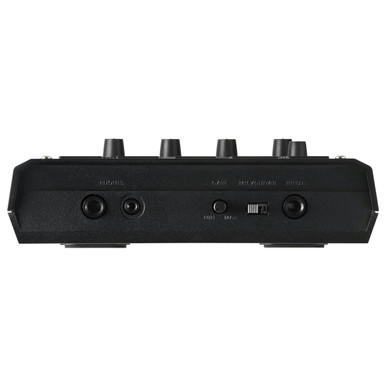
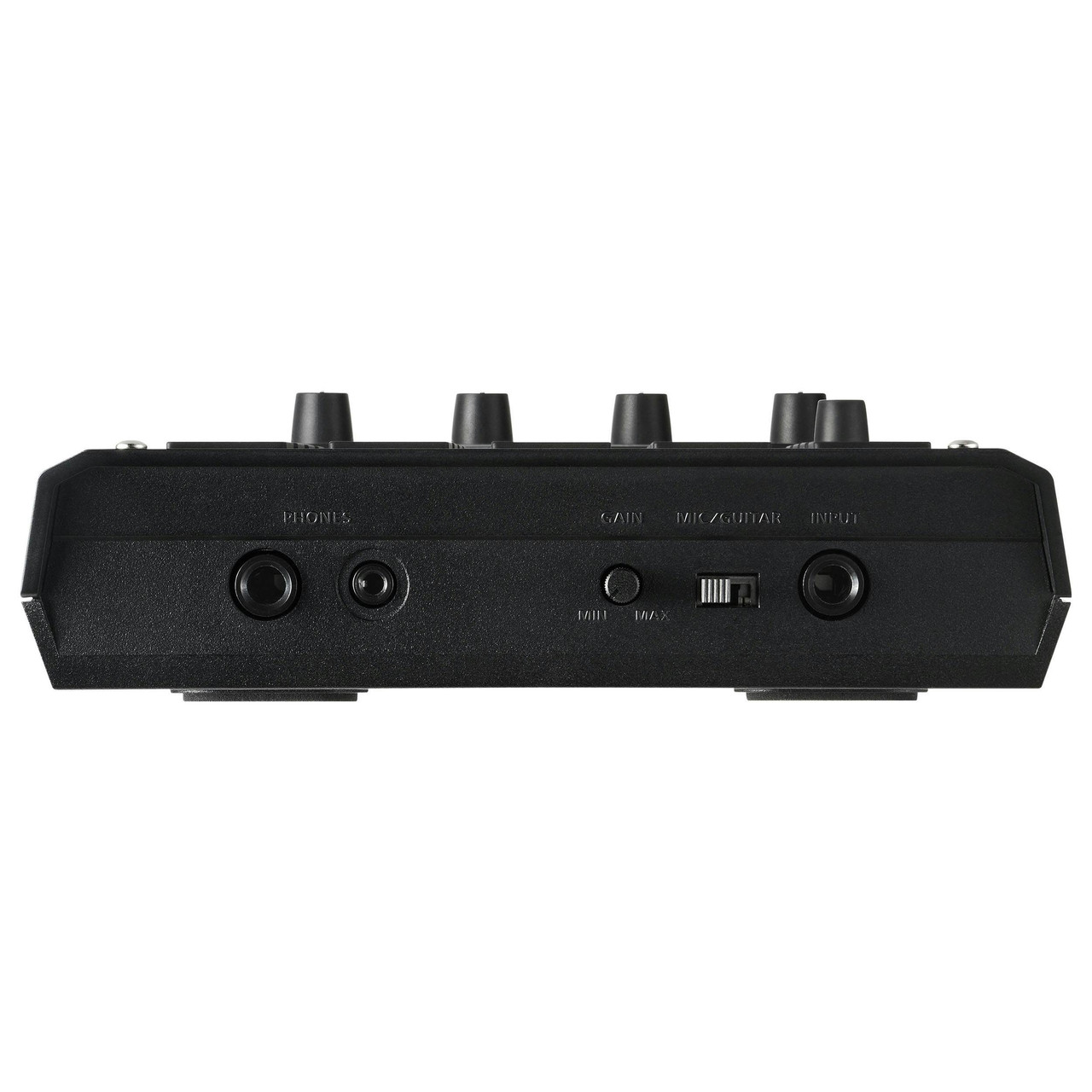
The Roland SP-404MKII is a performance-focused sampler with 17 velocity-sensitive RGB pads, a waveform display, generous internal storage, fast editing, resampling and a large collection of effects. It is equally comfortable building a beat, processing another instrument or acting as a playable bank of stems, one-shots and transitions.
Its workflow is especially strong when you like committing to audio and performing transformations in real time. Samples can be resampled through effects, patterns can be assembled without a computer, and several power options make the machine useful on stage or away from a fixed studio.
The SP approach relies on shortcuts and muscle memory, and its arrangement style is more performance-led than a conventional timeline. Producers who want a detailed DAW-like screen may prefer an MPC; performers who want to touch and alter audio directly often find the limitation inspiring.
Best match: beat sets, live resampling, transitions, stems and musicians who treat effects as part of the instrument.

Roland SP-404 MKII Sampler
£473.00Roland SP-404 MKII Sampler from Roland is on synthforsale in our Samplers department. Read More product details below.
3. Elektron Digitakt II — best for deep sample sequencing
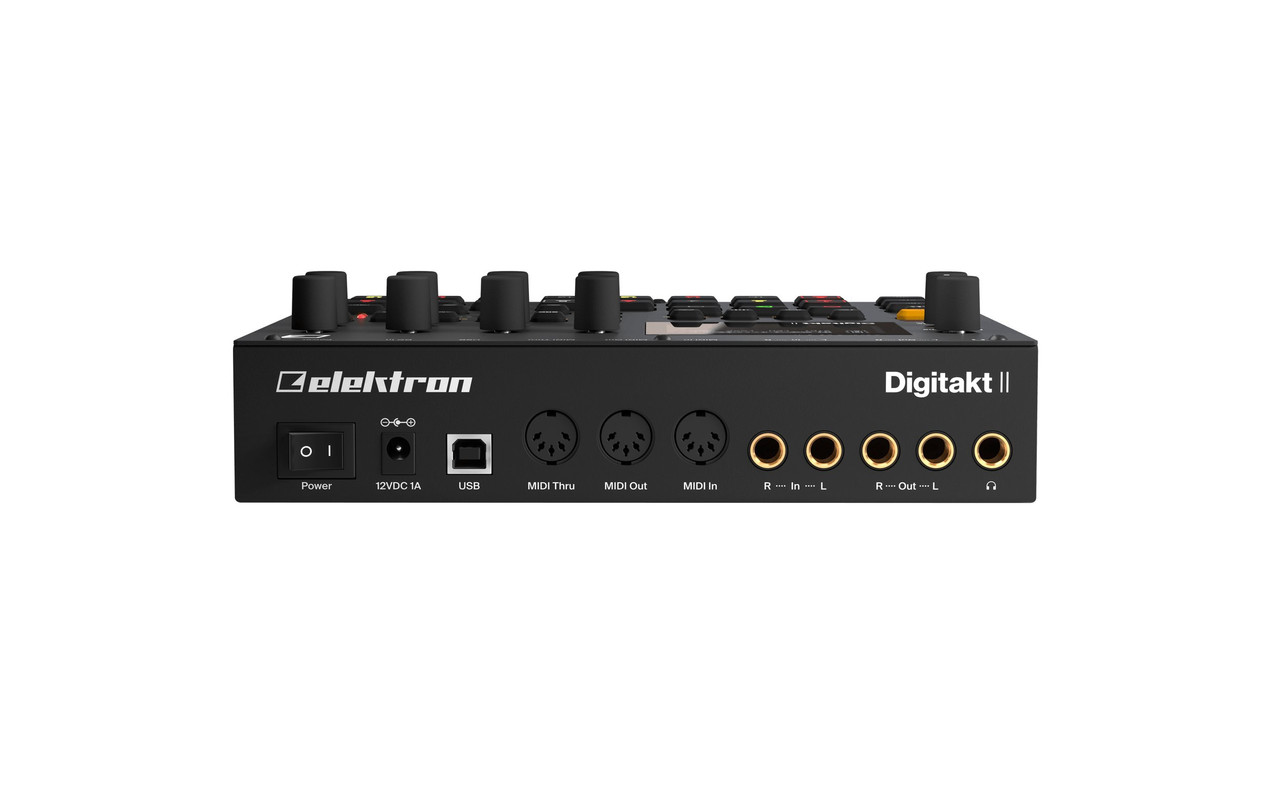
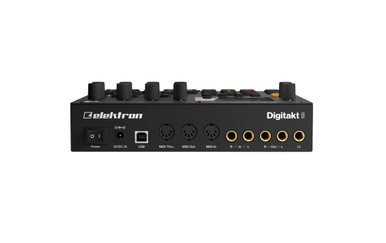
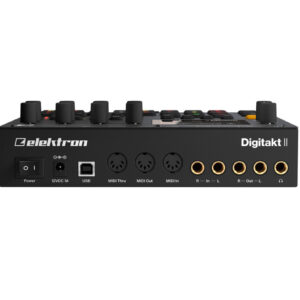
The Elektron Digitakt II is a 16-track drum computer and sampler whose tracks can work with stereo samples, mono samples or MIDI. Its 128-step sequencer, parameter locks, conditional behaviour and flexible filtering make a short sample capable of changing from step to step across a long pattern.
This is less about recording a loop and pressing play than about turning samples into a responsive composition system. One sound can be pitched, filtered, sliced, retriggered and automated differently on individual steps, while MIDI tracks can sequence external synths from the same pattern structure.
Elektron’s workflow is logical once learned but has its own vocabulary. The screen and button combinations reward deliberate practice. Choose it when sequencing depth and controlled variation are more important than a large touch display or traditional linear arrangement.
Best match: producers who want samples and external MIDI gear to behave as one precise, evolving pattern system.
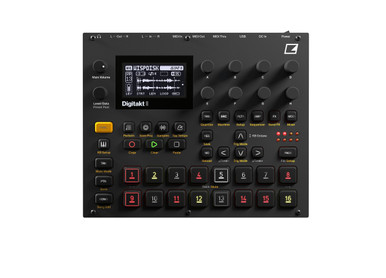

Elektron Digitakt MKII Sequencer + Sampler
£799.00Elektron Digitakt MKII Sequencer + Sampler from Elektron is on synthforsale in our Samplers department. Read More product details below.
4. Akai MPC One G2 — best for complete standalone production
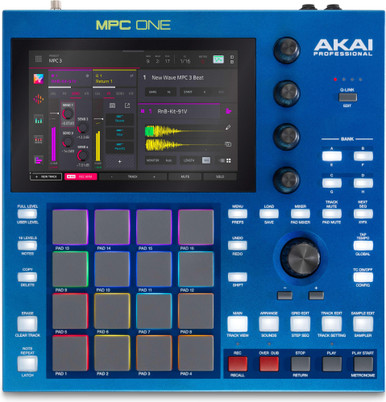
The Akai MPC One G2 is a standalone music production centre that combines classic MPC pads with sampling, sequencing, software instruments, effects and arrangement tools. It is the choice here that most directly aims to take a track from first sample to complete production without relying on a separate computer.
The touchscreen provides a visual environment for chopping, editing, mixing and arranging, while the pads keep drums and sample performance physical. MIDI and USB connections allow it to become the centre of a wider hardware rig, controlling synths while recording their audio back into the project.
That breadth can feel closer to learning a compact DAW than learning a simple sampler. Menus and project management are part of the experience. If you want one box to handle many studio duties, the depth is an advantage; if you want immediate, limited sampling, a smaller machine may be more inviting.
Best match: producers who want one standalone hub for beats, instruments, sampling and full arrangements.
Akai MPC ONE G2 Sampler & Workstation
£719.00Akai MPC ONE G2 Sampler & Workstation from Akai is on synthforsale in our Samplers department. Read More product details below.
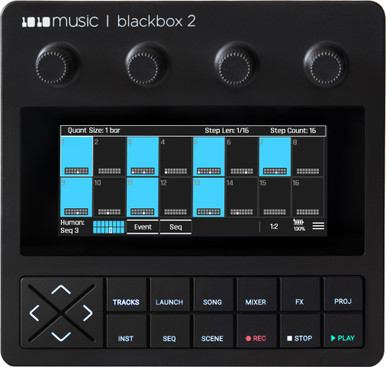
5. 1010music blackbox 2 — best for compact clip and song arranging
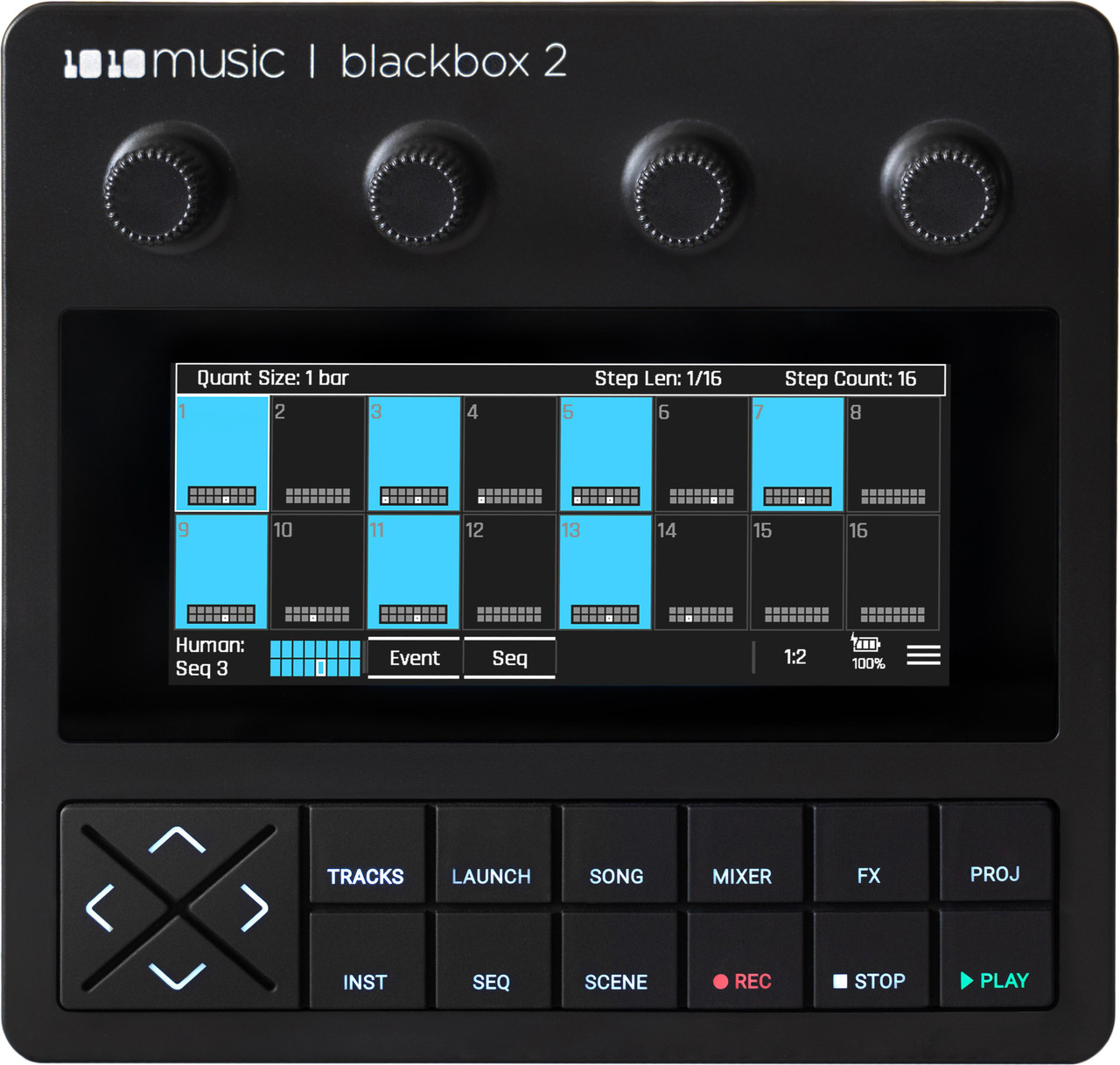
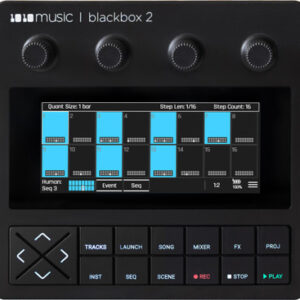
The 1010music blackbox 2 is a compact touchscreen sampler designed for computer-free creation and performance. It can record and edit samples, play loops, one-shots, slices and multisamples, sequence parts, launch grouped loops and build arrangements in a box small enough for a crowded desktop or mobile rig.
Its visual interface is valuable when you want to see waveforms, piano-roll notes and clips without moving to a full computer. The internal battery and broad sample types make it useful for capturing an idea, building a track from loops or carrying prepared material to a performance.
A touchscreen will not satisfy everyone who wants one control per function, and expressive finger drumming is better served by dedicated velocity-sensitive pads or an external controller. The blackbox 2 is strongest when compact arrangement and sample organisation are the priority.
Best match: space-conscious DAWless setups, clip-based performers and musicians who prefer visual sample editing in a very small box.
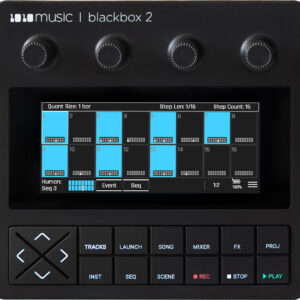

1010music Blackbox 2 Sampler
£669.001010music Blackbox 2 Sampler from 1010Music is on synthforsale in our Samplers department. Read More product details below.
What should you check in a hardware sampler?
How quickly can it capture audio?
Check whether the sampler has a built-in microphone, line inputs, microphone preamp, USB audio or only file import. A sampler you can record into immediately will encourage different habits from one that begins with organising files on a card.
What does it do with a sample?
Slicing is useful for breaks and phrases; multisampling is useful for playable instruments; time-stretching helps loops follow tempo; granular tools create textures; resampling lets you commit effects and layers. Buy for the transformations you will actually use.
How are songs built?
Some samplers chain patterns, some launch clips and some offer a timeline or song mode. Imagine a three-minute arrangement and ask how sections, mutes, fills and transitions would be created before deciding that a pattern demo proves the whole workflow.
How does storage work?
Check internal storage, removable media, supported file types, maximum sample length and backup method. Good housekeeping matters once the exciting first week becomes a library of hundreds of recordings.
Which one should you choose?
Choose the P-6 for portable discovery, the SP-404MKII for performance and effects, the Digitakt II for deep sequencing, the MPC One G2 for complete standalone production or the blackbox 2 for compact visual arrangement. The right sampler is the one that makes the step after recording feel natural.
Read next
Five of the Best Grooveboxes in 2026
How to Build Your First Hardware Synth Setup
How to Connect and Synchronise Synthesizers, Drum Machines and Grooveboxes
-
-
Five of the Best MIDI Controllers in 2026
Five of the Best MIDI Controllers in 2026
A MIDI controller gives you physical control over software instruments, recording programs and other musical equipment. Instead of drawing notes with a mouse, you can play melodies, tap out drums, adjust effects and control a mix using real keys, pads, knobs and faders.
Most MIDI controllers do not produce sounds by themselves. They send instructions to software instruments, synthesizers and other MIDI equipment. The right controller can make a computer-based studio feel much more immediate and musical.
For this guide, we have chosen five MIDI controllers that suit very different musicians. They range from compact keyboards that fit inside a backpack to a full-sized hammer-action controller built for pianists and composers.
1. Akai Professional MPK Mini IV
Best compact MIDI controller
The Akai Professional MPK Mini IV is the latest generation of one of the world’s most recognisable compact MIDI keyboards.
It is designed for musicians who want keys, drum pads and hands-on controls without filling their desk. The compact keyboard is joined by Akai’s MPC-style pads, rotary controls and proper pitch and modulation wheels.
Chord and Scale modes can help less experienced keyboard players develop musical ideas, while the included Studio Instrument Collection provides more than 1,000 sounds for getting started.
Its combination of portability and creative controls makes the MPK Mini IV particularly attractive to beatmakers, travelling musicians and anyone building their first home studio.
Why choose it?
- Compact and highly portable
- Responsive keyboard and MPC-style pads
- Pitch and modulation wheels
- Chord and Scale modes
- More than 1,000 included sounds
2. Arturia MiniLab 3
Best for beginners and included software
The Arturia MiniLab 3 is another compact 25-key controller, but its excellent software package and broad selection of controls give it a character of its own.
It includes eight velocity and pressure-sensitive pads, eight rotary encoders, four faders and a small display for navigating presets and settings. There is also a built-in arpeggiator and Chord mode for generating musical ideas.
Arturia’s Analog Lab software gives new users immediate access to a large collection of synthesizer, piano, organ and keyboard sounds. MiniLab 3 is also pre-mapped for several popular recording programs, reducing the amount of manual configuration required.
The MiniLab 3 is a particularly good choice for somebody who wants to buy one affordable package and begin experimenting with music production straight away.
Why choose it?
- 25 velocity-sensitive slim keys
- Eight pressure-sensitive pads
- Eight encoders and four faders
- Excellent included software
- Straightforward integration with popular recording programs
3. Novation Launchkey 49 MK4
Best all-round MIDI controller
The Novation Launchkey 49 MK4 provides an excellent balance between keyboard size, studio control and creative features.
Its 49 semi-weighted keys provide enough room for playing two-handed parts without requiring the space demanded by an 88-key controller. It also has 16 expressive pads, eight encoders and nine faders for controlling instruments, effects and mixer channels.
The Launchkey range is closely associated with Ableton Live, but the MK4 generation also provides custom integration with Logic, Cubase, FL Studio, Reason, Bitwig and other recording software.
Chord modes, Scale mode and a generative arpeggiator can be used independently of the computer, while Custom Modes allow the controls to be assigned to software or external MIDI equipment.
For most home studios, the Launchkey 49 MK4 offers the most practical combination of playability, control and price.
Why choose it?
- 49 semi-weighted keys
- 16 pads with polyphonic aftertouch
- Eight encoders and nine faders
- Excellent recording-software integration
- Chord, Scale and arpeggiator functions
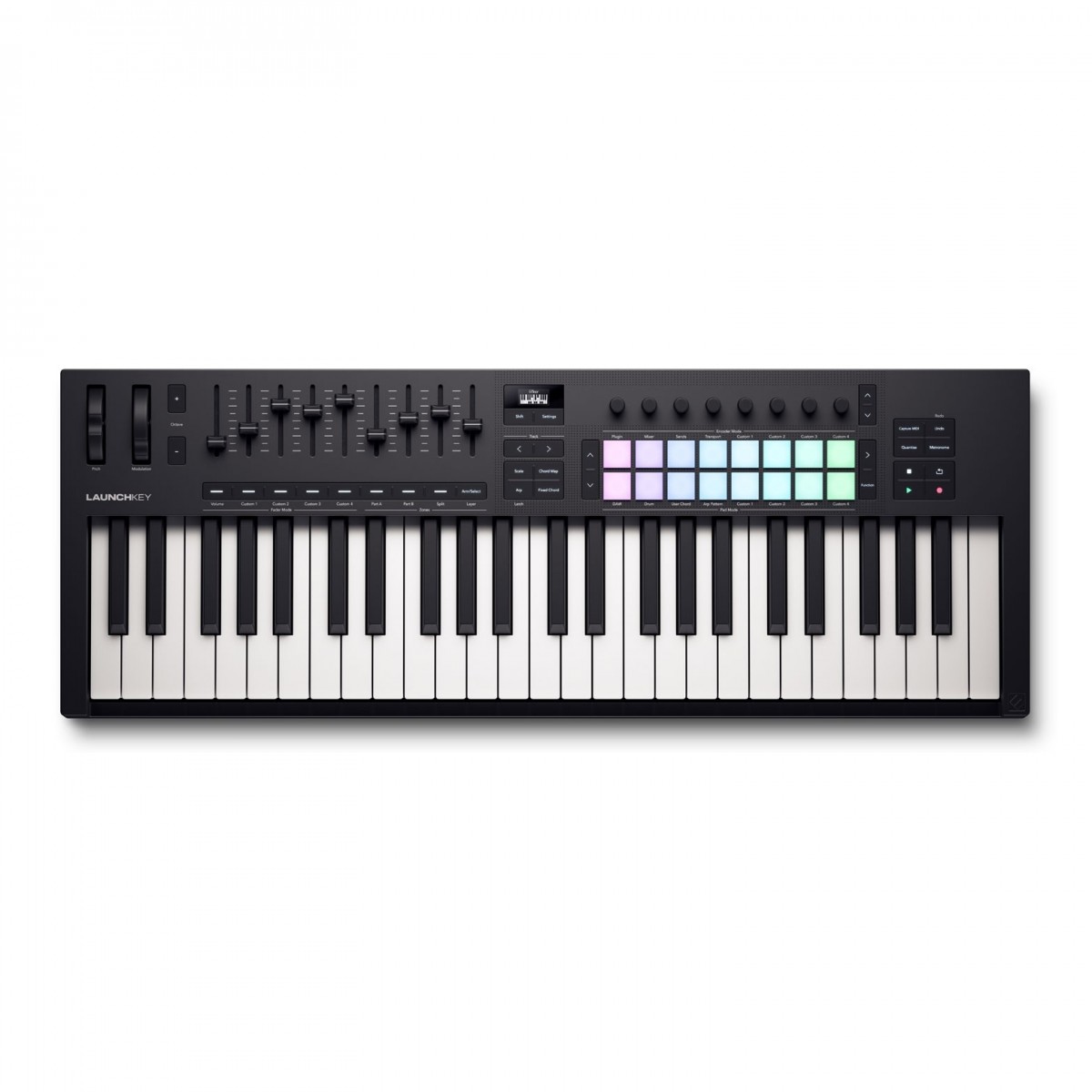
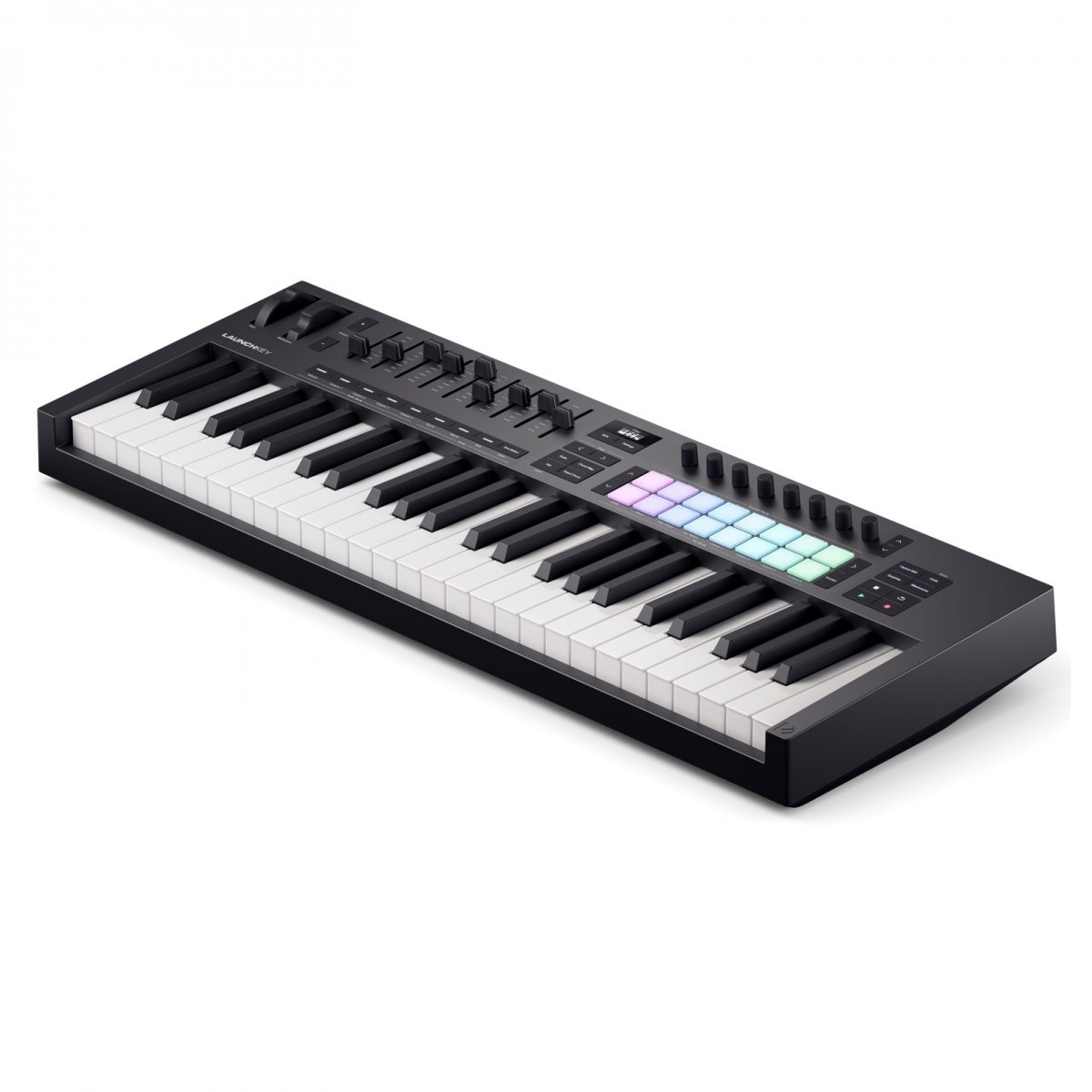
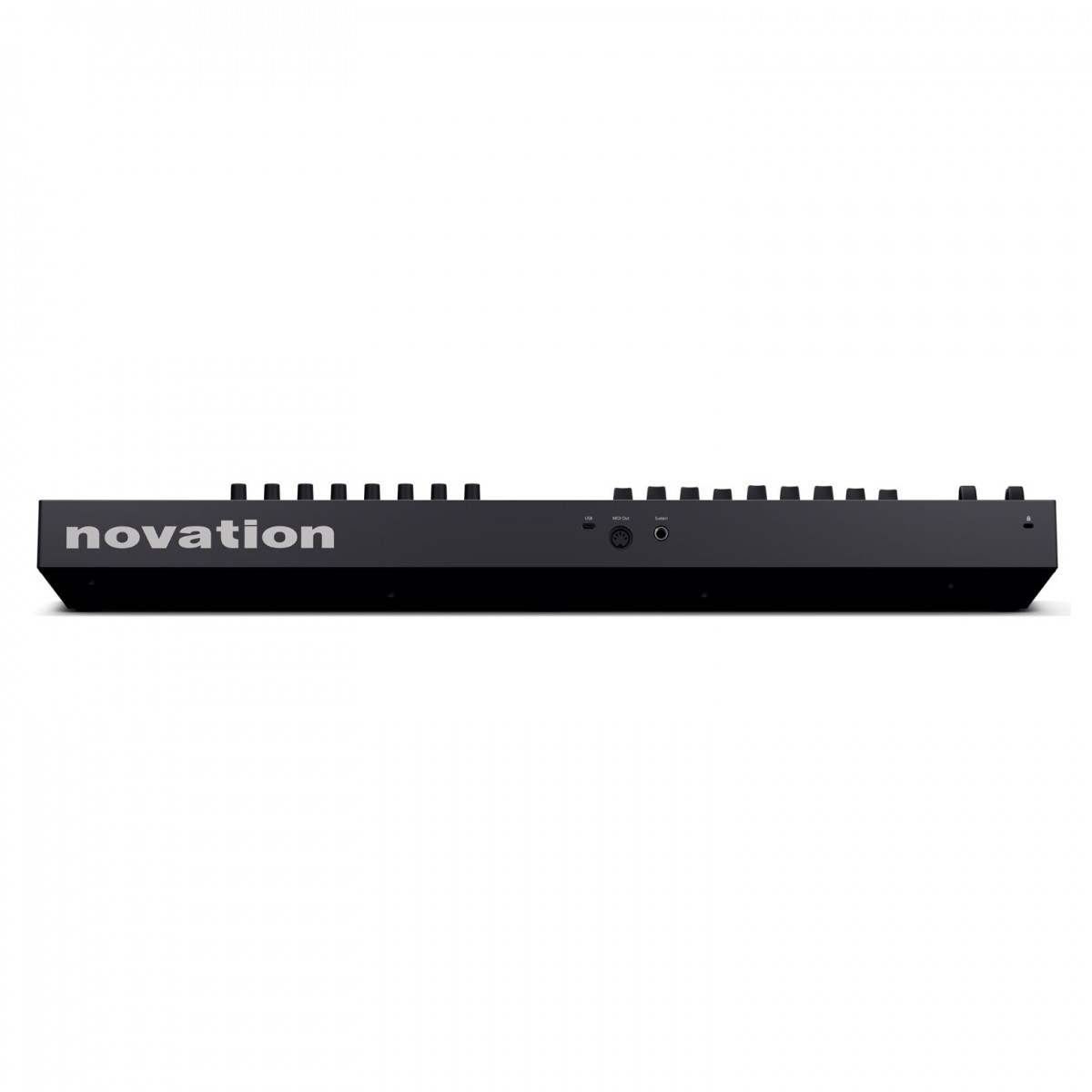
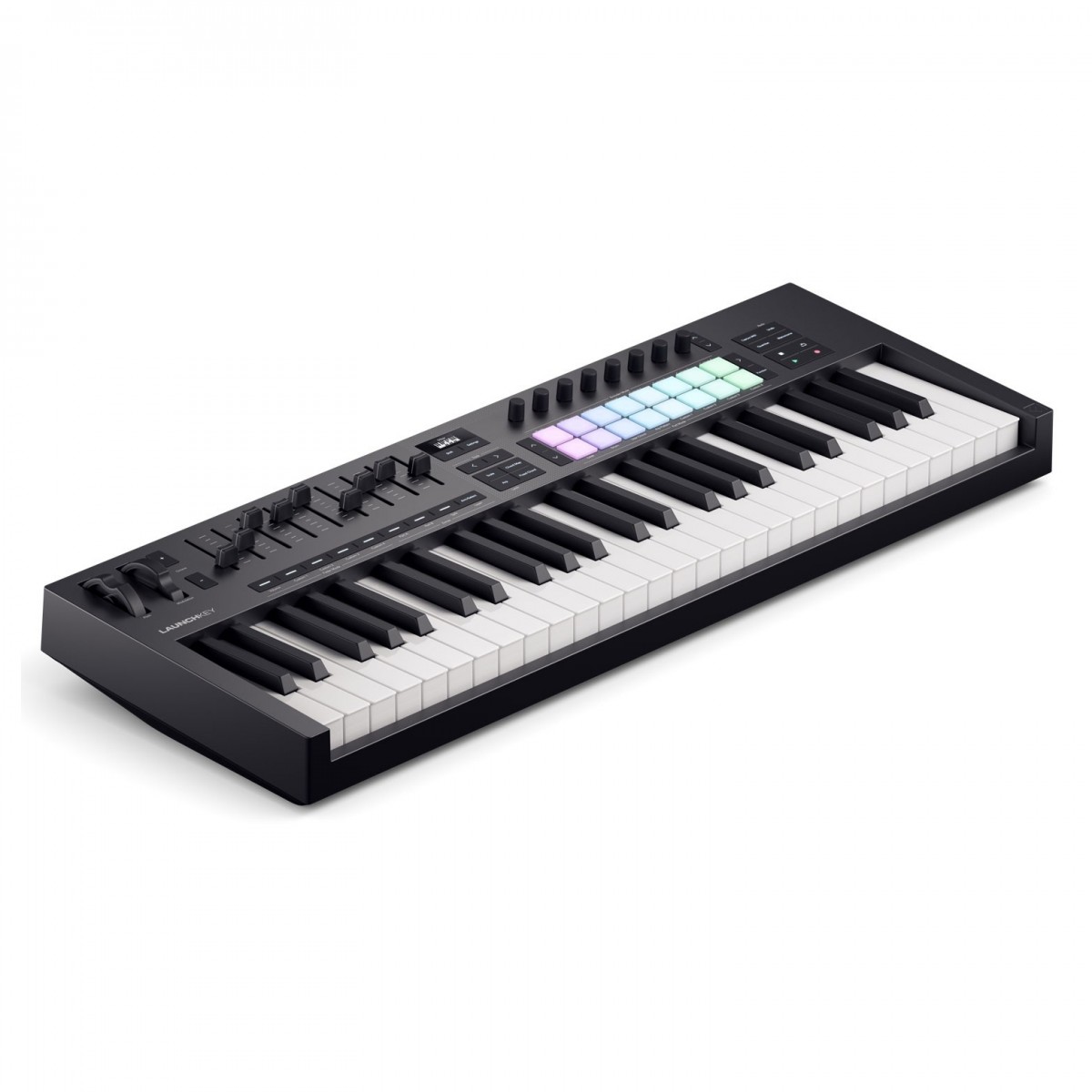
Novation Launchkey 49 MK4
£224.504. Native Instruments Kontrol S49 MK3
Best for controlling software instruments
The Native Instruments Kontrol S49 MK3 is a premium controller designed for musicians who work extensively with software instruments and sample libraries.
Its 49-key semi-weighted Fatar keyboard supports polyphonic aftertouch, allowing compatible software instruments to respond independently to the pressure applied to individual notes.
A large colour display lets you browse sounds, inspect settings and adjust instruments from the keyboard. The illuminated Light Guide above the keys can identify key ranges, drum layouts, articulations and musical scales.
Integration is particularly deep with Native Instruments software, but the NKS system also supports instruments and effects from many other developers. This makes the Kontrol S49 MK3 especially useful for producers and composers with large software collections.
Why choose it?
- Premium 49-key Fatar keyboard
- Polyphonic aftertouch
- Large colour display
- Illuminated Light Guide
- Deep software-instrument integration
5. Arturia KeyLab 88 MK3
Best for pianists and composers
The Arturia KeyLab 88 MK3 is designed for musicians who want the expressive range and physical response of a full-sized piano keyboard.
Its 88-note Fatar TP/110 keyboard uses a fully weighted hammer action and supports aftertouch. This makes it suitable for piano performances, orchestral arrangements and detailed software-instrument work.
The KeyLab 88 MK3 is also a comprehensive studio controller. It provides nine faders, nine rotary encoders, 12 pressure-sensitive pads and a 3.5-inch colour display.
Chord mode, Scale mode and an arpeggiator are included, alongside extensive control of popular recording programs and Arturia’s own Analog Lab instruments.
It is considerably larger and heavier than the other controllers in this guide, but that is precisely the point. This is a controller for musicians who prioritise playing feel, full keyboard range and detailed studio control.
Why choose it?
- 88 fully weighted hammer-action keys
- Fatar TP/110 keyboard with aftertouch
- Nine faders and nine encoders
- 12 pressure-sensitive pads
- Excellent for pianists, composers and performers
Which MIDI controller should you choose?
Choose the Akai Professional MPK Mini IV if you want a modern, highly portable controller with excellent pads and plenty of included sounds.
Choose the Arturia MiniLab 3 if you are beginning music production and want an affordable controller with a strong software package.
Choose the Novation Launchkey 49 MK4 if you want a versatile controller with full-sized keys, mixer controls and excellent integration with popular recording programs.
Choose the Native Instruments Kontrol S49 MK3 if you use large software-instrument or sample libraries and want to browse and control them directly from the keyboard.
Choose the Arturia KeyLab 88 MK3 if realistic playing feel, full keyboard range and expressive performance are more important than portability.
A MIDI controller should make your music software feel less like a computer program and more like an instrument. The best choice is therefore not necessarily the controller with the most features, but the one that makes you want to sit down and play.
SynthForSale may earn a small commission when you purchase through links on this page. This does not affect the price you pay.
-
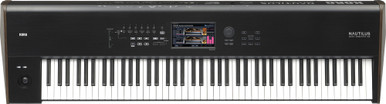
Korg NAUTILUS Synth & Workstation 88 Key
Here's What Korg Say About the NAUTILUS
The most dazzling and expansive collection of sounds ever put into a Korg synthesizer
NAUTILUS pushes the boundaries of what a performance synth and workstation is capable of. With the power of nine engines to drive a new approach to sounds, plentiful sampling, audio recording, effects, and processing power, there is simply no other synth that delivers more to explore sonically, with the workflow to get you there faster than ever. Korg spent years refining all our digital, analog, processing, and hardware technologies and delivering them in a way that helps the musician connect with their instrument. The result is the incredibly powerful, one-of-a-kind NAUTILUS.
Features
- Nine different sound engines offer massive expressive power
- New sounds offered over three broad categories
- The DYNAMICS knob makes delicate expression possible
- Make intuitive changes to sounds with the Realtime knobs
- A user interface designed for easy operation
- Convenient arpeggiator and drum track functions
- Color TouchView Display
- Set list mode that demonstrates its power in live performances
- Open Sampling System
- 16-Track MIDI Sequencer / 16-Track Audio Recorder
- 16 Onboard Effect Processors
- USB/MIDI Host Ports Accommodate MIDI Control Surfaces
- Smooth sound transitions that eliminate dropouts when changing sounds, regardless of the mode you're in
- 88-key model with piano touch, 73-key model with light touch and 61-key model available
Nine different sound engines offer massive expressive power
The NAUTILUS features nine dedicated sound engines to realistically reproduce sounds such as pianos, electric pianos, organs and more. To start, the enhanced SGX-2 piano sound generator offers delicate expressiveness to capture all the nuances of the acoustic piano, and NAUTILUS features the most piano libraries ever put into one product; with 12-step velocity-switched sound, string resonance and more. The EP-1 electric piano sound generator realistically reproduces seven different famous electric piano sounds. The CX-3 engine – the heart of our sought-after CX-3 reissue -covers the distinct sound of classic tonewheel organs. Add to that MOD-7 VPM/FM synthesis, the PolysixEX and MS-20EX for analog modeling, and the STR-1 for physical modeling, and you have essentially an engine for any type of sound you’re looking to get. Used together in Program or Combination mode, these distinctive engines create completely new timbres.
New sounds offered over three broad categories
The approach to the included sound on NAUTILUS, started with Korg setting aside our preconceptions of what sound should be like on a conventional music workstation, and instead focused on pushing the boundaries of sampling and programming to create a brand-new classifications of programs that we divide into three groups:
“Unique” sounds:
The NAUTILUS brings you distinctive sounds including phrase loops, prepared pianos, found percussion and more. Many seldom heard-of musical instruments found in different regions around the world can be difficult to play, but distinctive phrases played on these instruments are featured on the NAUTILUS. Use these phrases as-is in your songs—let your imagination be your guide. The NAUTILUS features sounds that were sampled for the first time just for this instrument, including prepared piano sounds created by placing different objects between piano strings and recording samples, or “found percussion” sounds made by turning ordinary items into instruments to be struck. Not only do these novel and mysterious sounds provide an unexpected flavor to your songs, they offer broad possibilities for sound effects used in film and TV music as well.
“Current” sounds:
The NAUTILUS also offers the freshest sounds that blend in well with today's music scene, including synths, drum kits, special effects and more. For synths, be sure to check out the EDM, electro and chiptune sounds for starters. Also, the NAUTILUS features more than 50 kinds of drum kits—sounds that most strongly reflect the changes in music over time. The special effect sounds offer useful material like drums added to dance music to create beats—sounds that you can put to use right away.
Standard sounds:
We’ve brought together all of the most important sounds a workstation needs including piano, electric piano, guitar, bass guitar and more, covering all genres. For the newly sampled piano sound, we’ve also recorded the lovely sonic ambience of the studio, and you can mix the piano and ambience sound as you like with the new ambience sound. A new electric piano model with a characteristic thick sound has been added, which works great for funky playing styles. We’ve also added many phrases that let you play back actual performances of guitar and bass parts that keyboardists will find useful.
The DYNAMICS knob makes delicate expression possible
With the DYNAMICS knob, you can instantly control the changes in volume and tone in response to how hard you play the keyboard (velocity); and you can customize this knob in real time to match the keyboard playing feel required for each style and song. Even when playing the same sound, you can turn this knob to get the feeling of playing a completely different sound. By finding just the right setting for your playing style, you'll uncover even more of the possibilities that the NAUTILUS offers.
When you activate the DYNAMICS knob and turn it to the left, the keyboard responds more softly to your playing, giving you a wide range of dynamics. This allows for delicate, expressive playing when accompanying a piano solo or vocals, which directly reflects the dynamics of your performance. On the other hand, turning the knob to the right gives a stronger, more flat dynamic response. This brings out the sound when you’re playing in a band or ensemble, which works best when performing with a more even feel.
Make intuitive changes to sounds with the Realtime knobs
The six RT (real-time) knobs at the top left of the panel give you direct control over changes to the PROG and COMBI sounds. A variety of functions are assigned to each knob that lets you enjoy making changes to sounds, such as the filter cutoff and effect depth, the gate time, tempo and swing of the arpeggiator or drum track, the type of snare drum and more. In COMBI mode, you can group timbres and control their levels with the knobs. Further, you can press these knobs into the panel to lock them in place, preventing them from being accidentally changed while you’re playing. For instance, you could use this to enable only the knobs you often use onstage and push the ones in that you do not need.
A user interface designed for easy operation
For the NAUTILUS, we have completely rethought the user interface, considering that panel controls tend to become denser as more functions are added. The interface of the NAUTILUS lets users find just the things they’re looking for once they understand the principles.
The MODE button lets you see what you’ve selected in each mode on a single screen, from PROG and COMBI to the set list, sampling, sequence and global modes. Each mode has tabs for each function, and the PAGE buttons offer more detailed editing with consistent operations. With the user-friendly navigation of the NAUTILUS, you can press the MODE button at any time to return to the start if you get lost. A dark mode is available for the display, using black as the primary color to reduce eye fatigue.
Six quick access buttons are also available as shortcut buttons. The NAUTILUS further offers four templates as a continuation of the previous user-friendly features, which can be used to select modes like PROG and COMBI, as transport buttons for sequencer playback and recording and so on. You can also select your own settings as you like. What’s more, you can freely assign functions you frequently use and save them in one of four sets.
Convenient arpeggiator and drum track functions
Four scenes of arpeggio patterns and drum track sets are made available that perfectly match each PROG and COMBI preset sound. These are useful for switching between scenes while they’re played, for use when improvising during performance, or for expanding your vision when composing music starting from a sound.
Color TouchView Display
The nerve center of the NAUTILUS is KORG’s enormous eight-inch (800 x 480 pixel) WVGA color TouchView display.
In addition to simply selecting a sound or choosing a parameter with the touch of a finger, the enhanced Touch-Drag ability allows more detailed control of parameter values. Interactive instruments and panel graphics provide the ability to do everything from adjusting the lid of a grand piano to connecting patch cable on a semi-modular synthesizer model.
The TouchView display also hosts a convenient new Search Function, allowing you to search for (and preview) sounds based on their titles.
Set list mode that demonstrates its power in live performances
NAUTILUS can organize all of the resources you need to get through a song—or a set—using the Set List mode. Using the Set List mode, the TouchView display can host 16 color-coded touch-screen buttons; each one can instantly call up the appropriate Preset, Combination, or Sequence—regardless of mode!
You can also select different button colors, such as when you want to change the colors within a song while playing live. This is a powerful feature for situations that require quick and accurate control. The Set List mode even adds a nine-band graphic EQ, allowing the overall tone to be tweaked to match the venue.
Open Sampling System
Using KORG’s Open Sampling System, NAUTILUS can quickly sample an external audio source, regardless of whether NAUTILUS is in the Program, Combination, or Sequencer modes. The Open Sampling Mode can even resample the performance of the NAUTILUS itself. The user sample bank, which extends the convenience of the EXs sample library to user samples, allows custom samples to be loaded and played, taking advantage of the gigantic SSD capacity.
AIFF, WAV, SoundFont 2.0, and AKAI S1000/3000 format samples can be loaded into memory via USB memory. Additionally, you can use a USB Ethernet adapter to exchange large amounts of sample data with your computer at high speed. Instruments or samples that you've previously created on your PC can be used to construct a music production setup based on just the NAUTILUS itself.
16-Track MIDI Sequencer / 16-Track Audio Recorder
NAUTILUS features a sequencer/recording section that offers both 16 MIDI tracks plus 16 audio tracks; a great resource for putting together a dazzling performance or a brilliant production. MIDI sequencing makes it easy to capture ideas, inspiration, and pro-quality phrases using the Drum Track, or RPPR (Realtime Pattern Play/Recording) functions.
The 16-track audio recorder simultaneously captures up to four tracks of 16-bit/24-bit uncompressed data at a sampling rate of 48 kHz. Play along with recorded tracks, add effects, and then resample the NAUTILUS itself and place the resampled WAV files directly in a track. When polishing your tracks, feel free to use mixer automation and editing functions such as copy, paste, and normalize to get the results you want.
88-key model with piano touch, 73-key model with light touch and 61-key model available
The keyboard on the 88-key model of the NAUTILUS uses a four-stage real weighted hammer action made in Japan, called the RH-3. This action is heavier on the lower notes and lighter on the higher notes for superb playability. The 73-key model features a much-requested light-touch synth keyboard from C to C, as with the 61-key model. This key action lets you play organ parts with plenty of glissandos, as well as synth solos that take advantage of the keyboard’s wide range.
The 88-key model is fitted with luxurious wooden side panels, and the 73-key and 61-key models a completely new design with impressive curves that rise from the bottom of the unit to the sides, patterned after the NAUTILUS’ namesakes: the Nautilus submarine and the cephalopod mollusk. All of these elements make the NAUTILUS a distinctive instrument onstage as well, brimming with personality.
Specifications
System, Keyboard
- System: NAUTILUS System Version 1.0
- Keyboard: RH3 (Real Weighted Hammer Action 3), A – C (Velocity sensitive is supported, after touch is not supported.)
Tone Generator
Synthesis Types
- 9
- SGX-2: Premium Piano (Acoustic Piano)
- EP-1: MDS Electric Piano (Electric Piano)
- HD-1: High Definition Synthesizer (PCM)
- AL-1: Analog Synthesizer (Analog Modeling)
- CX-3: Tonewheel Organ (Tonewheel Organ Modeling)
- STR-1: Plucked String (Physical Modeling)
- MOD-7: Waveshaping VPM Synthesizer (VPM Synthesis)
- MS-20EX: Component Modeling Technology (Analog Modeling)
- PolysixEX: Component Modeling Technology (CMT Analog Modeling)
Maximum Polyphony
- SGX-2: 100 voices
- EP-1: 104 voices
- HD-1: 140 voices
- AL-1: 80 voices
- CX-3: 200 voices
- STR-1: 40 voices
- MOD-7: 52 voices
- MS-20EX: 40 voices
- PolysixEX: 180 voices
Preset PCM
- RAM 496 MB / DISK 2.3G (ROM 1,771 Multisamples, 3,955 Drumsamples)
Build-in Expansion PCM Libraries
- EXs301: German2 D Piano
- EXs302: Italian F Piano
- EXs303: Japanese Upright U Piano
- EXs304: Prepared Piano
- EXs305: Historical Keyboards
- EXs306: Vintage Keyboards 2
- EXs307: Strings & Synths
- EXs308: Guitar Collection
- EXs309: Bass Collection
- EXs310: World Essence
- EXs311: Background Loops
- EXs312: SFX & Hits
- EXs313: Found Percussions
- EXs314: Expansion Drums
PCM RAM Capacity
- Approx. 2GB
Wave Sequences
- 598 User memory, 377 Preload (Support for stereo multisamples, synchronization of individual notes, and tempo-based settings.)
Sampling
System
- Open Sampling System (resampling, In-Track sampling)
Bit Depth/Sampling Frequency
- RAM: 16-bit/48 kHz stereo/mono sampling
- DISK: 16 or 24-bit/48 kHz
Sampling Time
- RAM: Depends on the amount of available PCM RAM
- DISK: Maximum 80 minutes stereo (879MB: 16bit)
Sample Locations
- 16,000 samples/4,000 multisamples (128 indexes per multisample)
Formats
- KORG format, AKAI S1000/S3000 data (with advanced Program parameter conversion); SoundFont 2.0, AIFF, and WAVE formats
Editing
- Time Stretch, Time Slice, Crossfade Loop, and other standard editing features.
Effects
- Insert Effects: 12 Stereo in / stereo out
- Master Effects: 2 Stereo in / stereo out
- Total Effects: 2 Stereo in / stereo out
- Timbre EQ: One 3-band EQ for each timbre/track
- Effect Types: 197
- Modulation: Dynamic Modulation and Common LFO
- Effects Control Busses: Stereo side-chaining for compressors, gates, vocoders, etc
- Effect Presets: Total 783 preset, Maximum 32 per 1 effect (Preset User)
Arpeggiator
- Arpeggiator Modules: One module in Program mode, two modules in Combination and Sequencer modes
- Arpeggio Pattern: 5 presets + ARP A 2,048 slots (1,593 come Preload) + ARP B 128 slots
- Controllers: On/Off, Latch, Gate, Velocity, Length, Swing, Tempo
Drum Track
Preset Patterns
- 1,272 (common with the preset patterns of the MIDI sequencer)
User Patterns
- 1,000 – Patterns created in Sequencer mode can be converted to drum track user patterns.
- Trigger Mode/ Sync / Zone / Swing, Drum SD, Tempo settings can be specified.
Sequencer / HDR
Tracks
- 16-track MIDI sequencer + 16-track hard disk recorder + 1 master track.
Number of Songs
- 200
Resolution
- 1/480
Tempo
- 40.00 – 300.00 (1/100 BPM resolution)
Maximum Memory
- 400,000 MIDI events or 300,000 audio events
MIDI Tracks
- 16 tracks plus the master track, 697 preset / 100 user patterns (per song), 18 preset/16 user template songs,
Audio Tracks
- 16-track playback, 4-track simultaneous recording, WAV file format 16bit/24bit
- Maximum Single-file Recording Time (mono): 80 minutes
- Automation: Volume, Pan, EQ, and Send1/2
- 10,000 regions (max.)
- Event Anchors, BPM Adjust
Other Functions
- RPPR (Realtime Pattern Play and Record): 1 Pattern set per song
- Auto Song Setup function
General
Disk Mode
- Load, save, utility, data filer function (save/load MIDI System Exclusive data), CD-R/RW (UDF format read/write), ISO9660 Level 1.
Controllers
- Joystick, Switches 1 & 2
- Arpeggiator Control: On/Off, Latch, Gate, Velocity, Length, Swing, Tempo
- DRUM TRACK: On/Off, Swing, Drum SD, Tempo
Display
- TouchView graphical user interface, 7 inch color TFT, WVGA (800 x 480 dots), adjustable brightness
Principal Specifications
- Frequency Response: 20Hz-22kHz, +/-1.0dB, 10k „¦ load
- THD+N: 20Hz-22kHz, 0.01%, 10k „¦ load (typical)
- S/N: 95dB (typical)
- Dynamic Range: 95dB (typical)
- Crosstalk: 95dB, at 1kHz (typical)
Outputs – L/MONO, R, Individual 1-4
- 1/4” TRS Balanced
- Output Impedance: 350 „¦ Stereo; 175 „¦ Mono (L/MONO Only),
- Nominal Level: +4.0 dBu,
- Maximum Level: +16.0 dBu (when load impedance is 600 „¦ or greater)
- MAIN VOLUME slider controls only AUDIO OUTPUT (MAIN) L/MONO and R
Outputs – Headphones
- 1/4” stereo phone jack
- Output impedance: 33 „¦,
- Maximum Level: 60+60 mW (when load impedance is 33 „¦),
- MAIN VOLUME knob (link with AUDIO OUTPUT (MAIN))
Outputs – USB-B
- 24-bit, Sample Rate: 48 kHz, 2 channels
- (Digital output of the same signals as AUDIO OUTPUT (MAIN) L/MONO and R)
Inputs – Audio Inputs 1 and 2
- 1/4” TRS Balanced
- Input Impedance: 10 k„¦
- Nominal Level: LINE +4 dBu
- Maximum Level: LINE +16 dBu
- Nominal Level: MIC –22 dBu
- Maximum Level: MIC -10 dBu
- Source Impedance: 600 „¦
Inputs – USB-B
- 24-bit, Sample Rate: 48 kHz, 2 channels
Control Inputs
- Damper pedal (half damper supported)
- Assignable switch, Assignable pedal
MIDI
- In, Out, Thru
USB A (TYPE A)
- For connection to external USB devices (QWERTY keyboards, MIDI controllers, ethernet adaptors, and storage)
USB B (TYPE B)
- MIDI/audio interface, MIDI: 1 (16 channel) input / 1 (16 channel) output, Audio: 2 channel input / 2 channel output
Disk Drives
- 60 GB SSD (2.5”)
Power Supply
- AC power supply terminal, Power switch
Accessories
- AC cord, Quick Start Guide
-
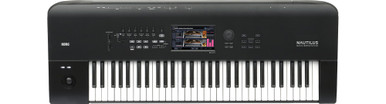
Korg NAUTILUS Synth & Workstation 61 Key
Here's What Korg Say About the NAUTILUS:
The most dazzling and expansive collection of sounds ever put into a Korg synthesizer
NAUTILUS pushes the boundaries of what a performance synth and workstation is capable of. With the power of nine engines to drive a new approach to sounds, plentiful sampling, audio recording, effects, and processing power, there is simply no other synth that delivers more to explore sonically, with the workflow to get you there faster than ever. Korg spent years refining all our digital, analog, processing, and hardware technologies and delivering them in a way that helps the musician connect with their instrument. The result is the incredibly powerful, one-of-a-kind NAUTILUS.
Features
- Nine different sound engines offer massive expressive power
- New sounds offered over three broad categories
- The DYNAMICS knob makes delicate expression possible
- Make intuitive changes to sounds with the Realtime knobs
- A user interface designed for easy operation
- Convenient arpeggiator and drum track functions
- Color TouchView Display
- Set list mode that demonstrates its power in live performances
- Open Sampling System
- 16-Track MIDI Sequencer / 16-Track Audio Recorder
- 16 Onboard Effect Processors
- USB/MIDI Host Ports Accommodate MIDI Control Surfaces
- Smooth sound transitions that eliminate dropouts when changing sounds, regardless of the mode you're in
- 88-key model with piano touch, 73-key model with light touch and 61-key model available
Nine different sound engines offer massive expressive power
The NAUTILUS features nine dedicated sound engines to realistically reproduce sounds such as pianos, electric pianos, organs and more. To start, the enhanced SGX-2 piano sound generator offers delicate expressiveness to capture all the nuances of the acoustic piano, and NAUTILUS features the most piano libraries ever put into one product; with 12-step velocity-switched sound, string resonance and more. The EP-1 electric piano sound generator realistically reproduces seven different famous electric piano sounds. The CX-3 engine – the heart of our sought-after CX-3 reissue -covers the distinct sound of classic tonewheel organs. Add to that MOD-7 VPM/FM synthesis, the PolysixEX and MS-20EX for analog modeling, and the STR-1 for physical modeling, and you have essentially an engine for any type of sound you’re looking to get. Used together in Program or Combination mode, these distinctive engines create completely new timbres.
New sounds offered over three broad categories
The approach to the included sound on NAUTILUS, started with Korg setting aside our preconceptions of what sound should be like on a conventional music workstation, and instead focused on pushing the boundaries of sampling and programming to create a brand-new classifications of programs that we divide into three groups:
“Unique” sounds
The NAUTILUS brings you distinctive sounds including phrase loops, prepared pianos, found percussion and more. Many seldom heard-of musical instruments found in different regions around the world can be difficult to play, but distinctive phrases played on these instruments are featured on the NAUTILUS. Use these phrases as-is in your songs—let your imagination be your guide. The NAUTILUS features sounds that were sampled for the first time just for this instrument, including prepared piano sounds created by placing different objects between piano strings and recording samples, or “found percussion” sounds made by turning ordinary items into instruments to be struck. Not only do these novel and mysterious sounds provide an unexpected flavor to your songs, they offer broad possibilities for sound effects used in film and TV music as well.
“Current” sounds
The NAUTILUS also offers the freshest sounds that blend in well with today's music scene, including synths, drum kits, special effects and more. For synths, be sure to check out the EDM, electro and chiptune sounds for starters. Also, the NAUTILUS features more than 50 kinds of drum kits—sounds that most strongly reflect the changes in music over time. The special effect sounds offer useful material like drums added to dance music to create beats—sounds that you can put to use right away.
Standard sounds
We’ve brought together all of the most important sounds a workstation needs including piano, electric piano, guitar, bass guitar and more, covering all genres. For the newly sampled piano sound, we’ve also recorded the lovely sonic ambience of the studio, and you can mix the piano and ambience sound as you like with the new ambience sound. A new electric piano model with a characteristic thick sound has been added, which works great for funky playing styles. We’ve also added many phrases that let you play back actual performances of guitar and bass parts that keyboardists will find useful.
The DYNAMICS knob makes delicate expression possible
With the DYNAMICS knob, you can instantly control the changes in volume and tone in response to how hard you play the keyboard (velocity); and you can customize this knob in real time to match the keyboard playing feel required for each style and song. Even when playing the same sound, you can turn this knob to get the feeling of playing a completely different sound. By finding just the right setting for your playing style, you'll uncover even more of the possibilities that the NAUTILUS offers.
When you activate the DYNAMICS knob and turn it to the left, the keyboard responds more softly to your playing, giving you a wide range of dynamics. This allows for delicate, expressive playing when accompanying a piano solo or vocals, which directly reflects the dynamics of your performance. On the other hand, turning the knob to the right gives a stronger, more flat dynamic response. This brings out the sound when you’re playing in a band or ensemble, which works best when performing with a more even feel.
Make intuitive changes to sounds with the Realtime knobs
The six RT (real-time) knobs at the top left of the panel give you direct control over changes to the PROG and COMBI sounds. A variety of functions are assigned to each knob that lets you enjoy making changes to sounds, such as the filter cut-off and effect depth, the gate time, tempo and swing of the arpeggiator or drum track, the type of snare drum and more. In COMBI mode, you can group timbres and control their levels with the knobs. Further, you can press these knobs into the panel to lock them in place, preventing them from being accidentally changed while you’re playing. For instance, you could use this to enable only the knobs you often use onstage and push the ones in that you do not need.
A user interface designed for easy operation
For the NAUTILUS, we have completely rethought the user interface, considering that panel controls tend to become denser as more functions are added. The interface of the NAUTILUS lets users find just the things they’re looking for once they understand the principles.
The MODE button lets you see what you’ve selected in each mode on a single screen, from PROG and COMBI to the set list, sampling, sequence and global modes. Each mode has tabs for each function, and the PAGE buttons offer more detailed editing with consistent operations. With the user-friendly navigation of the NAUTILUS, you can press the MODE button at any time to return to the start if you get lost. A dark mode is available for the display, using black as the primary color to reduce eye fatigue.
Six quick access buttons are also available as shortcut buttons. The NAUTILUS further offers four templates as a continuation of the previous user-friendly features, which can be used to select modes like PROG and COMBI, as transport buttons for sequencer playback and recording and so on. You can also select your own settings as you like. What’s more, you can freely assign functions you frequently use and save them in one of four sets.
Convenient arpeggiator and drum track functions
Four scenes of arpeggio patterns and drum track sets are made available that perfectly match each PROG and COMBI preset sound. These are useful for switching between scenes while they’re played, for use when improvising during performance, or for expanding your vision when composing music starting from a sound.
Color TouchView Display
The nerve center of the NAUTILUS is KORG’s enormous eight-inch (800 x 480 pixel) WVGA color TouchView display.
In addition to simply selecting a sound or choosing a parameter with the touch of a finger, the enhanced Touch-Drag ability allows more detailed control of parameter values. Interactive instruments and panel graphics provide the ability to do everything from adjusting the lid of a grand piano to connecting patch cable on a semi-modular synthesizer model.
The TouchView display also hosts a convenient new Search Function, allowing you to search for (and preview) sounds based on their titles.
Set list mode that demonstrates its power in live performances
NAUTILUS can organize all of the resources you need to get through a song—or a set—using the Set List mode. Using the Set List mode, the TouchView display can host 16 color-coded touch-screen buttons; each one can instantly call up the appropriate Preset, Combination, or Sequence—regardless of mode!
You can also select different button colors, such as when you want to change the colors within a song while playing live. This is a powerful feature for situations that require quick and accurate control. The Set List mode even adds a nine-band graphic EQ, allowing the overall tone to be tweaked to match the venue.
Open Sampling System
Using KORG’s Open Sampling System, NAUTILUS can quickly sample an external audio source, regardless of whether NAUTILUS is in the Program, Combination, or Sequencer modes. The Open Sampling Mode can even resample the performance of the NAUTILUS itself. The user sample bank, which extends the convenience of the EXs sample library to user samples, allows custom samples to be loaded and played, taking advantage of the gigantic SSD capacity.
AIFF, WAV, SoundFont 2.0, and AKAI S1000/3000 format samples can be loaded into memory via USB memory. Additionally, you can use a USB Ethernet adapter to exchange large amounts of sample data with your computer at high speed. Instruments or samples that you've previously created on your PC can be used to construct a music production setup based on just the NAUTILUS itself.
16-Track MIDI Sequencer / 16-Track Audio Recorder
NAUTILUS features a sequencer/recording section that offers both 16 MIDI tracks plus 16 audio tracks; a great resource for putting together a dazzling performance or a brilliant production. MIDI sequencing makes it easy to capture ideas, inspiration, and pro-quality phrases using the Drum Track, or RPPR (Realtime Pattern Play/Recording) functions.
The 16-track audio recorder simultaneously captures up to four tracks of 16-bit/24-bit uncompressed data at a sampling rate of 48 kHz. Play along with recorded tracks, add effects, and then resample the NAUTILUS itself and place the resampled WAV files directly in a track. When polishing your tracks, feel free to use mixer automation and editing functions such as copy, paste, and normalize to get the results you want.
88-key model with piano touch, 73-key model with light touch and 61-key model available
The keyboard on the 88-key model of the NAUTILUS uses a four-stage real weighted hammer action made in Japan, called the RH-3. This action is heavier on the lower notes and lighter on the higher notes for superb playability. The 73-key model features a much-requested light-touch synth keyboard from C to C, as with the 61-key model. This key action lets you play organ parts with plenty of glissandos, as well as synth solos that take advantage of the keyboard’s wide range.
The 88-key model is fitted with luxurious wooden side panels, and the 73-key and 61-key models a completely new design with impressive curves that rise from the bottom of the unit to the sides, patterned after the NAUTILUS’ namesakes: the Nautilus submarine and the cephalopod mollusk. All of these elements make the NAUTILUS a distinctive instrument onstage as well, brimming with personality.
Specifications
System, Keyboard
- System: NAUTILUS System Version 1.0
- Keyboard: Natural Touch Semi Weighted, C – C (Velocity sensitive is supported, after touch is not supported.)
Tone Generator
Synthesis Types
- 9
- SGX-2: Premium Piano (Acoustic Piano)
- EP-1: MDS Electric Piano (Electric Piano)
- HD-1: High Definition Synthesizer (PCM)
- AL-1: Analog Synthesizer (Analog Modeling)
- CX-3: Tonewheel Organ (Tonewheel Organ Modeling)
- STR-1: Plucked String (Physical Modeling)
- MOD-7: Waveshaping VPM Synthesizer (VPM Synthesis)
- MS-20EX: Component Modeling Technology (Analog Modeling)
- PolysixEX: Component Modeling Technology (CMT Analog Modeling)
Maximum Polyphony
- SGX-2: 100 voices
- EP-1: 104 voices
- HD-1: 140 voices
- AL-1: 80 voices
- CX-3: 200 voices
- STR-1: 40 voices
- MOD-7: 52 voices
- MS-20EX: 40 voices
- PolysixEX: 180 voices
Preset PCM
- RAM 496 MB / DISK 2.3G (ROM 1,771 Multisamples, 3,955 Drumsamples)
Build-in Expansion PCM Libraries
- EXs301: German2 D Piano
- EXs302: Italian F Piano
- EXs303: Japanese Upright U Piano
- EXs304: Prepared Piano
- EXs305: Historical Keyboards
- EXs306: Vintage Keyboards 2
- EXs307: Strings & Synths
- EXs308: Guitar Collection
- EXs309: Bass Collection
- EXs310: World Essence
- EXs311: Background Loops
- EXs312: SFX & Hits
- EXs313: Found Percussions
- EXs314: Expansion Drums
PCM RAM Capacity
- Approx. 2GB
Wave Sequences
- 598 User memory, 377 Preload (Support for stereo multisamples, synchronization of individual notes, and tempo-based settings.)
Sampling
System
- Open Sampling System (resampling, In-Track sampling)
Bit Depth/Sampling Frequency
- RAM: 16-bit/48 kHz stereo/mono sampling
- DISK: 16 or 24-bit/48 kHz
Sampling Time
- RAM: Depends on the amount of available PCM RAM
- DISK: Maximum 80 minutes stereo (879MB: 16bit)
Sample Locations
- 16,000 samples/4,000 multisamples (128 indexes per multisample)
Formats
- KORG format, AKAI S1000/S3000 data (with advanced Program parameter conversion); SoundFont 2.0, AIFF, and WAVE formats
Editing
- Time Stretch, Time Slice, Crossfade Loop, and other standard editing features.
Effects
- Insert Effects: 12 Stereo in / stereo out
- Master Effects: 2 Stereo in / stereo out
- Total Effects: 2 Stereo in / stereo out
- Timbre EQ: One 3-band EQ for each timbre/track
- Effect Types: 197
- Modulation: Dynamic Modulation and Common LFO
- Effects Control Busses: Stereo side-chaining for compressors, gates, vocoders, etc
- Effect Presets: Total 783 preset, Maximum 32 per 1 effect (Preset User)
Arpeggiator
- Arpeggiator Modules: One module in Program mode, two modules in Combination and Sequencer modes
- Arpeggio Pattern: 5 presets + ARP A 2,048 slots (1,593 come Preload) + ARP B 128 slots
- Controllers: On/Off, Latch, Gate, Velocity, Length, Swing, Tempo
Drum Track
Preset Patterns
- 1,272 (common with the preset patterns of the MIDI sequencer)
User Patterns
- 1,000 – Patterns created in Sequencer mode can be converted to drum track user patterns.
- Trigger Mode/ Sync / Zone / Swing, Drum SD, Tempo settings can be specified.
Sequencer / HDR
Tracks
- 16-track MIDI sequencer + 16-track hard disk recorder + 1 master track.
Number of Songs
- 200
Resolution
- 1/480
Tempo
- 40.00 – 300.00 (1/100 BPM resolution)
Maximum Memory
- 400,000 MIDI events or 300,000 audio events
MIDI Tracks
- 16 tracks plus the master track, 697 preset / 100 user patterns (per song), 18 preset/16 user template songs,
Audio Tracks
- 16-track playback, 4-track simultaneous recording, WAV file format 16bit/24bit
- Maximum Single-file Recording Time (mono): 80 minutes
- Automation: Volume, Pan, EQ, and Send1/2
- 10,000 regions (max.)
- Event Anchors, BPM Adjust
Other Functions
- RPPR (Realtime Pattern Play and Record): 1 Pattern set per song
- Auto Song Setup function
General
Disk Mode
- Load, save, utility, data filer function (save/load MIDI System Exclusive data), CD-R/RW (UDF format read/write), ISO9660 Level 1.
Controllers
- Joystick, Switches 1 & 2
- Arpeggiator Control: On/Off, Latch, Gate, Velocity, Length, Swing, Tempo
- DRUM TRACK: On/Off, Swing, Drum SD, Tempo
Display
- TouchView graphical user interface, 7 inch color TFT, WVGA (800 x 480 dots), adjustable brightness
Principal Specifications
- Frequency Response: 20Hz-22kHz, +/-1.0dB, 10k „¦ load
- THD+N: 20Hz-22kHz, 0.01%, 10k „¦ load (typical)
- S/N: 95dB (typical)
- Dynamic Range: 95dB (typical)
- Crosstalk: 95dB, at 1kHz (typical)
Outputs – L/MONO, R, Individual 1-4
- 1/4” TRS Balanced
- Output Impedance: 350 „¦ Stereo; 175 „¦ Mono (L/MONO Only),
- Nominal Level: +4.0 dBu,
- Maximum Level: +16.0 dBu (when load impedance is 600 „¦ or greater)
- MAIN VOLUME slider controls only AUDIO OUTPUT (MAIN) L/MONO and R
Outputs – Headphones
- 1/4” stereo phone jack
- Output impedance: 33 „¦,
- Maximum Level: 60+60 mW (when load impedance is 33 „¦),
- MAIN VOLUME knob (link with AUDIO OUTPUT (MAIN))
Outputs – USB-B
- 24-bit, Sample Rate: 48 kHz, 2 channels
- (Digital output of the same signals as AUDIO OUTPUT (MAIN) L/MONO and R)
Inputs – Audio Inputs 1 and 2
- 1/4” TRS Balanced
- Input Impedance: 10 k„¦
- Nominal Level: LINE +4 dBu
- Maximum Level: LINE +16 dBu
- Nominal Level: MIC –22 dBu
- Maximum Level: MIC -10 dBu
- Source Impedance: 600 „¦
Inputs – USB-B
- 24-bit, Sample Rate: 48 kHz, 2 channels
Control Inputs
- Damper pedal (half damper supported)
- Assignable switch, Assignable pedal
MIDI
- In, Out, Thru
USB A (TYPE A)
- For connection to external USB devices (QWERTY keyboards, MIDI controllers, ethernet adaptors, and storage)
USB B (TYPE B)
- MIDI/audio interface, MIDI: 1 (16 channel) input / 1 (16 channel) output, Audio: 2 channel input / 2 channel output
Disk Drives
- 60 GB SSD (2.5”)
Power Supply
- AC power supply terminal, Power switch
Power Consumption
- 40 W
Accessories
- AC cord, Quick Start Guide