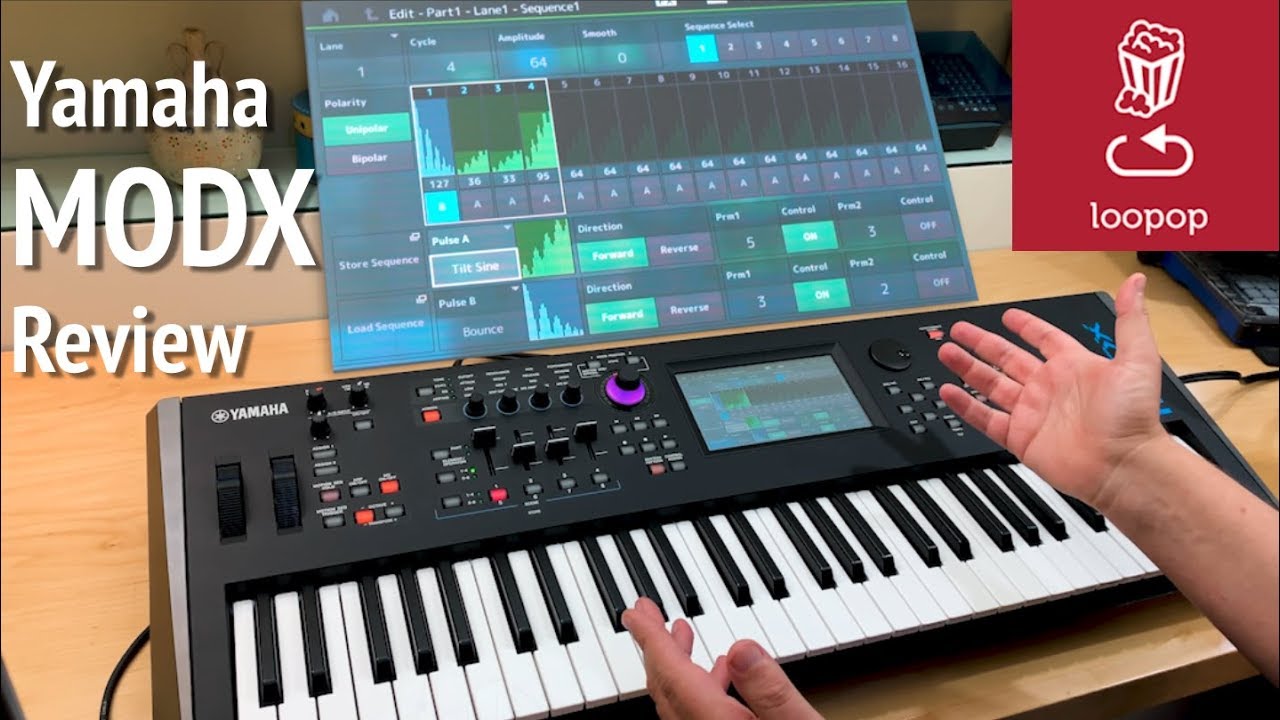
SynthForSale TV – Yamaha MODX review: Everything you need to know // full tutorial
Search results for: “Yamaha P”
-
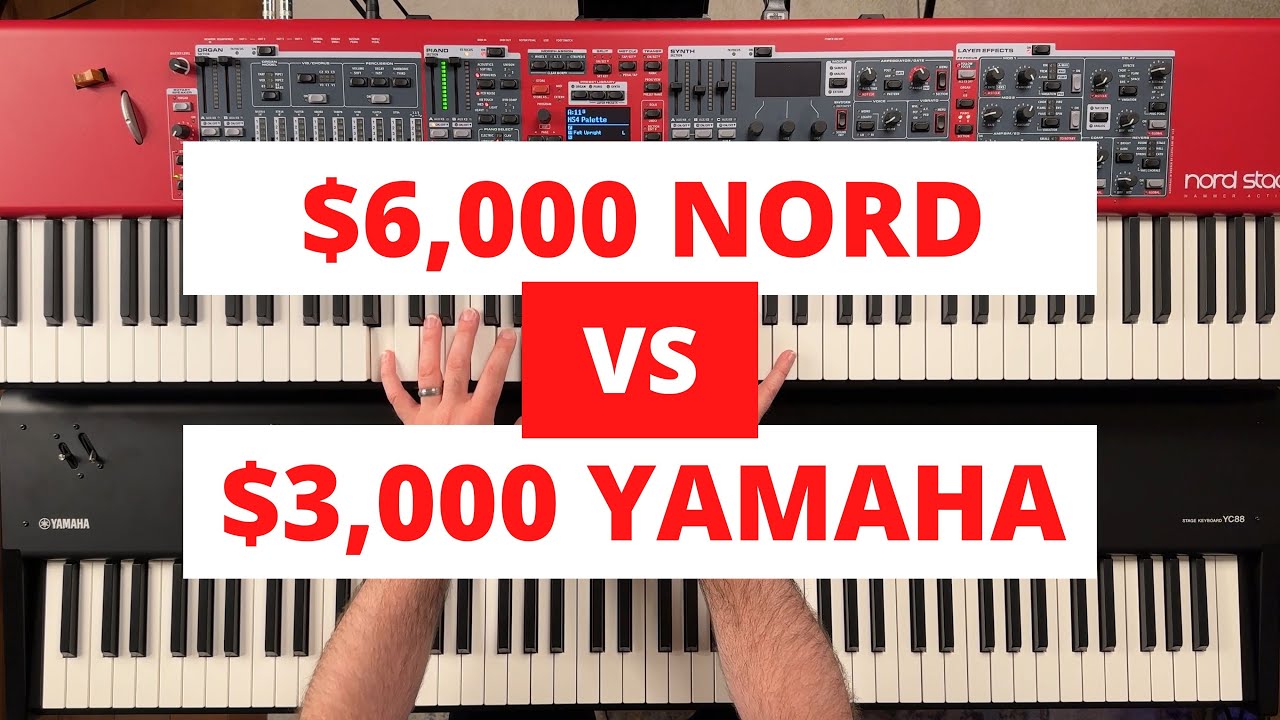
SynthForSale TV – Nord Stage 4 vs Yamaha YC88 – Comparison Review
SynthForSale TV – Nord Stage 4 vs Yamaha YC88 – Comparison Review
-
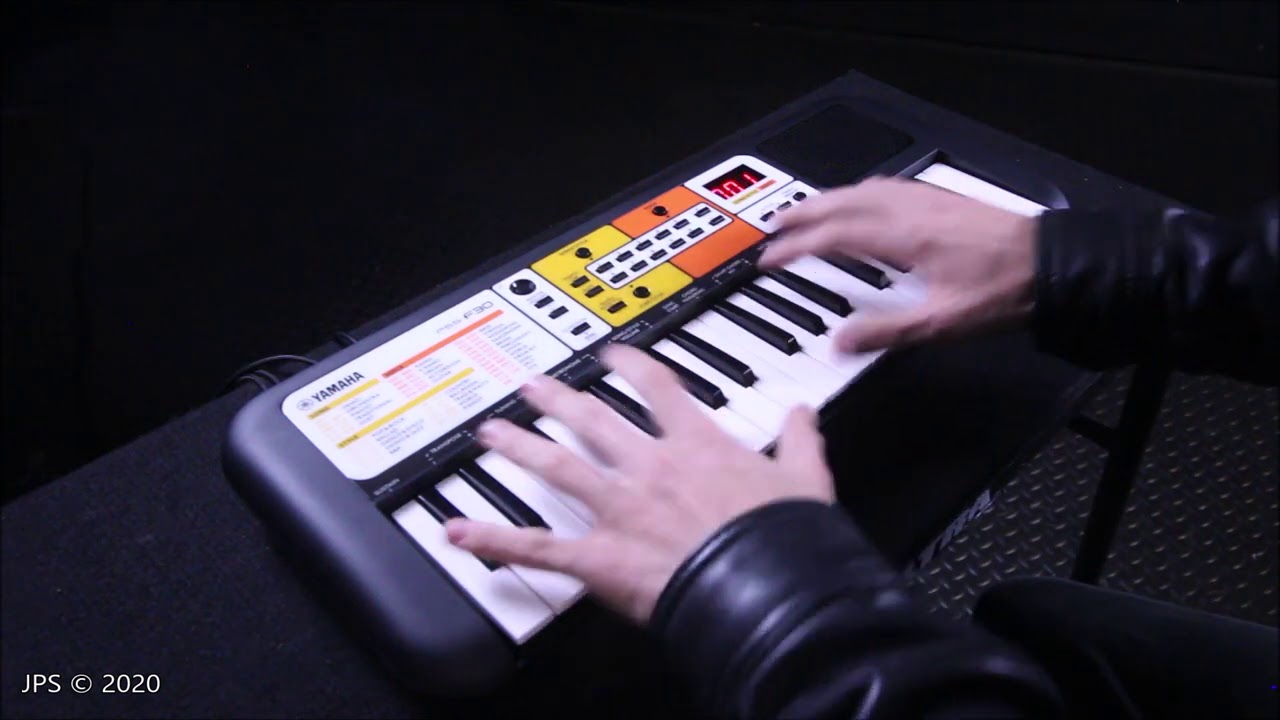
SynthForSale TV – Yamaha’s Astonishing $50.00 Keyboard (PSS-F30)
SynthForSale TV – Yamaha’s Astonishing $50.00 Keyboard (PSS-F30)
-
Five of the Best Grooveboxes in 2026
Five of the Best Grooveboxes in 2026
A good groovebox lets you create beats, basslines, melodies and complete arrangements without constantly reaching for a computer. It combines several music-making tools inside one hands-on instrument, making it ideal for capturing ideas, building tracks and performing live.
For this guide, we have selected five established grooveboxes that offer genuinely different ways of working. Some are immediate and beginner-friendly, while others provide deep sampling, sequencing and complete standalone production.
There is no single groovebox that will suit everybody. The best choice depends on whether you value portability, sampling, live performance, simplicity or the ability to produce an entire track in one machine.
1. Novation Circuit Tracks
Best for beginners and immediate music-making
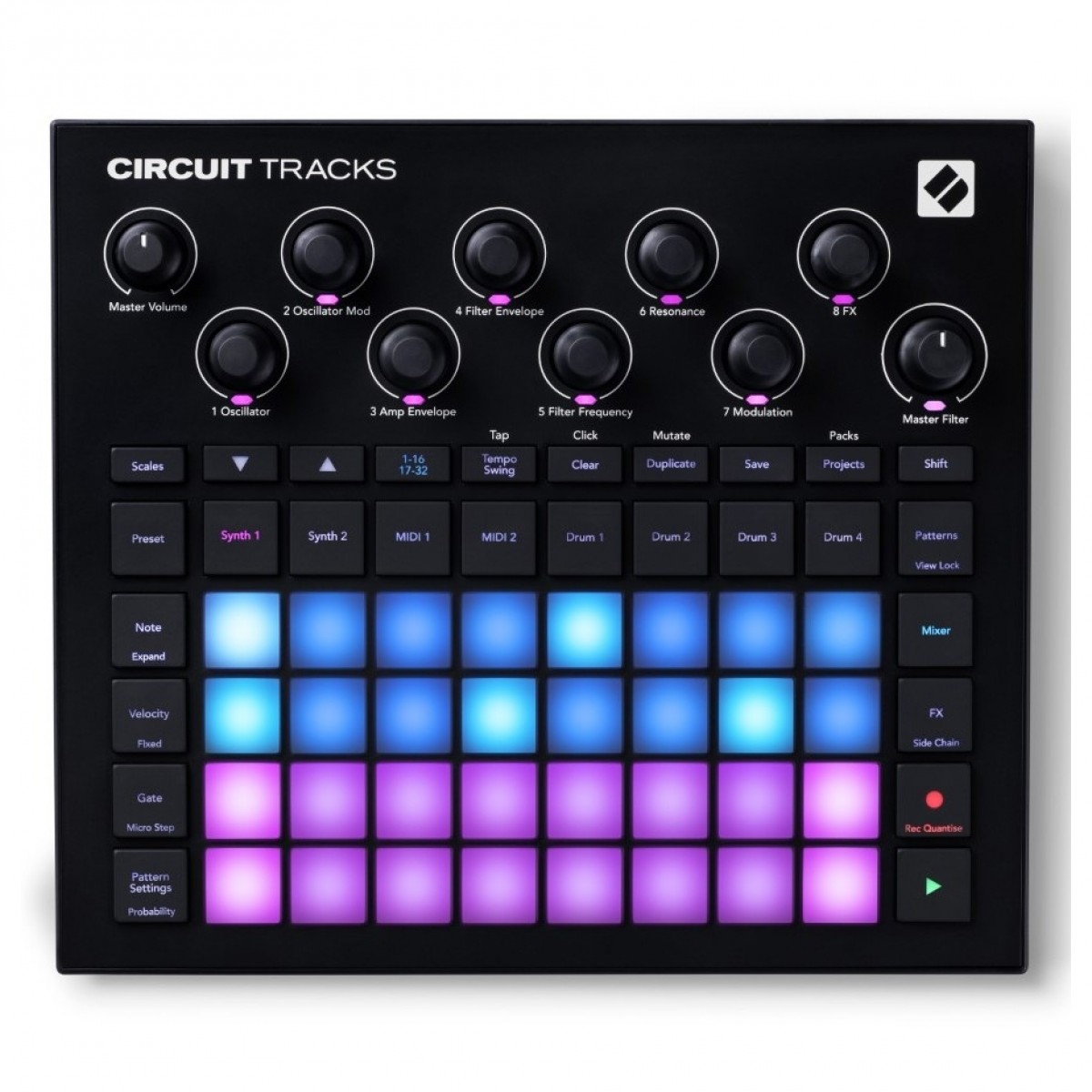
The Novation Circuit Tracks remains one of the most approachable ways to start making electronic music without a computer.
It combines two polyphonic synthesiser tracks, four sample-based drum tracks and two MIDI tracks for controlling other instruments. Its colourful 32-pad layout provides a clear visual representation of patterns and sequences without relying on a screen.
Circuit Tracks is particularly good for musicians who want to begin creating quickly. Patterns can be combined into Scenes, modulation can be recorded, and effects can be controlled directly from the front panel.
The rechargeable battery provides up to four hours of use, while MIDI connections and audio inputs allow Circuit Tracks to become the centre of a larger hardware setup.
Why choose it?
- Fast, screen-free workflow
- Two synthesiser tracks and four drum tracks
- Two additional MIDI tracks
- Rechargeable battery
- Excellent for beginners and experienced performers
2. Yamaha SEQTRAK
Best portable groovebox
The Yamaha SEQTRAK packs drums, synthesis, sampling and sequencing into a remarkably compact instrument.
Its 11 tracks include dedicated drum, synthesiser, DX and sampler sections. Yamaha has also included an extensive collection of preset sounds, combining its AWM2 sample-based engine with four-operator FM synthesis.
SEQTRAK is designed for capturing ideas wherever they appear. It has a rechargeable battery, built-in speaker and microphone, so you can begin creating without connecting additional equipment.
The controls are divided into clear sections for building rhythms, adding melodic parts and shaping a finished track. Deeper editing, visualisation and video creation tools are available through the accompanying SEQTRAK app.
- Compact and lightweight
- 11-track production system
- AWM2 and FM synthesis
- Built-in sampling
- Rechargeable battery, speaker and microphone
3. Elektron Digitakt II
Why choose it?
Best for sampling and detailed sequencing
The Elektron Digitakt II is the most sampling-focused machine in our selection.
It provides 16 flexible tracks that can be used for audio or MIDI, allowing samples and external instruments to be combined within the same project. It supports stereo and mono samples and includes Elektron’s powerful 128-step sequencer.
The real strength of the Digitakt II is the amount of control it provides over individual sounds. Samples can be sliced, filtered, modulated and transformed into something completely new. Parameter locks allow different settings to be applied to individual sequencer steps, producing constantly changing rhythms and textures.
Digitakt II has a steeper learning curve than Circuit Tracks, but it rewards the time spent understanding it. It is an excellent choice for experimental electronic music, intricate rhythms and musicians who want to build a performance around their own samples.
Why choose it?
- 16 flexible audio or MIDI tracks
- Stereo sampling
- Powerful 128-step sequencer
- Deep sound manipulation
- Excellent control of external MIDI equipment
4. Roland MC-707
Best for live electronic performance
The Roland MC-707 is a substantial eight-track groovebox built for creating complete arrangements and performing them live.
Each track can contain synthesiser sounds, drums or audio loops. Clips can be arranged into Scenes, making it easy to move between different sections of a track during a performance.
Roland’s ZEN-Core sound engine supplies a huge collection of synthesiser and drum sounds, including instruments inspired by classic Roland machines. The MC-707 also includes sampling, effects and hands-on controls for shaping sounds as they play.
Dedicated faders provide immediate control over all eight tracks, while the pads can be used for playing drums, entering melodies and triggering clips. This makes the MC-707 feel more like a playable instrument than a compact programming box.
Why choose it?
- Eight-track standalone production
- ZEN-Core synthesiser engine
- Sampling and clip-based sequencing
- Dedicated track faders
- Excellent hands-on performance controls
5. Akai MPC One G2
Best complete production system
The Akai MPC One G2 is the most complete standalone production machine in this guide.
It builds upon the established MPC workflow with a new eight-core processing system, 4GB of RAM and support for up to 16 stereo audio tracks. It can be used for sampling, sequencing, recording, arranging and mixing complete pieces of music.
The MPC’s velocity-sensitive pads remain at the centre of the experience, but the large touchscreen provides access to detailed editing, software instruments, effects and arrangement tools.
Unlike a simpler groovebox, the MPC One G2 can operate as the heart of an entire studio. It can control external MIDI instruments, record audio and take a project from its first drum pattern through to a finished arrangement.
It offers considerably more depth than most grooveboxes, although that also means there is more to learn. For musicians seeking one standalone machine capable of handling almost every stage of production, it is the strongest all-round choice here.
Why choose it?
- Complete standalone music production
- New eight-core processing system
- Up to 16 stereo audio tracks
- Sampling, synthesis, sequencing and recording
- Powerful MPC pads and touchscreen workflow
Which groovebox should you choose?
Choose the Novation Circuit Tracks if you want an immediate, enjoyable and screen-free introduction to grooveboxes.
Choose the Yamaha SEQTRAK if portability is your priority and you want to create using an instrument with its own battery, speaker and microphone.
Choose the Elektron Digitakt II if sampling, sound manipulation and intricate sequencing are central to your music.
Choose the Roland MC-707 if you want tactile controls, eight tracks and a groovebox designed for live electronic performance.
Choose the Akai MPC One G2 if you want a complete standalone production system capable of taking a track from its first beat to a finished arrangement.
Whichever one you choose, a groovebox can offer something that software often struggles to reproduce: a focused, physical and genuinely enjoyable way to make music.
SynthForSale may earn a small commission when you purchase through links on this page. This does not affect the price you pay.
-
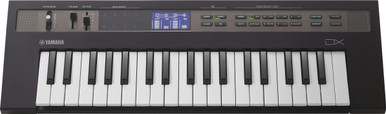
Reface DX Compact Digital FM Synthesizer
The Yamaha reface Series offers the classic sounds of the 70’s and 80’s in 4 super compact and individual instruments.
The reface series is based around 4 legendary Yamaha keyboard ranges; The CS series for classic analogue Synths, CP Series for Stage Pianos, EY Series for Combo organs and and the DX series for Digital FM synths. All featuring the same basic compact chassis, they each have their own flavour with both styling sounds, and internals taken from their original ancestors!
The reface DX
The reface DX almost needs no introduction. It is of course based on the legendary DX7 Synthesizer first released in 1983. Credited with being in so many recordings spanning the 80’s, it’s no wonder that the DX7 is included in the Reface Series. Featuring a really intuitive 4 Operator FM synth inside the box a gorgeous screen and a range of controls, the DX is a fantastic option for those wanting to get into synthesis without getting completely bamboozled. Featuring a wide range of sounds from the DX range, the reface DX offers a versatile sound set.
Looks Like a Toy, Behaves like a beast
At first look, you may be fooled into thinking that the reface pianos are somewhat of a toy. With their super compact design mini keys and in built speakers, it does seem reminiscent of a few mini-starter-keyboard instruments that i grew up with in looks.
HOWEVER, in terms of both sound quality,playability and features, the reface series completely blows those keyboards out off the water!
Thanks to its internal circuitry the sound is warm and rich and has all the artifacts and intricacies of the original. If you wanted, you could plug the reface into a larger rig and just use it as a compact top quality sound module for a larger keyboard with fully weighted keys.
Mini Keys, Mighty Control
With mini-keys becoming more prominent in a range of keyboards these days, many players have been disappointed by their lack of playability and responsiveness compared to a proper keyboard action. having been used to the proper hammer action of a real piano myself, I have in the past sometimes wondered whether mini-keys is that one step too far!
What’s great about the reface key bed is that you’ll find that the Mini-Keys are like none that have been before. The keys not only feel better to play, there’s a huge amount of expressiveness and sensitivity that is sometimes lost in other mini key setups. In a reface promotional video a reviewer remarked “It seems like a piano player actually made the keys”!
There is obviously a reason why Yamaha decided to use mini-keys on the reface series, and as soon as you start taking that keyboard out and about, you really start to see the benefits of its compact nature. Whether your on your (usually dull) train ride to work with some headphones on or your sitting in a park with your mates on a sunny day, you can make awesome music and be creative.
The reface slogan is “Your Sound. Any Place, Any Time”. This really sums up why you should get a reface. It’s a no-brainer to easily perch somewhere in your performing rig to add an extra layer, or one of your main creative outlets when you’re out and about. reface is more than just a toy, it offers a powerful collection of instruments that you can take wherever, whenever!
The DX Sound
The reface DX comes with 32 different presets in 4 banks featuring Classic DX tones from the early keyboards to more modern DX100 tones. Whether you’re looking for a cutting bass, a wood ep or a soaring lead tone you can flip to a preset and you’re ready to play.
However, if you want to use the presets as a basis and make those sounds your own, you have at your disposal a range of editing functions that are controllable through 6 touch sensitive “Data Entry” controls. Then if you like your edit better than the preset, you can save it, and next time it will be your preset that comes up!
FM Editing Sections
- Operator Frequency
- Level
- 12 different Algorhythms
- Feedback
FX & Modulation
The reface DX offers a range of digital FX and modulation controls to fatten your sounds and you can choose any two to use together at one time. They are;
- Distortions
- Touch Wah
- Chorus
- Flanger
- Fazer
- Delay
- Reverb
Loopers Delight
The reface DX also features a in built looper so that you can play around and get some ideas together and jam. Combined with it’s fantastic portability, the reface DX is a powerful music making tool when on stage or on the go.
-
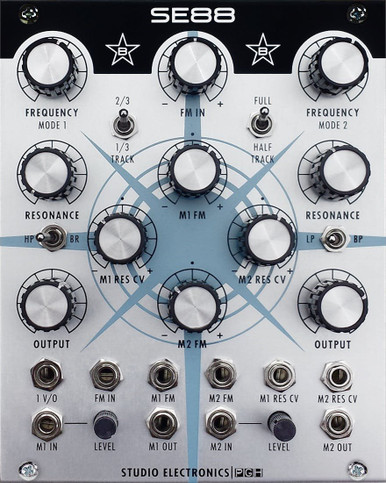
Studio Electronics Modstar SE88 Filter Eurorack Module
The Modstar SE88 is Studio Electronics’ version of the classic CS80 filter that amongst other things formed the backbone of the classic Bladerunnner sound.
A Classic Reimagined
Featuring the same great boxy sound as the original but with more versatility than before, the new SE88 features a new design.
The original CS-80 fed a High Pass Filter into a Low pass filter. The new design actually has 2 separate low pass & High Pass filters which means that you can do so much more.
Not only can you feed the path both ways, the High Pass can be switched to a Band Rejection filter, and the Low pass can be switched to a Band pass filter; and you can use these in a variety of configurations!
From smooth and silky, to sharp and biting, the SE88 is capable of a wide range of tones and is a great addition to your modular setup.
Here’s what Studio Electronics Say about the Modstar SE88
Our version of the boxy, Blade Runner-sweet and Boomstar-brash dual mode CS80 filter, initially married to the Omega Series Synths, and then tucked-in the ‘Stars, now joins the Modstar Collective. We’ve twisted and turned the SE88 to unflatten the earth, so to speak; the original CS80 fed a HP filter into a LP filter, but with the SE88 your can select MODE 1’s HP or BR to feed MODE 2’s LP or BP, or patch it to reverse that pleasant path. The audio signal is completely controllable with input and output levels for each filter. Cherish and respect your filter’s input gain stages, for a smooth yet often brassy sound—shed your mercy to strike hard for boiling, snarling bite, even to the blackout/cutout point; then and only then, uniquely blend mode settings for the filter family values you revere.
To get things merrily modulating, each filter employs attenuverters for frequency and resonance experimentation and decimation. While the SE88 does not self oscillate (Yamaha’s creation didn’t either), we did amp up the resonance level for full-throttle squelching. An additional master FM (frequency modulation) attenuverter-controlled level can feed both filters (when hungry enough) simultaneously, and tracking switches allow for individual keyboard response for each of the contrasting and complimentary filter modes.
Features
Potentiometer Potential
- Five attenuverter and eight attenuation pots control the FREQUENCY MODE 1, FM IN, FREQUENCY MODE 2, RESONANCE, M1 FM, RESONANCE, M1 RES CV 1, M2 RES CV, INPUT, M2 FM, OUTPUT, LEVEL (M1 OUT), and LEVEL (M2 OUT).
Switch it Up
- 2/3 – 1/3 TRACK (M1), FULL – HALF TRACK (M2), HP – BR, LP – BP.
Patch it Up
- Ten patch points: 1 V/O, FM IN, M1 FM, M2 FM, M1 RES CV, M2 RES CV, M1 IN, M1 OUT, M2 IN, M2 OUT.
All Controls and Patch Points
- FREQUENCY MODE 1 – Adjusts the frequency, or cutoff of Mode 1.
- 2/3 – 1/3 TRACK – Toggles tracking options for Mode 1.
- FM IN – Adjusts the master frequency modulation input.
- FULL – HALF TRACK – Toggles tracking options for Mode 2.
- FREQUENCY MODE 2 – Adjusts the frequency, or cutoff of Mode 2.
- RESONANCE – Adjusts the resonance of Mode 1’s filter.
- M1 FM – Adjusts Mode 1’s frequency modulation.
- RESONANCE – Adjusts the resonance of the Mode 2’s filter.
- HP / BR – Toggles the High-Pass and Band-Reject option.
- M1 RES CV – Adjusts Mode 1’s resonance control voltage.
- M2 RES CV – Adjusts Mode 2’s resonance control voltage.
- INPUT – Adjusts the master audio input.
- M2 FM – Adjusts Mode 2’s frequency modulation.
- OUTPUT – Adjust the audio output.
- 1 V/O – One volt per octave control voltage input.
- FM IN – Master frequency modulation input.
- M1 FM – Mode 1 frequency modulation input.
- M2 FM – Mode 2 frequency modulation input.
- M1 RES CV – Mode 1 resonance control voltage input.
- M2 RES CV – Mode 2 resonance control voltage input.
- M1 IN – Mode 1 input.
- LEVEL – Level control for Mode 1.
- M1 OUT – Mode 1 output.
- M2 IN – Mode 2 input.
- LEVEL – Level control for Mode 2.
- M2 OUT – Mode 2 output.
Vitals
- Size – 20hp
- Depth – 39.7mm with ribbon cable attached
- Power Usage – ?mA, ?mA (+12 / -12)
BYSIB (Before You Send it Back)
- This filter (and the SEM) can be ‘input driven’ to the cutout/cutoff/blackout point, for angry, aggressive unpredictability, and staggered, shell-shocked recovery. We wanted it that way; it’s perfectly harmless OpAmp smashing, for smashing good fun. Think traumatic movie scene after which an actor’s hearing momentarily disappears (extreme wooziness overtakes the balance of his senses—and camera work), high-pitched sounds follow, and then blessed normalcy of awareness and sensory perception gradually, grudgingly return. That. No reboot necessary: just sweep the frequency forward and back, and pull back the input level, unless of course you want “that” to keep happening. Teasing the edge is entertaining too.
Of Special Note
- Two audio paths are involved if you are running the ’88 filter in series, so both input levels, and the seeded output level of the 1st stage have to be taken into consideration if a clean sound is desired—either that or keep your resonance setting below 3:00 to avoid the fireworks. This beast’s resonance is wide open, with no governor in place—hot-rodded—so expect ‘voltaged’ chaos when you push it past its ‘yama-clone’ comfort zone.
* From 7:00 (0) to 9:00 our “Negative Resonance Saturation” adds beefiness, boosting the waveform amplitude and taming wavesform transients; set to 9:00 to achieve the cleanest tone possible (effect most pronounced on 3003 filter).
-
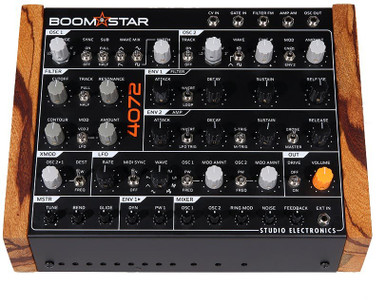
Studio Electronics Boomstar 4072 Analogue Synthesizer Module
Here's What Studio Electronics Say About the Boomstar 4072
Boomstar is a return to the raw power and purity of non-programmable discrete analog, where STUDIO ELECTRONICS started in 1985 with the Midimoog. The snap and punch of hardware envelopes drive the Boomstar's brilliant discrete voltage controlled circuits with unparalleled sonic integrity and versatility; refaced, and revoiced for 2018, the Boomstar MKII is likely the ultimate desktop analog synthesizer for those who remember, and desire still, analog synth sounds that changed the music, and sound seekers who have yet to discover that electric magic and delight in their time—via MIDI or CV of course.
The Boomstar's alchemy of combinable waveform oscillations—with sub, OSC1-OSC2 sync—filter and oscillator xmod, ring mod, 5 revered filter types, extensive modulation routing made easy via its 18+ toggle switches, and a flexible software LFO, make sound and music design a daring delight. Hardware envelopes with invert, loop, drone and master mode deliver that flexible, funky snap and shift.
The quick-turn shaft pots along the bottom for the hardware ring mod, noise, feedback: now diode-based for more complex and interesting harmonic distortion, and VCO Levels make vital sonic changes intimate, immediate, and indispensable; the adjacent overdrive switch adds beefy boost, warmth, and edge. 29+ pots insure a fluid, intuitive groove over wide-ranging sweeps, and subtle tone variations: whip them suddenly and rhythmically into shape, or feather in the changes.
Expect cleaner levels in and out of the 6 MKII filter models for 2018 (MKIIs will still brown out but their headroom is more generous): 3003—rubbery, squelchy, twangy, lo-fi, beloved Roland® TB-303 (not pictured), 4072—powerfully resonant, thumpy and mid-rangy ARP® 2600; 5089—classic, buttery & boomy Moog® 24dB ladder; 8106—ripping Jupiter-Juno Roland® magic; SEM—the original Lord Tom Oberheim® 2-pole 12dB/octave, boxy, reedy & boomy gem; SE80—the legendary, creamy, dreamy, multi-mode Yamaha® CS-80. So why not go off-synth via the external input processing patch point: connect rhythm and color to non-native oscillations and pulses, moving in, around, and through them?
SidesExoticia® Bocote, Marblewood, Pau Ferro, and East Indian Rosewood end bells, are hand selected, handcrafted one-offs, and will vary greatly in grain and attractive imperfections, but they are always character rich, and easily transcend exact appearance expectation. Expect a richly figured hardwood. Bocote and Marblewood are "CITIES" compliant; Indian Rosewood is USA only.
Can't decide which model deserves your attention? It does help that Boomstar is a discrete, through-hole, hand-matched transistor, semi-modular desktop monophonic synthesizer, built in the U. S. A. to last, no matter which glowing circuit, handcrafted filter model you choose—the 1st time.
Boomstar 2018 Highlights
- Refaced for clarity of function, signal flow and an overall visual/tactile assist.
- Revoiced for purity of tone—more headroom into amplifier; browning-out is delayed.
- Diode-based feedback circuit for greater dynamic range and harmonic distortion content.
- Exotic and rugged hand-picked and handcrafted lumber/microlumber sides
- Lined, fluted knobs and lined quick-turn pot shafts top and bottom for more precise programming and patch recall.
- Metal-shafted pots installed throughout, apart from the envelopes, where the custom taper plastic-shafted pots are strengthened with an added bushing.
Specifications
Construction
- Sturdy steel chassis, 29-31 pots, 2 rotary switches, 18-19 toggle switches—15 three way for expanded functionality—AC power triple output desktop adaptor (15, -15 Volt Auto-Switching Supply). Tried and true through-hole technology—not surface mount—for integrity of sound quality, durability, and serviceability.Dimensions
- Height: 2.05" (52.07 mm) at front, 3.625" (92.075 mm) at back, Width: 8.7 " (220.98 mm), Depth: 7.05" (179.07 mm).
Sound Generation
- All discrete circuity, with the exception of the software LFO. Hand matched transistors in filter and amplifier.
Oscillator 1
- 6 position rotary range switch; Two center off toggle switches select combinations of sine, triangle, saw and square waveforms; Pulse width for square waveform; Sub oscillator with center off toggle switch for half and full level positions; Sync oscillator 2 to oscillator 1 switch.
Oscillator 2
- 6 position rotary range switch; Three position toggle switch to select triangle, saw or square waveform; Fine tune pot; Mod depth pot with center off toggle switch to select modulation by envelope 1 or 2; Keyboard tracking on-off switch.
Filter / Envelope 1
- Frequency and resonance pots; Center off toggle switch to select half and full keyboard tracking; Envelope mod depth pot; Additional mod depth pot with center off toggle to select modulation by oscillator 2 or the LFO. Envelope 1: Attack, decay, sustain, and release pots; Center off toggle switch to select envelope invert or envelope loop.
Filter Types
- 3003—resonant low-pass, diode ladder, 4-pole 24 dB/octave (Roland® TB-303); 4072—resonant low-pass, 4-pole 24 dB/octave—12 kHz design miscalculation corrected—(ARP® 2600); 5089—resonant low-pass, transistor cascade ladder, 4-pole 24 dB/octave (Moog® Model D); 8106—multi-mode non-resonant high-pass, resonant low-pass, 4-pole 24 dB/octave (Roland® Jupiter8); SEM—multi-mode resonant low‑pass/high‑pass, band‑pass and notch, 2-pole 12 dB/octave (Oberheim®); SE80—dual resonant hi-pass/low-pass, 2-pole 12 dB/octave (Yamaha® CS-80).
Envelope 2
- Attack, decay, sustain, and release pots; Center off toggle switch to select envelope invert or LFO gate trigger; Single or multiple triggering switch; Center off toggle switch to select drone and envelope 1 as master. With master selected, envelope 2 is the modulator for both the amplifier and filter frequency. Envelope 1 remains active for oscillator 2 frequency and oscillator 1 pulse width modulation.
XMod
- Oscillator 2 mod depth pot with center off toggle switch to select modulation of oscillator 1 pulse width or oscillator 1 frequency.
LFO
- Rate pot; MIDI sync on-off switch; Waveform pot: sine, triangle, saw up, saw down, square, offset square 1 and 2, random and slew random waveforms; Mod depth pot with center off toggle switch to select oscillator 1 frequency or oscillator 1 pulse width; Mod depth pot with center off toggle switch to select oscillator 2 frequency or oscillator 2 pulse width.
Amplifier
- Center off toggle switch to select two levels of overdrive; Volume pot.
Tuning
- Master tune pot.
Bender
- Bend range pot.
Glide
- Hardware exponential glide time pot.
Dynamics
- (routes MIDI keyboard) Dynamics to filter frequency pot.
Envelope 1 to Pulse Width 1 (ENV1> PW1)
- (routes) Envelope 1 to Oscillator 1 pulse width pot.
Mixer – OSC
- Oscillator 1 level pot; Oscillator 2 level pot.
Mixer – Ring Mod
- Hardware Ring Modulator level pot.
Mixer – Noise
- Noise level pot.
Mixer – Feedback
- (routes the synth's output back through the filter) Feedback level pot.
Front Panel Jacks
- CV in, Gate in, Filter frequency modulation in, Amplifier modulation in, Oscillator out, External signal in.
Back Panel Jacks
- MIDI In, MIDI Out, 1/4" Audio out, Traveller input (SE80 model only), DC power input.
Back Panel Switches
- Learn switch: Selects MIDI channel.
Overflow Switch
- For chaining together multiple Boomstars together via MIDI overflow.
-
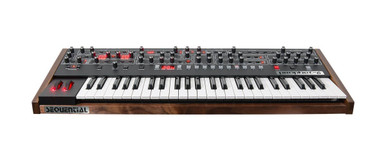
Sequential Prophet 6 Synth Keyboard
The Prophet 6 signals the return of the Sequential Circuits brand, originally founded by Dave Smith himself in the early 1970's, pioneering the development of modern music technology as it is today. Sequential's first synthesizer was in fact the Prophet 5, but in 1987, the brand was unfortunately sold to Yamaha.
For years, Dave Smith has been continuing to make simply breathtaking instruments using his brand Dave Smith Instruments, and the sequential name sat gathering dust. But in an exciting announcement at the NAMM 2015 show, the rights to use the Sequential brand name were returned and the New Prophet 6 bears the name and heritage of this great brand proudly on it's case.
Vintage AND Modern
The Prophet 6 pays tribute to the poly-synth that started it all; the Sequential Prophet 5. But instead of just recreating that great vintage classic, Dave Smith takes it one step further and creates, in his words "the most awesome-sounding, modern analogue poly synth possible".
The result is a synth that takes all the best qualities of the original, Including true voltage-controlled oscillators, filters and amplifiers and then adds modern enhancements like studio quality effects, a polyphonic step sequencer, an arpeggiator and other great tools that allow you to make the most of the awesome prophet sound.
Classic Warm Vibe
The unmistakable warm and punchy sound in the prophet 6 is in the most part thanks to the newly-designed, discrete voltage-controlled oscillators that create each voice. Add to this the Knob-per-function front panel that many digital synths seem to lack these days; Instead of trawling through menus on an LCD, all the features are right there at your fingertips for intuitive control.
The Keyboard feels great to play too, with a 4 octave, semi-weighted keybed with velocity and channel aftertouch, allowing you to fully take control of your patches with musical performances and interesting effects.
Prophet-6 Specifications
OSCILLATORS
- Two newly designed, discrete VCOs per voice
- Continuously variable wave shape (triangle, sawtooth, pulse, square) per oscillator
- Pulse width per oscillator
- Hard sync: oscillator 1 syncs to oscillator 2
- Triangle sub-octave generator (oscillator 1) per voice
- Low frequency mode (oscillator 2)
- Keyboard tracking on/off (oscillator 2)
- Oscillator slop amount for increased tuning instability, from subtle to extreme
MIXER
- Oscillator 1 amount
- Oscillator 1 sub-octave amount
- Oscillator 2 amount
- White noise amount
HIGH-PASS FILTER
- Two-pole, resonant, high-pass filter per voice
- Bi-polar filter envelope amount
- Velocity modulation of envelope amount
- Keyboard tracking: off, half, full
LOW-PASS FILTER
- Four-pole, resonant, low-pass filter per voice, inspired by the original Prophet 5 filter
- Filter can be driven into self-oscillation with the Resonance control
- Bi-polar filter envelope amount
- Velocity modulation of envelope amount
- Keyboard tracking: off, half, full
FILTER ENVELOPE
- Four-stage (ADSR) envelope generator
AMPLIFIER ENVELOPE
- Four-stage (ADSR) envelope generator
- Velocity modulation of envelope amount
LOW FREQUENCY OSCILLATOR
- Five wave shapes: triangle, sawtooth, reverse sawtooth, square, and random (sample and hold)
- Clock sync (internal or external MIDI clock)
- Initial amount
- Mod destinations: oscillator 1 frequency, oscillator 2 frequency, oscillator 1 and 2 pulse width, low-pass filter cutoff, high-pass filter cutoff
POLY MOD
- Sources: filter envelope (bi-polar) and oscillator 2 (bi-polar)
- Destinations: oscillator 1 frequency, oscillator 1 shape, oscillator 1 pulse width, low-pass filter cutoff, high-pass filter cutoff
AFTERTOUCH
- Source: channel (mono) aftertouch with bi-polar amount
- Destinations: oscillator 1 frequency, oscillator 2 frequency, LFO amount, amplifier envelope amount, low-pass filter envelope amount, high-pass filter envelope amount
CLOCK
- Master clock with tap tempo
- BPM control and display
- MIDI clock sync
ARPEGGIATOR
- Selectable note value: 16th note, 8th note triplet, 8th note, dotted 8th note, quarter note
- One, two, or three octave range
- Up, down, up/down, random, and assign modes
SEQUENCER
- Polyphonic step sequencer with up to 64 steps and rests
EFFECTS
- Stereo analog distortion
- Dual, 24-bit, 48 kHz digital effects, including: reverb (room, hall, plate, spring), delay (full bandwidth digital delay and emulated bucket brigade and tape delays), chorus, and phase shifter
- Delay sync
- True bypass maintains fully analog signal path when digital effects are off
PERFORMANCE CONTROLS
- Full-sized, semi-weighted, 4-octave keyboard with velocity and aftertouch
- Backlit pitch and mod wheels
- Spring-loaded pitch wheel with selectable range per program (1 to 12 semitones up and down)
- Transpose controls for an 8-octave range
- Hold switch latches held notes on
- Polyphonic glide (portamento)
- Unison (monophonic) mode with configurable voice count, from one to all six voices, and key modes
- Preset switch: when off, the front panel is live; what you see is what you hear
PATCH MEMORY
- 500 user and 500 factory programs in 10 banks of 100 programs each
- Direct program access, including Prophet 5-style single-button access to the current set of 10 programs
IN/OUT
- Left/mono and right audio outputs (2 x 1/4” phone jack)
- Headphone output (stereo, 1/4” phone jack)
- MIDI in, out, and thru ports
- USB for bidirectional MIDI communication
- Low-pass filter cutoff expression pedal input
- Volume expression pedal input
- Sustain footswitch input
- Sequencer start/stop footswitch input
POWER
- IEC AC power inlet for internal power supply
- Operates worldwide on voltages between 100 and 240 volts at 50 to 60 Hz; 30 watts maximum power consumption
PHYSICAL SPECS
- 32” L x 12.7” W x 4.6 H (81.3 cm x 32.3 cm x 11.7 cm)
- 20.0 lbs (9.5 kg)
- Walnut end panels and trim