Brand
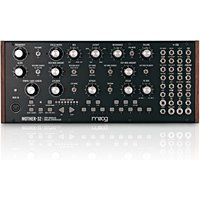
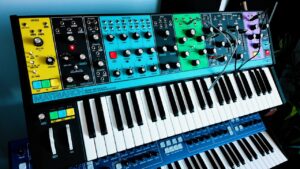
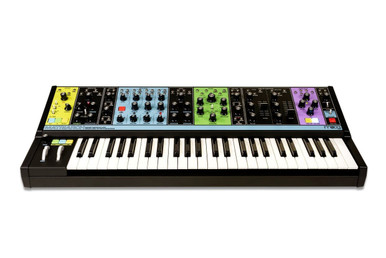
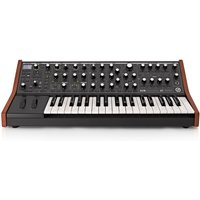
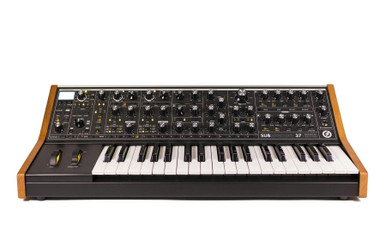
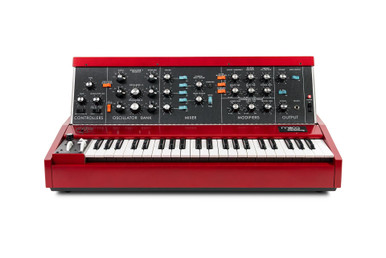
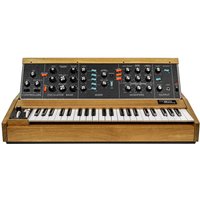
Moog, from North Carolina USA, are pioneers of analog synthesis. The Minimoog Model D remains the benchmark for fat, warm bass and leads. Modern Moog instruments like the Sub 37 and Matriarch combine classic design with new flexibility. Moog synths are celebrated for their build quality and their uniquely alive, organic sound. Owning a Moog is like owning a piece of electronic music history that never stops being relevant.
Category
Explore hardware synthesisers for sound design, performance and music production. This collection includes analogue, digital, hybrid, FM and wavetable instruments in keyboard, desktop and modular formats. Compare the synthesis method, polyphony, keybed, sequencer, effects and MIDI or CV connectivity to find an instrument that fits your studio, live setup and preferred way of creating sounds.
Tags
Products using analogue sound-generation or signal-processing circuitry, also commonly written as analog. Analogue instruments shape continuously varying electrical signals and are often chosen for direct controls, natural variation and a character that responds organically to performance and modulation.
Products with dedicated note, rhythm, MIDI or control-voltage sequencing capabilities. A sequencer records or generates musical events and sends them to internal sounds or connected instruments, often providing step programming, pattern chaining and performance controls.
Products centred on electronic sound generation and synthesis. This tag brings together keyboard, desktop, modular and performance instruments that create or substantially shape their own sounds rather than serving only as controllers.